Haiti continues to experience a complex situation of violence and insecurity, particularly in the country’s capital of Port-au-Prince.
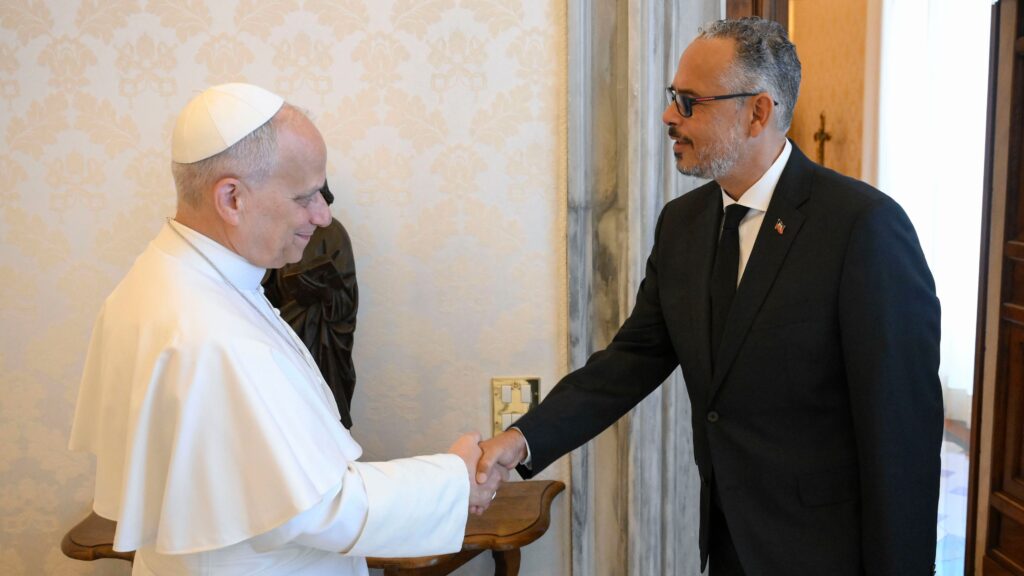
Alix Didier Fils-Aimé, prime minister of Haiti, a country which continues to suffer from a wave of violence and insecurity, was received by Pope Leo on Saturday.
Following the meeting, the Holy See Press Office reported that the discussions between the two men focused on “the good relations between the Holy See and Haiti” and “the valuable contribution that the Church offers to the country at this particular time.”
The meeting’s readout indicated that various current issues facing Haiti were also addressed during the meeting, including “the socio-political situation and challenges in the humanitarian matters, migration, and security” as well as “the necessary contribution of the international community in addressing the present difficulties.”
Following his meeting with the Holy Father, the prime minister was received by Cardinal Pietro Parolin, the Vatican Secretary of State, and Archbishop Paul Richard Gallagher, Secretary for Relations with States and International Organizations.
Haiti’s ongoing turmoil
Haiti continues to experience a complex situation of violence and insecurity, particularly in the country’s capital of Port-au-Prince, where armed gangs operate freely, controlling a large portion of the region.
In the midst of this backdrop, which also affects the Catholic Church, general elections are slated to be held on August 30, 2026, to elect the new president, members of the Senate and the Chamber of Deputies, as well as mayors.
The last elections in Haiti took place in 2016 and were marked by controversy. Following that process, Jovenel Moïse assumed the presidency. Moïse was assassinated in 2021 and since then Haiti has spiraled into further political chaos and violence.
Given the situation, in February of this year Bishop Pierre-André Dumas of Anse-à-Veau-Miragoâne, the current vice president of the country’s bishops’ conference, anticipated that this year’s elections will neither be “transparent” nor “democratic.”
This article was originally published by EWTN News English.