The number of women on the commission has increased from five to eight, including five laywomen, raising the total number of lay representatives to eight — double that of the previous term.
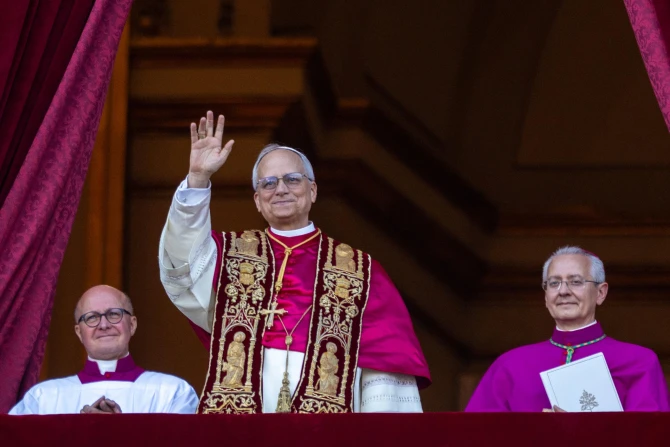
On Monday, Oct. 19, Pope Leo XIV appointed new members to the International Theology Commission (ITC) for the 2026–2031 cycle. Compared with previous years, the number of women has increased from five to eight, including five laywomen, raising the total number of lay representatives to eight — double that of the previous term.
Each member of the ITC is a scholar in various fields, as reported in the National Catholic Register, the sister partner of EWTN News, “including biblical studies, patristics, dogmatics and moral theology, but with some publicly holding views that conflict with established Church teaching, such as on women’s ordination and the theology of salvation.”
The commission, founded by Pope Paul VI in 1969, is made up of 30 individuals and is tasked with assisting the Holy See — particularly the Dicastery for the Doctrine of the Faith — with the study of theological questions and publishing official advisory documents.
The group meets once a year for a week to discuss their work and tackle any ongoing discussions and global theological demands. Made up of both laypeople and members of the clergy, the ITC brings together a wide range of scholars from around the world including those from Asia, Africa, and South America.
Pope Leo has asked the new ITC members and six returnees to focus on the topics of tradition and enculturation of the faith over their term.
The commission’s lay membership
The following lay scholars — five women and two men — are new members of the ITC:
Professor Teresa Hyeon Soon Choi — South Korea
Teresa Hyeon Soon Choi is an associate professor at the Institute for Whole Person Education Center of Sogang University in Seoul.
Professor Maria Teresa Fattori — Italy
Maria Teresa Fattori is a researcher at the University of Teramo, Italy, specializing in early modern papal history, the governance of Pope Benedict XVI, and provincial councils in polycentric Catholicism. Her current work focuses on the relationship between the Catholic Church and slavery in the early modern period. She has published extensively on the history of the early modern Roman Curia, the development of canon law after the Council of Trent, and the history of global Catholicism.
Professor Claudia Leal Luna — Chile
Claudia Leal Luna is a full professor at the Pontifical John Paul II Theological Institute for Marriage and Family Sciences in Rome. With a niche in understanding the fragility of the human hallmark and the methodology of social morality, Luna is also an alumna of the John Paul II Center for Interreligious Dialogue.
Professor Sara Parvis — Great Britain/Scotland
Sara Parvis is an associate professor at the University of Edinburgh’s School of Divinity and was appointed for her expertise in early Christianity and theology. Her contributions draw on her experience as a lay Dominican, her studies in early Christian theological development, and her writings on Pope Francis’ encyclical Laudato Si’.
Professor Anne-Sophie Vivier-Muresan — France
Anne-Sophie Vivier-Muresan is dean of the faculty of theology at the Catholic Institute of Paris. Holding doctorates in social anthropology, ethnology, and Catholic theology, she is a specialist in dogmatic and Trinitarian theology working on contemporary Orthodox theology and theology of religions.
Professor Boyd Taylor Coolman — USA
Boyd Taylor Coolman is an associate professor in the theology department in the Morrissey College of Arts and Sciences at Boston College. He is a historical theologian of medieval Catholicism and founder of the Boston Colloquy in Historical Theology.
Professor Jan-Heiner Tück — Austria
Jan-Heiner Tück is a German theologian who has served as a professor of dogmatics and dogmatic history since 2010 at the University of Vienna, where he also heads the Department of Dogmatic Theology.
Rounding out the number of laypeople on the commission for the new term to eight is Professor Reinhard Huetter, a visiting professor of theology at Duke Divinity School in the United States, who was confirmed for a second consecutive five-year term.
The full list of membership for this next five-year cycle can be found at the Holy See Press Office website.
Pope Paul VI established the ITC in 1969, and its status was further defined in 1982 by Pope John Paul II. Throughout its active years, the commission has published 33 documents with the approval of its president, the prefect of the Dicastery for the Doctrine of the Faith, which aid in the work of the dicastery for the year.
This article was originally published by EWTN News English.