The pontiff said authority in the Church is a gift of the Holy Spirit that requires listening, free elections, and fidelity to the whole Church.
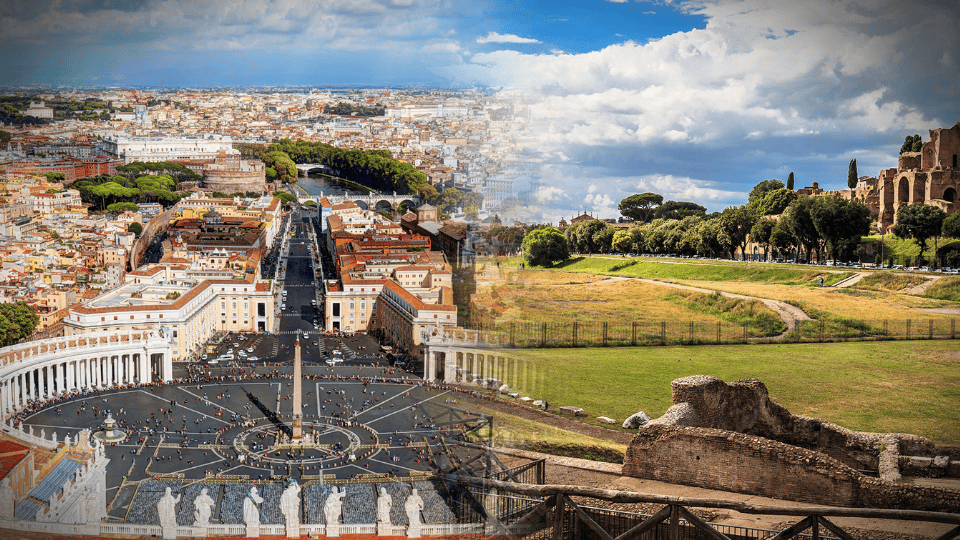
VATICAN CITY — Pope Leo XIV told leaders of international associations of the faithful, ecclesial movements, and new communities Thursday that governance in the Church must never become a vehicle for prestige or personal power but must serve communion and the spiritual good of the faithful.
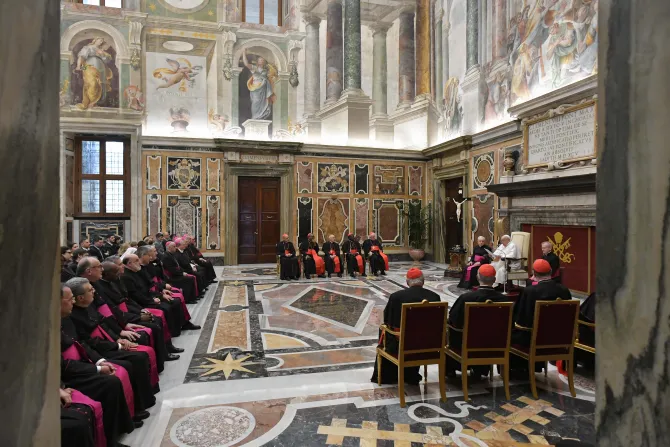
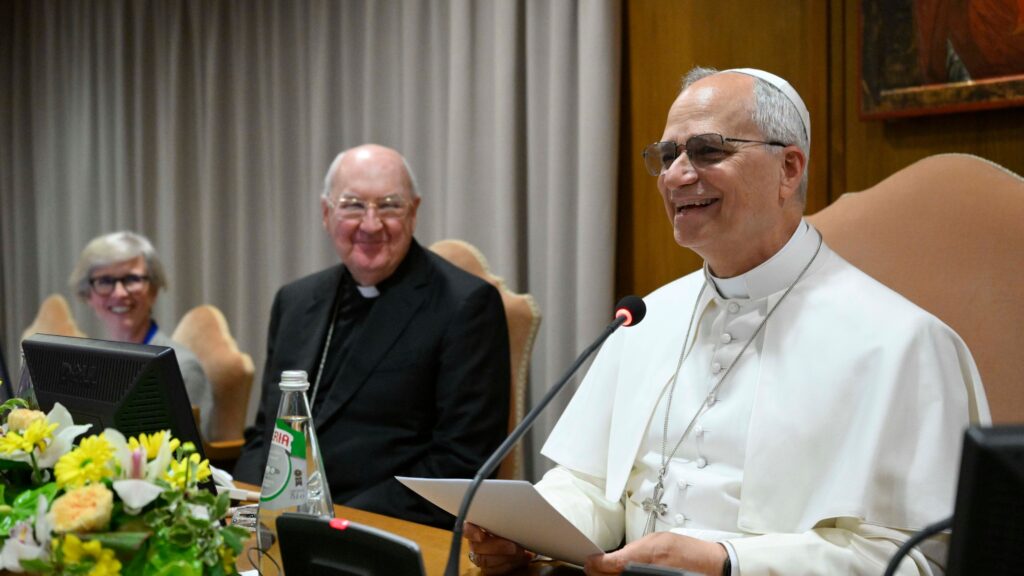
Speaking May 21 in the Synod Hall to participants in a meeting promoted by the Dicastery for the Laity, the Family, and Life, the pope reflected on the theme of governance in ecclesial communities and the responsibility of those who lead them.
“In every social entity there exists a need for suitable people and structures to guide and coordinate communal life,” Pope Leo said. “At its root, the term ‘to govern’ refers to the action of ‘holding the helm,’ of ‘steering a ship.’ It is, therefore, a matter of providing a sure direction, so that the community may be a place of growth for the people who belong to it.”
The pope said Church governance cannot be reduced to administrative efficiency or coordination.
“However, in the Church, governance does not arise simply from the need to coordinate the religious needs of its members,” he said. “The Church was established by Christ as a lasting sign of his universal salvific will and is the place, willed by God, where all people, in every age, may receive the fruits of redemption and experience the new life that Christ has given us.”
For that reason, he said, governance in the Church “is never merely technical” but “has a salvific orientation in itself,” directed toward “the spiritual good of the faithful.”
Addressing leaders of lay associations and movements, Pope Leo said governance is generally entrusted to laypeople and “expresses participation in the royal ‘munus’ of Christ received in baptism.” He emphasized that such leadership is “placed at the service of other faithful and of the life of the association” and should be the fruit of free elections understood as an act of communal discernment.
“If, as we have said, governance is a particular gift of the Holy Spirit, which the members of a community recognize as present in some of their brethren in the faith, at least three consequences derive from this,” the pope said.
The first, he said, is that governance must be “for the benefit of all,” serving the community, the association, and the whole Church. “Governance, therefore, can never be exploited for personal interests or worldly forms of prestige and power,” he said.
The second consequence, Pope Leo continued, is that governance “can never be imposed from above but must be a gift recognizable within the community and freely accepted,” which is why “free elections” are important.
The third, he said, is that the governance of an association, “like every charism,” remains subject to the discernment of pastors, who are responsible for safeguarding “the authenticity and orderly use of charisms.”
The pope also cited several qualities he said must mark Church governance: “mutual listening, shared responsibility, transparency, fraternal closeness, and communal discernment.”
Leaders of ecclesial movements, he said, have a delicate task. They must both preserve “the memory of a living heritage” and exercise a “prophetic” role by listening to present pastoral needs and responding to “the new challenges and to the cultural, social, and spiritual sensibilities of our time.”
“Indeed, only in this way can one be a Christian, a disciple and a missionary in today’s society and Church,” Pope Leo said.
He placed particular emphasis on communion, warning against the temptation for ecclesial groups to close in on themselves.
“Those who exercise a mission of leadership in the Church must learn to listen to and welcome different opinions, different cultural and spiritual orientations, and different personal temperaments, always seeking to preserve, especially in necessary and often difficult decisions, the greater good of communion,” he said.
“This requires a witness of meekness, detachment, and selfless love for one’s brothers and sisters and for the community, which serves as an example to everyone,” the pope added.
Pope Leo warned that some groups can become self-referential.
“At times we find groups who close themselves up and think that their specific reality is the only one, or that it is the Church, but the Church is all of us, it is much more!” he said. “And so our movements must truly endeavor to live in communion with the entire Church, at diocesan level.”
The bishop, he said, is “a very important figure of reference,” adding that groups must seek communion with the Church both locally and universally.
The pope concluded by thanking the associations and movements for their service, calling them “an inestimable gift to the Church.”
“There is great richness among you: so many well-formed people and so many fine evangelizers; so many young people and diverse vocations to the priesthood and married life,” he said. “The variety of charisms, gifts, and methods of apostolate developed over the years allows you to be present in the fields of culture, art, social life and work, bringing the light of the Gospel everywhere.”
This story was first published by ACI Stampa, the Italian-language sister service of EWTN News. It has been translated and adapted by EWTN News English.