ANALYSIS: The extraordinary consistory can include the creation of new cardinals, but it can also be a consistory for discussion.
Pope Leo XIV’s second consistory of his pontificate on May 31 did not include the creation of new cardinals, it has now been confirmed. This is unsurprising, as new cardinals are typically announced at least a month before the consistory to give them time to prepare. It therefore would have been highly unlikely for him to create new cardinals at Sunday’s gathering.
Pope Francis left behind a sizeable College of Cardinals. At his death, 135 cardinals could have voted in the conclave, 15 more than the limit of 120 established by Paul VI. Today, there are 117 cardinal-electors, or 118 if we include Cardinal Angelo Becciu, whose situation has not yet been clarified. In 2027, 13 more cardinals will turn 80 and will therefore no longer be eligible to participate in a conclave. Consequently, at the end of 2027, there could be 104 cardinal-electors, and Leo XIV would thus have 16 slots available to create new red hats, assuming he wishes to remain within the limit established by Paul VI.
In short, Leo XIV has time to choose the next cardinals of the Holy Roman Church. Some unconfirmed Vatican rumors speak of a possible mini-consistory to create cardinals, with one or two new red hats at most, starting with Archbishop Filippo Iannone, who was chosen by Leo XIV as his successor as head of the Dicastery for Bishops. However, these rumors are unconfirmed.
Unlike other popes, whose first consistory was always intended for the creation of new cardinals, Leo XIV has decided to use his first gatherings foremost as meetings of cardinals, occasions to discuss the present and future of the Church.
The Code of Canon Law provides for two types of consistories: the ordinary and the extraordinary. The extraordinary consistory is held in special cases, and all cardinals are summoned to the extraordinary consistory. The ordinary consistory, on the other hand, is held when the pope needs to consult the cardinals on some important but routine matter or to perform solemn acts.
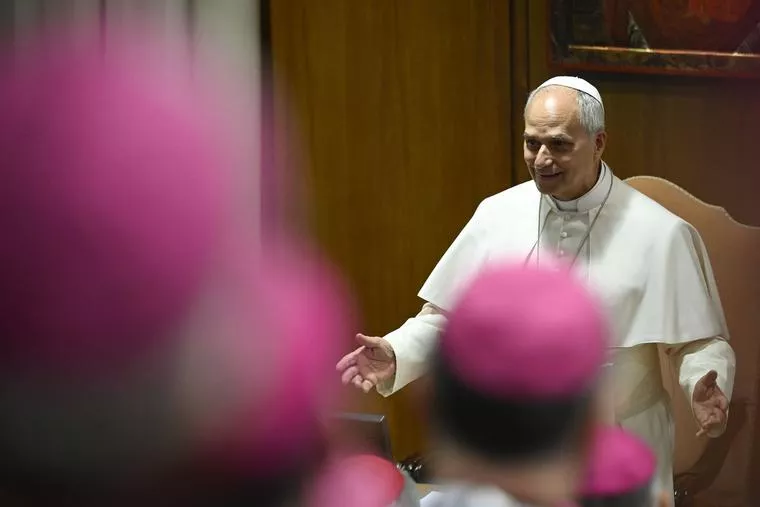
The extraordinary consistory can include the creation of new cardinals, but it can also be a consistory for discussion. Leo XIV wanted to make the convocation of the extraordinary consistory for discussion a biannual event. The first of this type was convened Jan. 7-8, 2026, and the next will take place June 26-27, 2026.
The working method for the next consistory has not yet been defined. In January, the consistory was conducted in linguistic groups, with a rapporteur for each group. It is unknown whether this model will be replicated in the June consistory. However, the so-called “synodal” model is disliked by several cardinals. The cardinals dislike having their opinions and assessments absorbed into a final summary by the rapporteur and the group, preferring to take personal responsibility for their own statements. This issue has been raised, and it remains to be seen whether Leo XIV will agree to change the modalities.
It is known, however, that the theme will primarily concern the Church’s mission. In a letter sent to the cardinals on April 12, Leo XIV recalled that mission is “integral” and “combines explicit proclamation, witness, commitment, and dialogue, without giving in to the temptation of proselytism or to a logic of simple institutional preservation or expansion. Even when it recognizes itself as a minority, the Church is called to live without complexes, as a small flock bringing hope to all, remembering that the goal of the mission is not its own survival, but the communication of the love with which God loves the world.”
The Pope also noted that the discussion at the January 2026 consistory had demonstrated “the need to relaunch Evangelii Gaudium to honestly assess what, after all these years, has actually been received and what remains unknown and unimplemented. In particular, attention must be paid to the necessary reform of the paths of Christian initiation; attention must also be paid to valorizing apostolic and pastoral visits as authentic kerygmatic opportunities and opportunities for growth in the quality of relationships; as well as the need to reconsider the effectiveness of ecclesial communication, even at the level of the Holy See, in a more clearly missionary key.”
The debate, in short, will not concern situations in the governance of the Church, but rather indications about the future of the Church itself. This is the style of Leo XIV, who wanted ample time for discussion and the opportunity for all to explore themes of faith.
With his second extraordinary consistory of discussion, Leo XIV has already almost surpassed Pope Francis. Pope Francis convened 10 consistories for the creation of cardinals during his pontificate, but only in three cases did he decide to hold a discussion beforehand: in 2014, when the topic of the family was discussed with Cardinal Walter Kasper’s famous report; in 2015, when the work focused on the possible reform of the Curia; and in 2022, when the recently promulgated reform of the Curia was discussed.
But Leo XIV also shows a certain precision in his forms of governance. The pope convenes the dicasteries or their leaders for “political” decisions — if one may say so — and calls upon the cardinals to exchange opinions and define the role of the Church in today’s world. Furthermore, Leo XIV has not established a “Council of Cardinals,” as Pope Francis did.
The council (called the “C9” because it was composed of nine cardinals) was a sort of advisory board to the Pope. Pope Francis, however, had not included the council within the Praedicate Evangelium, and, therefore, it was not considered a body of the Roman Curia nor a permanent body. It was a group of consultants at the Pope’s discretion.
Here, too, Leo XIV prefers a more collegial approach, instead summoning all the cardinals and trying to involve them in a broad discussion.
Is this where Leo XIV’s method of governing comes in? Perhaps. Meanwhile, there’s curiosity over whether the Pope will appoint any cardinals in the near future. The cardinals, however, are already preparing for the debate in the chamber. And it will be interesting to see which direction they decide to take.
This article was originally published by NCRegister.