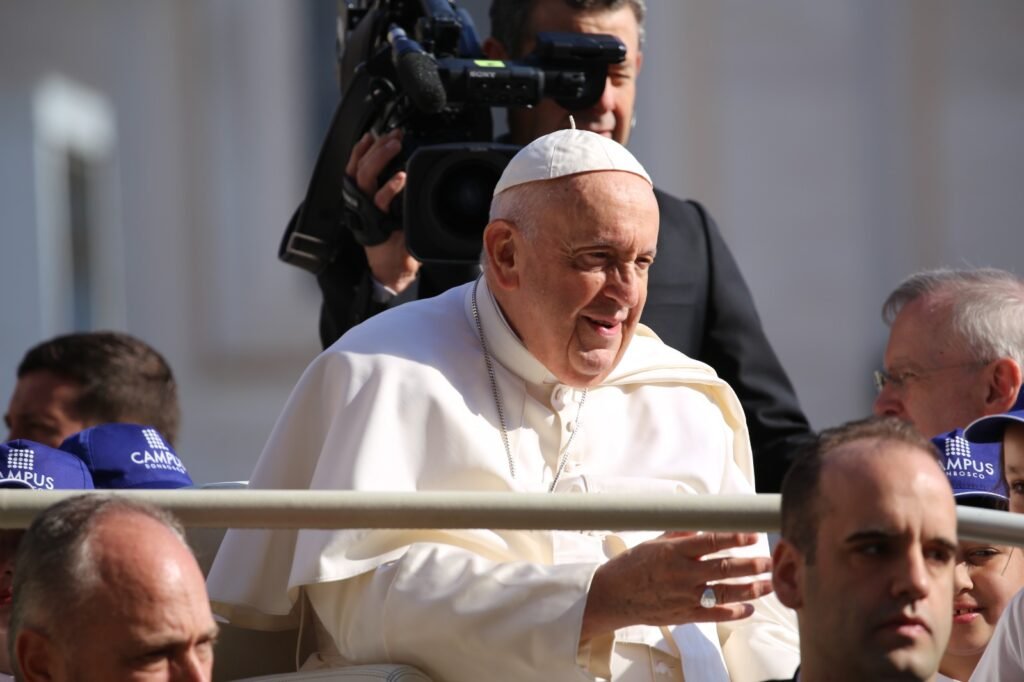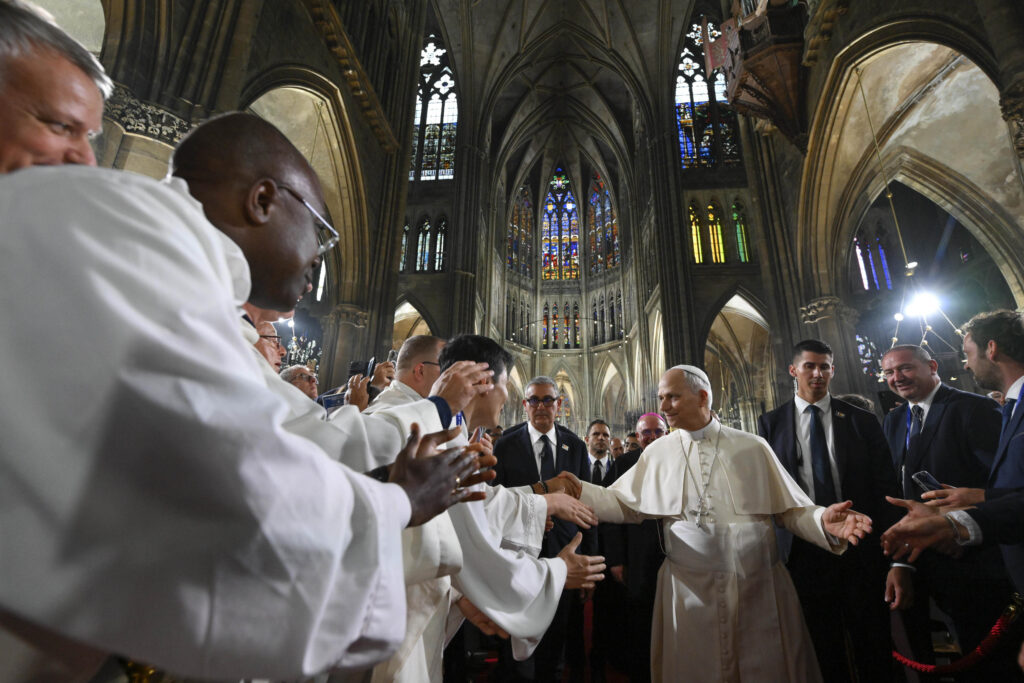
At his Wednesday general audience, the pope continued his catechesis on Vatican II’s Constitution on the Sacred Liturgy, reflecting on the mystery of the Eucharist.
VATICAN CITY — Pope Leo XIV said Wednesday that the Eucharist is a “powerful antidote” to division in the world, calling on Catholics to “draw with faith from this source of divine life” and to allow themselves “to be transformed by the mystery we celebrate.”
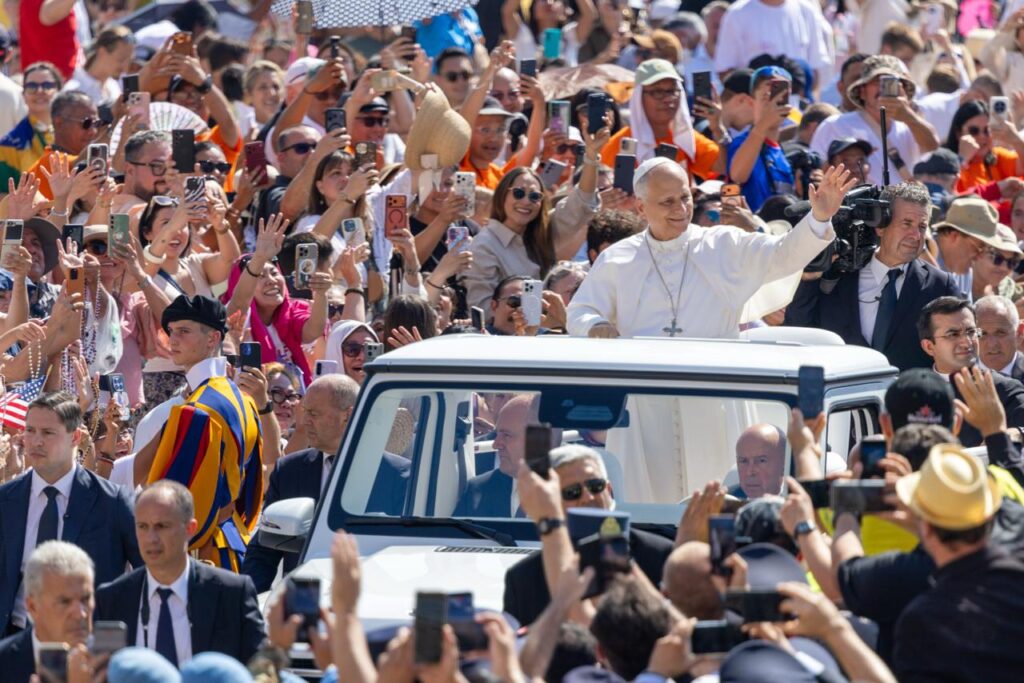
“Thus, by incorporating us into Christ, the Eucharist teaches us to adopt the very style of life of the Lord Jesus, which was marked by the free gift of Himself,” the pope said during his June 24 general audience in St. Peter’s Square.
“This gift draws us into the dynamic of unity, offering a powerful antidote to the forces of division that undermine our world, our communities, our families, and our hearts,” he said.
The pope continued his catechesis on the documents of the Second Vatican Council, focusing on the Constitution “Sacrosanctum Concilium” on the sacred liturgy.
Leo highlighted the liturgical reform called for by the council fathers, especially the creation of the Lectionary, the book containing the biblical readings for liturgical celebrations.
“The liturgical reform translated this request into the treasure that is the Lectionary, the book that gathers all the biblical readings for liturgical celebrations,” he said.
“This richness has been drawn from the purest source of the living Tradition, which combines fidelity with tradition; with openness to legitimate progress,” the pope added, citing “Sacrosanctum Concilium.”
Reflecting on the Mass, Leo said the faithful are invited “to listen to the Word of God and to be nourished at the Lord’s table, where He offers Himself to the Father.”
The two parts of the Mass — the Liturgy of the Word and the Liturgy of the Eucharist — “are so closely connected with each other that they form but one single act of worship,” he said.
“The Eucharist opens us to an understanding of Scripture, just as Scripture for its part illumines and explains the mystery of the Eucharist,” the pope said, quoting Benedict XVI’s apostolic exhortation “Verbum Domini.”
Leo also drew on the teaching of St. Augustine, who explained the mystery of the Body of Christ to the newly baptized by citing St. Paul’s words: “Now you are Christ’s body, and individually parts of it.”
“It is your own mystery that you receive,” Augustine wrote, according to the pope. “To what you are, you respond: Amen, and your response is like your signature. You are told, ‘The Body of Christ,’ and you reply, ‘Amen.’ Be therefore members of the Body of Christ, so that your Amen may be true.”
The pope said that through the Eucharist, Christians become what they receive: the Body of Christ.
“Thus, the Eucharist is the sacrament of the Kingdom that is to come,” Leo said. “It is the Bread for the journey that leads us to our heavenly homeland, until that blessed day when ‘God will be all in all.’”
He also stressed that the faithful are not passive spectators at Mass but join in offering the sacrifice “not only through the hands of the priest, but also with him.”
“By participating in it, they learn ‘to offer themselves; through Christ the Mediator, they should be drawn day by day into ever more perfect union with God and with each other,’” he said.
The pope concluded by quoting “Sacrosanctum Concilium” on the Eucharist as “a sacrament of love, a sign of unity, a bond of charity, a paschal banquet in which Christ is eaten, the mind is filled with grace, and a pledge of future glory is given to us.”
“Dear brothers and sisters,” he said, “let us draw with faith from this source of divine life and allow ourselves to be transformed by the mystery we celebrate.”
This story was first published by ACI Prensa, the Spanish-language sister service of EWTN News. It has been translated and adapted by EWTN News English.