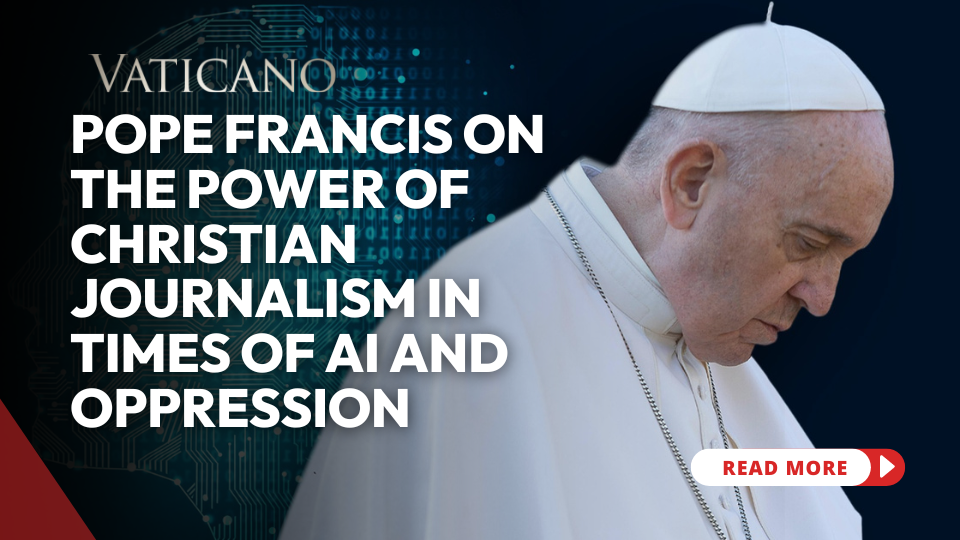
On the 58th World Day of Social Communications, Pope Francis asked, “How can we remain fully human and guide this cultural transformation to serve a good purpose?”
Pope Francis put forward this question at the outset of his message for World Day of Social Communications. This cultural transformation is being brought about by Artificial Intelligence.
Pope Francis addressed the opportunities and dangers posed by the new technology and how it affects the role and work of journalists. This was the same question Catholic journalists from across the globe addressed at a conference held at the Shrine of Our Lady in Lourdes, situated at the foot of the French Pyrenees mountains.
Co-organized by the Vatican’s communications department, the 27th edition of the St. Francis de Sales Congress focused on Catholic journalism and the mission to speak the truth, even when people don’t want to see it or hear it. This year, the theme was to discuss the role of Christian journalism in “Times of Upheavel.”
Alessandro Gisotti, the Deputy Editorial Director for Vatican Media, stressed, “It is important to have exchanges of ideas and to create a network that is very, very important for us and for the Dicastery for Communication to promote, not to be the leader, but to promote space and opportunities, to create a network between journalists of different output, different media outlets… so radio, newspapers, televisions like EWTN.”
Artificial intelligence was one of the themes discussed in Lourdes. Gisotti noted, “Artificial intelligence. This is a new situation with intelligence. Artificial intelligence within the church, with the Synod. That is so important for the media.”
While the conference participants debated and agreed on the dangers of artificial intelligence, the positive aspects were also shown.
Nicolas Torchebouef from Switzerland presented his AI platform for Church teaching called CATÉ GPT.
Nicolas Torchebouef, founder of CATÉ GPT, explained, “The idea of CatéGPT is to provide a general answer to the questions people have, and then we sought to structure this response to gain a deeper understanding of the subject. For example, we will provide an answer based on the teachings found in the Bible, then consider what the Church Fathers say on the matter, and also examine what can be found in the Magisterium, such as encyclicals or the teachings of the popes. Afterward, we will provide the user with a comprehensive list of references that allow them to explore the sources of this answer and to form their own understanding. This enables the user to directly read the texts of the Church themselves.”
CatéGPT only uses documents from the official Vatican website to ensure sound doctrine. While the technology can be helpful, the journalists were clear that it will hardly replace humans, nor should it.
Pope Francis stressed the same in his message for the Day of Social Communications that new technologies such as AI will never be able to replace the human journalist.
He encouraged media to continue to report especially from war-torn regions, because only direct and personal contact will enable us to “grasp the absurdity of war.”
This was another central topic at the conference in Lourdes: journalism in war-torn places across the globe. Journalists face hostility and oppression, especially when reporting on terrorism and crimes.
In Nigeria, violent attacks at the hands of terrorist groups such as Boko Haram or the Fulani Herdsman can pose many risks.
Father Walter Ihejirika, President of Signis Africa, in this regard noted, “Catholics are being targeted for what they report on, the journalists are also part of those who are targeted. Two years ago, a Catholic priest, a friend I know Father Keetenum was one of the people who was massacred during his sermon by these herdsmen. So it’s affecting the media. A lot of the media in our country can’t go out to do their job for fear of kidnapping, for fear of massacre.”
In the Philippines, Christians have also come under attack. One recent tragedy, the bombing of a Catholic Mass in December of last year, has sparked particular concern.
Additionally, the digital space is becoming increasingly hostile.
Paterno R. Esmaque of Rappler Newssite Philippines related the reality in the Philippines on the interplay between social media and the government in the social sphere, “We continue to be under attack because social media is a place where many trolls abound and sometimes when we report on something that is not favorable to the government we receive online attacks.”
He remarked how it has even affected his own team, “There are many journalists in the Philippines facing imprisonment and legal cases—even our own newsroom has its own cases.”
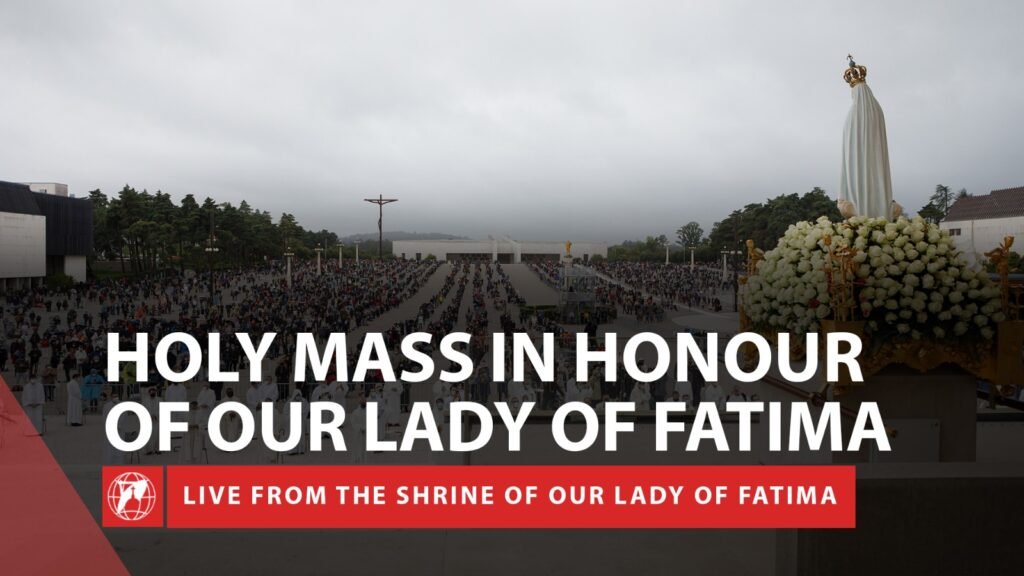
The Catholic journalists came to Lourdes not only to discuss and learn from each other. An important part were the times of prayer and celebrating holy mass at the shrine: a source of courage and strength—especially for those who are called to report on the tragedies of our time, without losing hope.
Pope Francis’s message continued, “The digital revolution can bring us greater freedom, but not if it imprisons us … It is up to us to decide whether we will become fodder for algorithms or will nourish our hearts with that freedom without which we cannot grow in wisdom.”
Adapted by Jacob Stein