A conference addressed the subject of quantum gravity with regard to the incompatibility of quantum mechanics with general relativity, presenting a challenge for researchers to propose solutions.
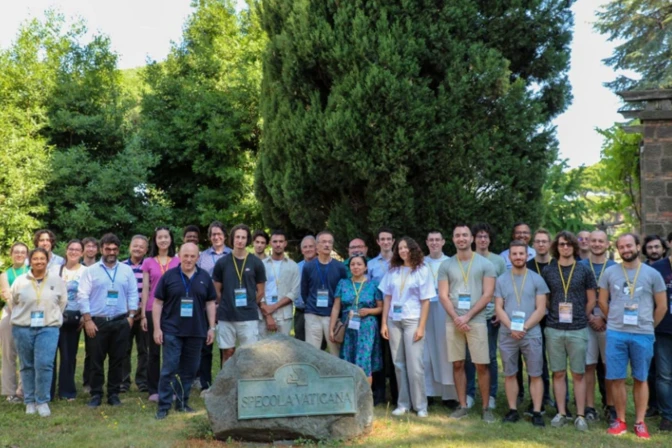
The Vatican Observatory, one of the oldest astronomical institutions in the world, hosted its prestigious Vatican Observatory Lectures at its headquarters in Castel Gandolfo, Italy, last week. This year’s series focused on quantum gravity.
The event brought together internationally renowned experts and a select group of doctoral students and young researchers who delved into one of the most complex and fascinating problems in modern physics: unifying quantum mechanics with general relativity.
The difficulty of this challenge lies in the very nature of the two theories. While quantum mechanics describes the behavior of elementary particles with enormous precision, Albert Einsteinʼs general relativity explains gravity as the curvature of space-time on a large scale. However, the two frameworks prove incompatible when one attempts to apply them simultaneously.
In relativity, space and time are not an immutable scenario but rather dynamic entities that warp and evolve. Attempting to subject these quantities to the rules of quantum physics gives rise to profound mathematical inconsistencies.
One of the best known is the so-called “perturbative non-renormalizability.” In simple terms, renormalizing involves controlling the infinite corrections that appear in quantum calculations in order to make physical predictions.
This method works in the other fundamental forces of nature but fails in the case of gravity, where these corrections multiply without limit, generating an infinite number of parameters that makes the theory unviable. Overcoming this obstacle constitutes one of the great objectives of current theoretical physics.
The conferences, held at the observatory’s headquarters in Castel Gandolfo and coordinated by Jesuit Father Gabriele Gionti and Father Matteo Galaverni, explored the issues from various perspectives.
Professor Claus Kiefer of the University of Cologne in Germany presented the canonical (in a nonreligious sense) quantization approach to gravity, focusing on the so-called “problem of time.”
If time itself is subject to quantum fluctuations, a fundamental question arises: How do we define the evolution of a physical system? Kiefer explored the implications of this issue for the study of black holes, including the nature of singularities where gravity reaches extreme levels.
Professor Roberto Percacci of the International Higher School for Advanced Studies in Trieste, Italy, presented a covariant approach in which gravitons — hypothetical particles that mediate gravity — are treated as spin-2 quantum fields.
A particular highlight was the asymptotic safety program — a proposal suggesting that gravity could be consistent within the quantum regime without recourse to additional exotic entities, thanks to the specific behavior of its constants at very high energies.
From a more conceptual perspective, Professor Sergio Cacciatori of the University of Insubria in Italy delved into the difficulties inherent in quantizing a universe where the very fabric of space-time is subject to uncertainty.
His remarks highlighted questions that border on the philosophical yet carry very concrete technical implications: What does it mean to measure time when it fluctuates? How is observation defined in a context where the observer is part of the system?
Finally, Professor Pierpaolo Mastrolia of the University of Padua in Italy contributed the scattering amplitude approach, a key tool for calculating particle interaction probabilities. His research reveals surprising parallels between the theories describing fundamental forces such as electromagnetism and nuclear interactions and certain formulations of quantum gravity, such as supergravity or string theory. These analogies open up promising avenues toward possibly unifying quantum mechanics with general relativity.
Beyond the technical aspects, these lessons have once again highlighted the uniqueness of the Vatican Observatory as a meeting place between traditions, disciplines, and generations. In an environment marked by centuries of history, young researchers not only receive high-level training but also participate in a setting of free and open dialogue where the great questions of human knowledge, such as the origin of the universe or the ultimate nature of space and time, can be addressed without prejudices.
Founded in the 16th century at the behest of Pope Gregory XIII, who ordered the construction of the Tower of the Winds at the Vatican and gathered astronomers and mathematicians to reform the calendar, the Vatican Observatory has maintained a constant quest to understand the universe throughout the centuries. It was Pope Leo XIII who, in the late 19th century, revitalized its research activities, establishing it as an international point of reference.
At a time when science is advancing in the study of the infinitely small and the immeasurably large, the Vatican has reaffirmed its commitment to research and critical thought. For, as quantum gravity demonstrates, the deepest questions remain open, and finding their answers is a task that can only be tackled as a community.
This story was first published by ACI Prensa, the Spanish-language sister service of EWTN News. It has been translated and adapted by EWTN News English.