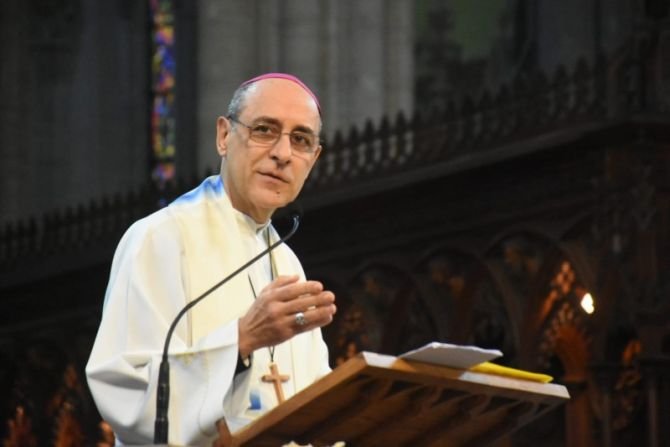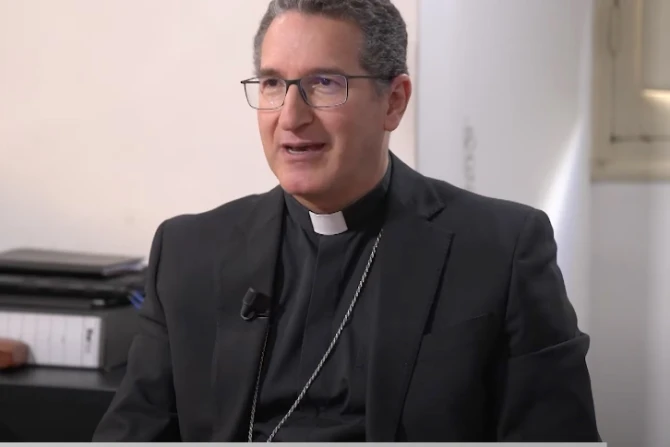
Auxiliary Bishop Luis Manuel Alí Herrera, secretary of the Pontifical Commission for the Protection of Minors (PCTM, by its Italian acronym), contends that instead of a single reparative action, victims of abuse within the Church require “an in-depth process that listens to, welcomes, and accompanies.”
SIGN UP FOR OUR NEWSLETTER HERE
Alí Herrera explained that the harm done to such victims is “disastrous” as it harms “the very image of God, the [victim’s] relationship with the Church, interpersonal relationships, and one’s very identity. A victim sees their life plans and their ability to bounce back damaged,” Alí explained in an interview with “EWTN Noticias,” the Spanish-language broadcast edition of EWTN News.
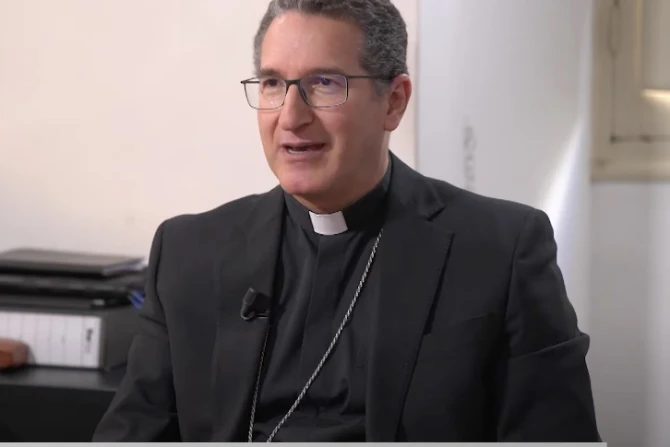
The auxiliary bishop of Bogotá — who, along with the other members of his team, met with Pope Leo XIV two weeks ago — stated that the voice of survivors is at the center of the Church’s work and that the presence of victims within the commission itself is key to moving toward a true culture of prevention.
“We have victims on the pontifical commission; they are part of it as members. Their voice is essential to knowing how to speak to all victims and survivors, and also to guiding our responses in prevention processes,” he noted.
Since its creation in 2014, the PCTM, led by Cardinal Seán O’Malley, has been one of the Church’s most practical instruments for combating sexual abuse and promoting a culture of prevention.
The prelate shared that his pastoral perspective on this issue changed completely after hearing the testimony of a person who had suffered abuse.
“I had read, studied, and analyzed it. But it’s another thing entirely to be faced with the real pain, the tears, the despair of someone who has been deeply wounded. That transformed me,” he related.
For the commission’s secretary, a key part of the work of prevention begins with adequate psycho-affective formation of a candidate for the priesthood beginning at the very outset of seminary.
“Affective, communal, and sexual formation must be present from the preparatory phase to the end of theological formation. It must be across the board, continuous, and closely connected to the emotional world and interpersonal relationships,” he noted.
Regarding the impact of the abuse crisis on priestly vocations, Alí acknowledged that it has had painful but also positive effects.
“It has had an impact, because many pull back [from considering a priestly vocation] when they see news of cases. But it has also helped, because it has forced us to rethink vocation ministry and recognize that the priest is, above all, a human person, with wounds, crises, and emotions that he must learn to integrate,” the bishop explained.
Impact of Rupnik
Regarding decisions such as that taken by the shrine at Lourdes, which this past March covered up the murals of the artist and former Jesuit Father Marko Rupnik, who is accused of serial sexual abuse, Alí believes it is necessary to act with discernment and empathy.
“Art can heal, but it can also retraumatize. It’s not about condemning beforehand but rather putting oneself in the shoes of the victims and not triggering their pain with gestures that may be insensitive,” Alí indicated.
With a clear appeal to the entire Church, Alí concluded: True reparation only begins when those who have suffered are truly listened to. “That listening, that closeness, is the first step toward restoring what has been broken: the image of God in each victim.”
FIND THE POPE’S BIOGRAPHY HERE
This story was first published by ACI Prensa, CNA’s Spanish-language news partner. It has been translated and adapted by CNA.