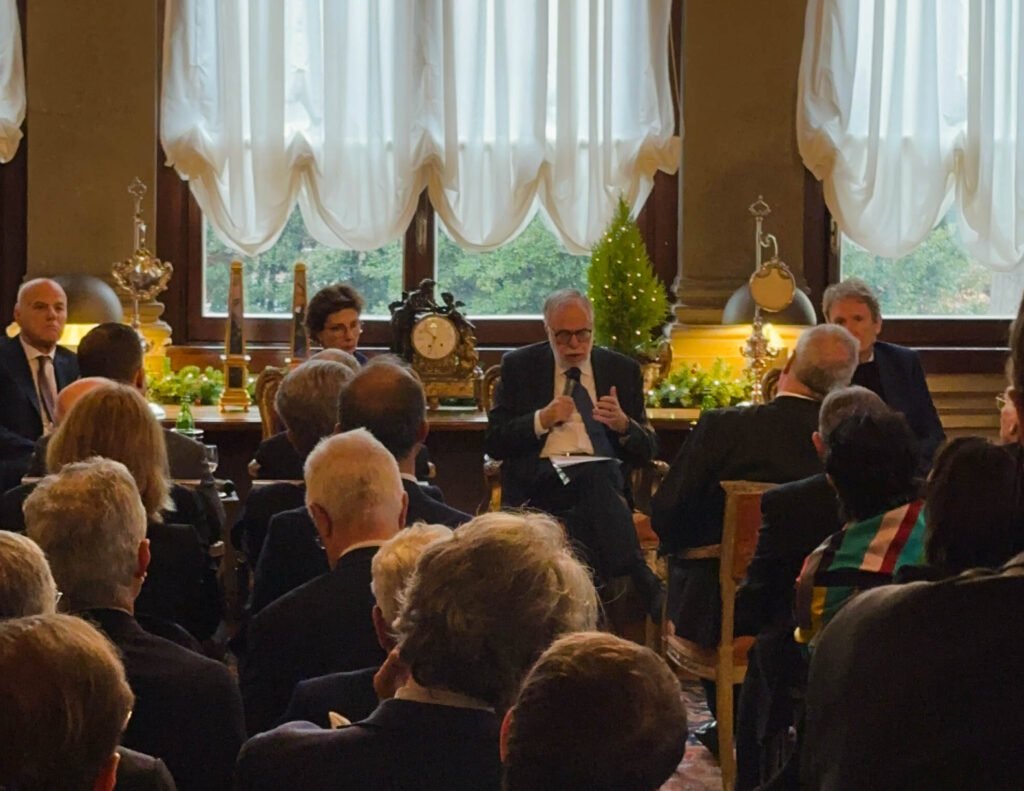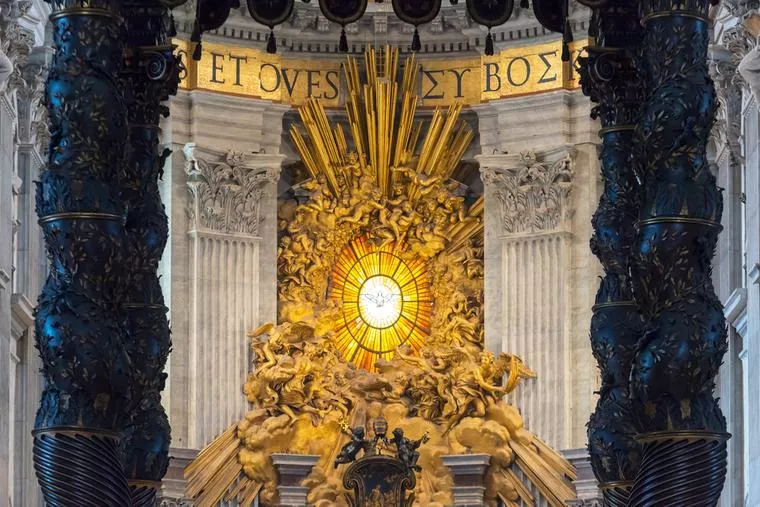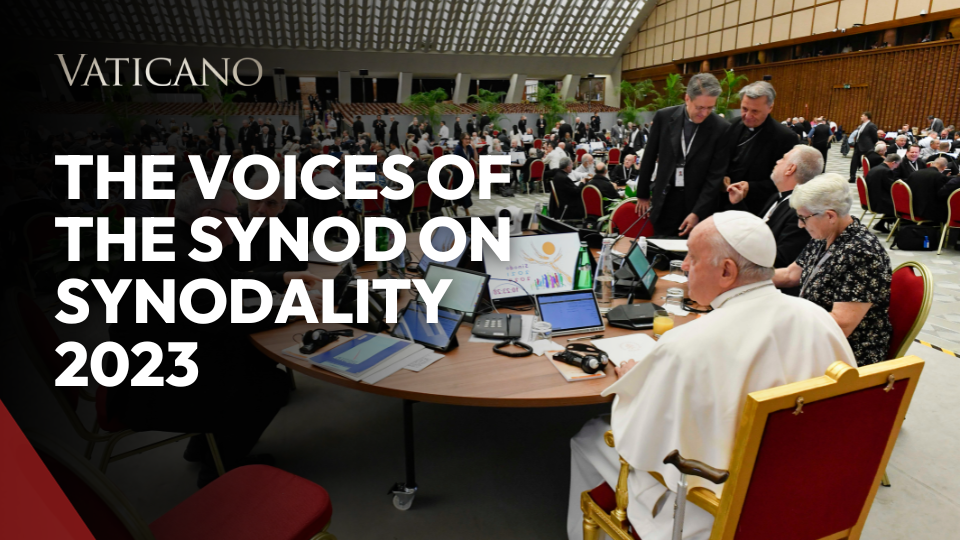
On the last Sunday in October, the four-week Synod came to an end with a Holy Mass celebrated in St. Peter’s Square. Throughout the course of October, more than 400 participants gathered at the Vatican to discuss the future of the Church in the context of the “Synod on Synodality” initiated by Pope Francis in 2021. This Synod will end in a year, with the next assembly in Rome taking place in October 2024.
Speaking about his experience of taking part at the Synod, Archbishop Timothy Broglio, the president of the United States Conference of Catholic Bishops, underlined the need in the future to encourage greater participation by the faithful everywhere.
He noted, “The participation in the two years leading up to the Synod less than 1% of the Catholics worldwide participated. So, I think one thing, going forward, we have to do is to encourage greater participation and invite people to really engage in this process of speaking and listening and praying together. I think that would be a source for the Church.”
Pope Francis repeatedly emphasized that the Holy Spirit was the “protagonist of this Synod.” The secretary general of the Nordic Bishops’ Conference, Sister Anna Mirijam Kaschner, in an interview with EWTN, bore witness to how the Holy Spirit actually played an essential role during the Synod.
She told EWTN, “The Holy Spirit was definitely palpable. Right from the beginning. Before the Synod, we made a 3-day retreat, and the fact that we prepared ourselves for the Synod in silence and prayer was very important.”
It was such a fruitful experience, she said, “We expressed the wish that we please do this again at the next Synod.” It was a transformative process for many participants in the Synod, “This concept of conversation in the Holy Spirit.” Sister believes the participants, “Many bishops, including lay people, experienced such a kind of communication for the first time. The Holy Spirit was really present. And that had an effect on the atmosphere in the Synod hall.”
Cardinal Michael Czerny, Prefect of the Dicastery for Promoting Integral Human Development, stressed that it is not the structures of the Church themselves that should be changed but how they are dealt with.
His Eminence related, “I think what we will discover is not what you might say, a new idea, but we will learn to live within those structures or to move with those structures or maybe even best to say that those structures will move with us in a synodal fashion and that this will allow those structures – which is a kind of a stiff or inflexible word – to be more simple and to be able to fulfill their purpose better.”
Among the other speakers at the briefings during the Synod was newly appointed Cardinal Robert Francis Prevost, prefect of the Dicastery for Bishops. When asked about the role of women in the Church and the controversial issue of women’s ordination, the Cardinal said: “Ordaining women, and there are some women who have said this enough: clericalizing women does not necessarily solve our problem. It might make a new problem. And that perhaps we need to look at a new understanding or different understanding of both leadership, power, authority, and service, above all service in the Church from different perspectives, and it can be, if you will, brought to the life of the Church by women and men.”
The synthesis report presented at the end of the Synod is 40 pages long. Following this document, the participants of the Synod will now try to take the next step. We find one such example in the German bishop Stefan Oster. He hopes, “We’ll get something like a guide because we have the average experience that 40 pages in a dense, content-rich subject probably won’t be read by that many people. That’s why I hope we’ll still get something more compact.”
But with his return to his diocese, he said, “I will tell with joy about the way we went and also try to implement the method here and there. I will try to tell enthusiastically how it was possible that completely different cultures and positions found each other.”
He has some doubts about how to implement the synodal process in the home context of his diocese, “This will not be easy,” he said, “In the Synod hall, we now talk enthusiastically about what we have experienced, but if you have not experienced it and now I go home and tell: Friends, that was all great, now let’s do it. I don’t know whether they also think it’s great and just go along with it.”
At the end of the Synod, the speech of Pope Francis was therefore eagerly awaited. But he was surprisingly brief and again emphasized that listening to the Holy Spirit is the most important thing. Thanking all participants with heartfelt gratitude, the Pope stressed again, “The protagonist of this Synod is the Holy Spirit.”
In this light, Bishop Oster speaks about what gives him hope, “Jesus Christ!” he said, “When I look at my Lord, I think to myself: for whom else should I go and live? I want to proclaim Him. I wouldn’t know what else to live for!”
[Adapted by Jacob Stein]