The Holy See Press Office reported on February 28 that Pope Francis has appointed Maximino Caballero Ledo as a new member of the Reserved Affairs Commission. But what exactly is this Commission responsible for?
The Vatican’s Reserved Affairs Commission was mentioned for the first time in legislation in Pope Francis’s motu proprio of June 1, 2020, regarding the awarding of public contracts from the Holy See and the Vatican City State.
It was in article 4.1 on transparency, control, and competition rules, where the need to create a control commission to supervise the contracts of the Holy See was specified.
A few months later, in October 2020, Pope Francis appointed the members of this Vatican office, created to control Vatican spending on specific and “sensitive” issues that affect above all the security of the Pope, the Holy See and the universal Church.
The delegation was conceived as an attempt by the Holy Father to promote the economic transparency of the Vatican and fight against corruption.
Its members are responsible for supervising the contracts written by the Secretary of State, especially those that include confidentiality clauses that guarantee the sovereignty and independence of the Holy See.
This Commission is chaired by Cardinal Kevin Farrell, Prefect of the Dicastery for the Laity, Family and Life; and its secretary is Mons. Filippo Iannone, prefect of the Dicastery for Legislative Texts of the Holy See.
Also, members of said Commission are Mons. Fernando Vérgez Alzaga, Secretary of the Interior of the Vatican, and Mons. Nunzio Galantino, president of the Administration of the Patrimony of the Apostolic See (APSA).
In the motu proprio of June 1, Pope Francis stressed that “the promotion of a concurrent and loyal contribution from economic operators, together with transparency and control of contract award procedures, will allow better management of resources that the Holy See administers to achieve the proper ends of the Church”.
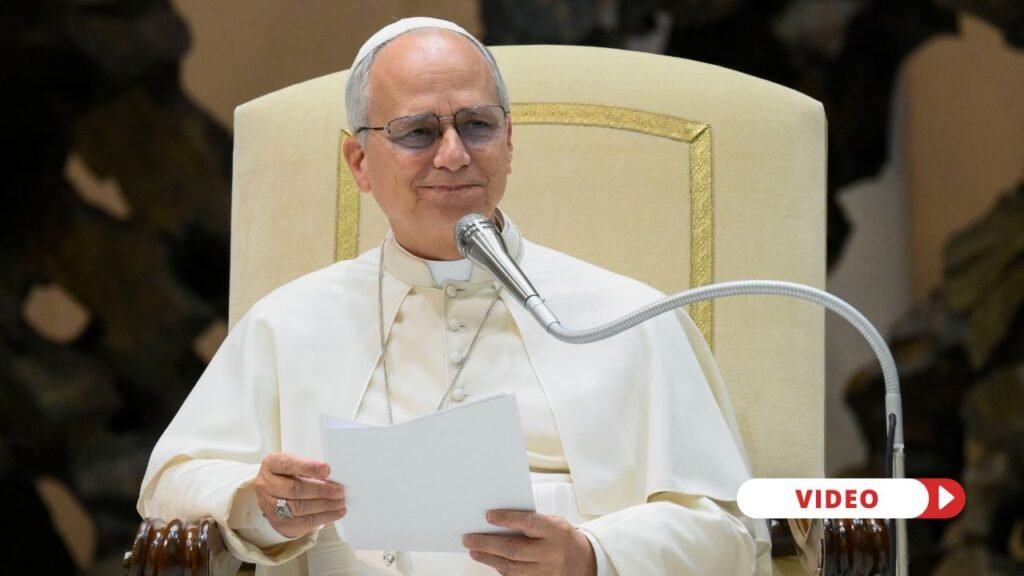
Its new member, Maximino Caballero Ledo, is the current prefect of the Secretariat for the Economy. He was born on December 21, 1959, in Mérida, Spain, and is married and has two children. He studied Economics and Business Administration at the Autonomous University of Madrid and a master’s in business administration at the IESE Business School in Barcelona.
Caballero Ledo replaces the Jesuit priest Juan Antonio Guerrero on the Commission, who was prefect of the Secretariat for Economic Affairs until November 2022, when he resigned for “personal reasons.”