ANALYSIS: 3 key features of Archbishop Rudelli’s appointment.
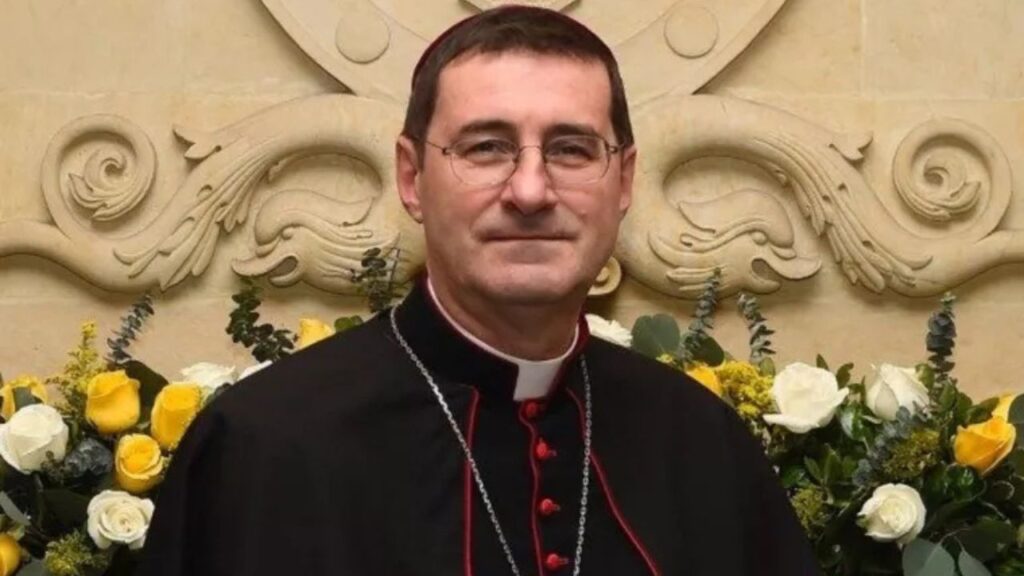
In the complex organizational structure of the Vatican Secretariat of State, recently appointed Archbishop Paolo Rudelli holds a key role. As sostituto, he is not merely the “chief of staff,” as the role is often described. He heads the first section of the Secretariat of State, dedicated to general affairs, which is the organizational machine for the entire Vatican apparatus. In a role that can be described as deputy to the secretary of state, Cardinal Pietro Parolin, his office is also responsible for managing the Pope’s “signature,” that is, responding to the many letters he receives.
It is such an important role that the sostituto has weekly “scheduled audiences” with the Pope, to whom he reports on general affairs and from whom he seeks approval for certain organizational decisions.
There was, therefore, much curiosity about who Leo XIV would choose as his replacement. Until now, he had inherited the sostituto chosen by Pope Francis, Archbishop Edgar Peña Parra. Last month, on March 30, in what has been the most impactful government decision of this pontificate so far, Leo XIV appointed Archbishop Rudelli to the position, returning Archbishop Peña Parra to his diplomatic career and appointing him nuncio to Italy.
Archbishop Rudelli was introduced to the Secretariat of State on April 8, a week after his appointment, when Cardinal Parolin gathered the staff of the Apostolic Palace to present the new No. 2. According to some members of the Secretariat of State, Archbishop Rudelli was very cordial with everyone: He introduced himself personally to each one, inquired about their work and the location of their office, and emphasized his willingness to remain together.
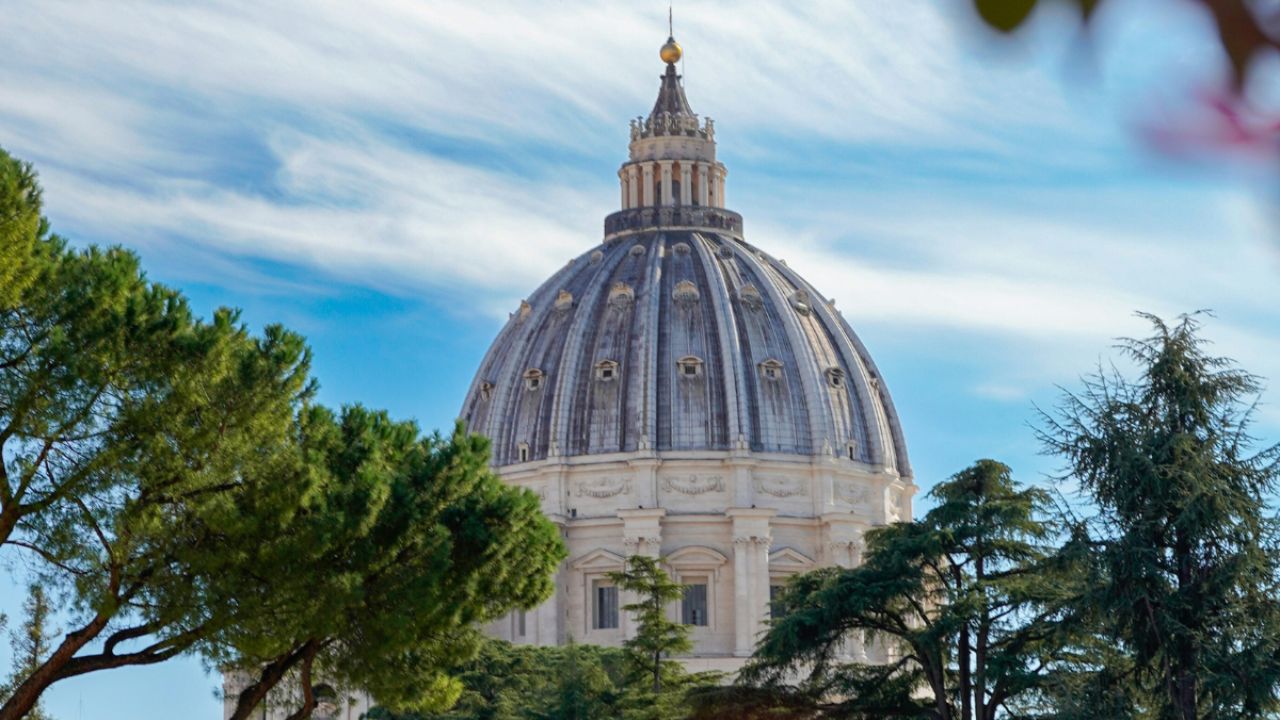
Then, he took up his office, and his choice already presented a novelty. Archbishop Rudelli, in fact, chose to use the office designed for the sostituto, located on the Third Loggia, that is, the third floor of the Vatican Apostolic Palace and home to the General Affairs Section of the Secretariat of State. Archbishop Peña Parra, during his time as substitute, had instead preferred an office in the Second Loggia, the second floor, where the Section for Relations With States is located. This decision isolated him from the staff and characterized him in his role as a diplomat “on loan” to manage general affairs.
The change wasn’t limited to his choice of office. Until now, ambassadors accredited to the Holy See presented a copy of their credentials to the substitute. This copy of the credentials “officialized” the status of “ambassador-designate,” pending the presentation of the credentials directly to the Pope. On April 10, however, the new Turkish ambassador to the Holy See, Fahrettin Altun, presented a copy of his credentials to Archbishop Paul Richard Gallagher, secretary for relations with states, i.e. the Vatican’s “foreign minister.” It was a first, but — sources at the Secretariat of State say — it will become a custom.
Archbishop Rudelli’s appointment also marks a decisive transition in the Vatican Secretariat of State, which will likely reorganize around the new appointee.
Who Is Archbishop Rudelli?
Archbishop Rudelli will turn 56 on July 16. He is relatively young for such a crucial position.
Born in 1970 in the Diocese of Bergamo, he was ordained a priest in 1995 and has served in the Holy See’s diplomatic service since 2001. He served at the papal representations in Ecuador (2001-2003) and Poland (2003-2006), as well as in the Section for General Affairs of the Holy See’s Secretariat of State.
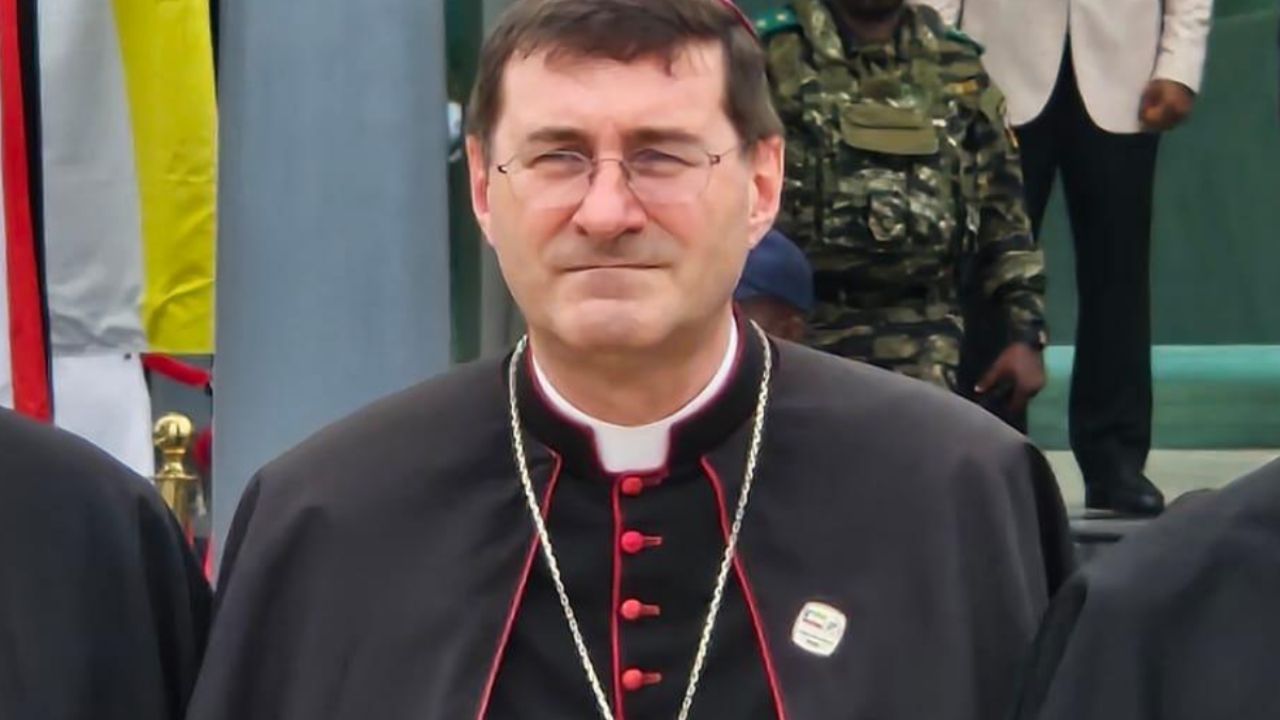
From September 2014 to 2019, he served as the Holy See’s permanent observer to the Council of Europe in Strasbourg. He also brought his extensive experience in family issues, to which he had dedicated his doctoral thesis, to the Council of Europe.
He was then apostolic nuncio to Zimbabwe from 2020 to 2023, and, since 2023, he has held the role of “Pope’s ambassador” to Colombia, a crucial post in which the Church has also been heavily involved in reaching a peace agreement between the government and paramilitary organizations.
Archbishop Rudelli brings his extensive diplomatic experience to this deputorial role, as well as a knowledge of the ins and outs of the Secretariat of State that he has developed over the years, alongside leading figures such as Archbishop Alain Lebeaupin (who died in 2021 after a life spent in the diplomatic ranks), and as secretary to Leonardo Sandri, now a retired cardinal and sostituto from 2000 to 2007.
The role of sostituto is relatively recent. Since 1831, when the position was established, 21 officials have held the position. While it is not a diplomatic position, the leadership has generally been chosen from diplomatic staff, acting as liaisons between the First and Second Sections of the Secretariat of State and — since 2017 — also with the Third Section, dedicated to the pontifical representations (i.e., nunciatures).
We are talking about highly technical data that is crucial for a complex organization like the Holy See.
Archbishop Rudelli’s appointment has at least three key features.
First, he appears to be the profile favored by Leo XIV. So far, Leo XIV has appointed to key positions people who are distinguished above all by their hard work but who are difficult to pin down ideologically and disinclined to take center stage: from Archbishop Filippo Iannone as prefect of the Dicastery for Bishops to Archbishop Anthony Randazzo as prefect of the Dicastery for Legislative Texts, to Archbishop Carlo Maria Redaelli, chosen by the Pope as secretary of the Dicastery for the Clergy.
Second, although relatively young, Archbishop Rudelli is a bridge between the “old” Secretariat of State (the organization that preceded the Curia reform initiated by Pope Francis) and the “new” Secretariat of State. His experience, combined with his ability to resolve potential conflicts, will be crucial to harmonizing and finalizing the reform without significant disruption.
Third, he is a highly regarded diplomat, and his appointment also demonstrates that Cardinal Parolin still has significant influence on decisions and enjoys the trust of Leo XIV.
The combination of an Italian secretary of state and an Italian deputy might be considered excessive, but it is not new in the history of the Church. Only recently have there been the tandem of Cardinal Tarcisio Bertone as secretary of state and Fernando Filoni (later a cardinal and prefect of the then-Congregation for the Evangelization of Peoples) as deputy, and then Cardinal Bertone and Angelo Becciu (later a cardinal) in the same role, until the Parolin-Becciu partnership lasted until 2017.
The new replacement is therefore called upon to take on a delicate role, but within a stronger Secretariat of State, one that enjoys the Pope’s trust and with greater room for maneuver. The reform of the Curia will likely be finalized, and there will be other changes within the Secretariat of State. We are likely facing a process of institutional harmonization and strengthening that will last five years, and Archbishop Rudelli is the person chosen to help the Secretariat of State complete it.
This article was originally published on National Catholic Register.