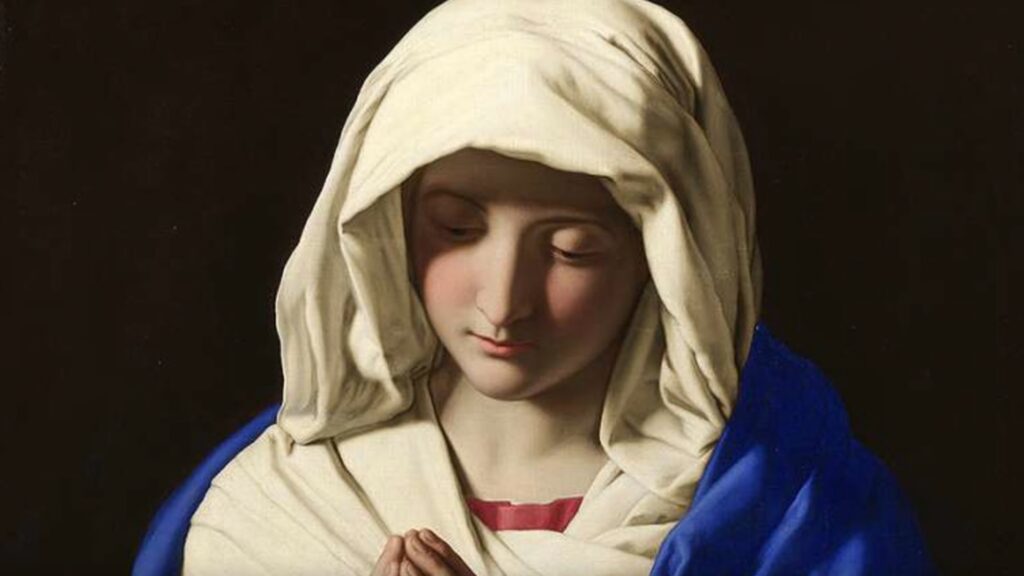
The Catholic Church celebrates the Memorial of the Blessed Virgin Mary, Mother of the Church each year on the Monday after Pentecost. This year, it falls on May 25.
In 2018, Pope Francis added the memorial of the Blessed Virgin Mary, Mother of the Church, to the Roman calendar. This memorial is celebrated each year on the Monday after Pentecost. This year it will be celebrated on May 25.
In the decree on the celebration, the then-head of the Congregation for Divine Worship and the Discipline of the Sacraments, Cardinal Robert Sarah, wrote that the intention for the memorial was to help the faithful “remember that growth in the Christian life must be anchored to the mystery of the cross, to the oblation of Christ in the Eucharistic banquet, and to the mother of the redeemer and mother of the redeemed, the virgin who makes her offering to God.”
While this memorial honoring the Blessed Mother as the mother of the Church is relatively new, Mary’s title as mother of the Church has been associated with her for centuries.
The theological foundation for the title is often traced to the Gospel of John. As Jesus hangs on the cross, he says to his mother: “Woman, behold your son,” and to the apostle John: “Behold your mother.” Catholic tradition has long interpreted that moment as John representing all disciples, making Mary the spiritual mother of the entire Christian community.
The 2018 decree highlights this moment as well. It reads: “Indeed, the mother standing beneath the cross (cf. Jn 19:25) accepted her son’s testament of love and welcomed all people in the person of the beloved disciple as sons and daughters to be reborn unto life eternal. She thus became the tender mother of the Church, which Christ begot on the cross handing on the Spirit. Christ, in turn, in the beloved disciple, chose all disciples as ministers of his love towards his mother, entrusting her to them so that they might welcome her with filial affection.”
Over the centuries, Marian devotion expanded through prayers, feast days, art, and theology, but the specific title “mother of the Church” gained wider prominence during the 20th century.
During the Second Vatican Council, bishops debated how Mary should be presented within modern Church teaching. Some argued for a separate document dedicated entirely to Mary, while others believed she should be discussed within the Church’s broader mission and identity.
In 1964, Pope Paul VI formally proclaimed Mary as “mater Ecclesiae” — “mother of the Church” — calling her “mother of all the faithful and pastors.”
It was also added to the Roman Missal after the holy year of reconciliation in 1975. Subsequently, some countries, dioceses, and religious families were granted permission by the Holy See to add this celebration to their particular calendars. With its addition to the General Roman Calendar, it is now celebrated by the whole Roman Catholic Church.
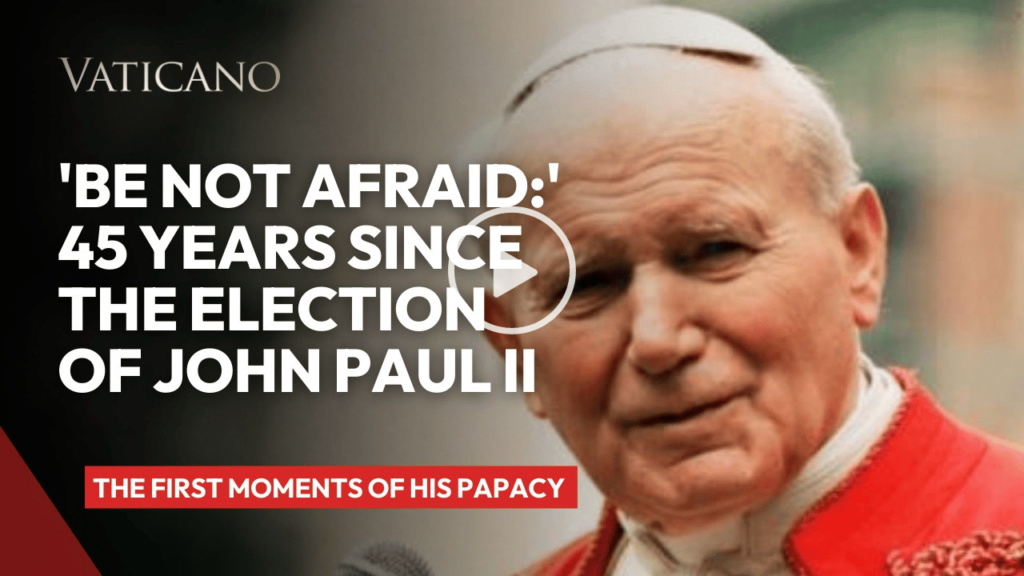
Pope John Paul II strongly championed this Marian title and had a deep devotion to “mater Ecclesiae.” The pope’s papal motto was “Totus tuus” (“Totally yours”) and signified his total consecration to Jesus through Mary.
During his papacy he also had a mosaic commissioned facing St. Peter’s Square titled “Mater Ecclesiae.” This mosaic was done after the pope’s survival of a 1981 assassination attempt in which John Paul II credited Mary with saving his life, and he dedicated his pontificate to her protection.
John Paul II also wrote extensively about the Blessed Mother’s role in guiding the faithful, most notably in his 1987 encyclical Redemptoris Mater, which explores Mary’s participation in the plan of salvation, the mother of God being at the center of the pilgrim Church, and examines Mary’s role as intercessor and spiritual mother.
With this in mind, the memorial aims to “encourage the growth of the maternal sense of the Church in the pastors, religious, and faithful, as well as a growth of genuine Marian piety.”
This article was originally published by EWTN News English.