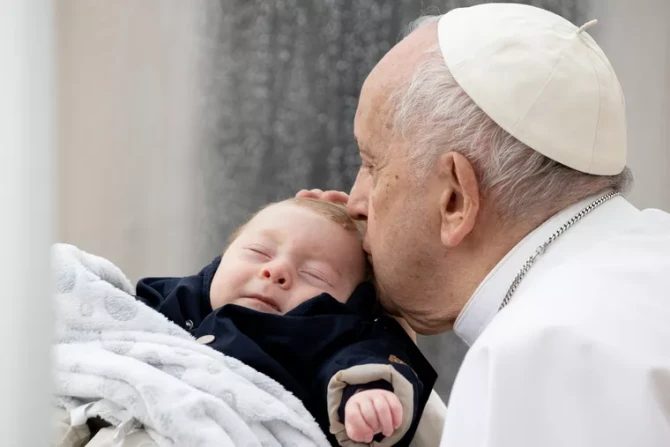
Pope Francis died on April 21 at the age of 88. As Catholics around the world mourn his passing, a highly regulated process has now begun that will see the pope’s earthly body laid to rest and a conclave convened to elect his successor.
As of this moment, the chair of St. Peter is vacant — and you may have seen the phrases “sede vacante” and “interregnum” being used to describe the present period. Here’s a breakdown of what those phrases mean.
SIGN UP FOR OUR NEWSLETTER HERE
What does the phrase ‘sede vacante’ mean?
“Sede vacante” is Latin for “the see being vacant,” indicating the period when a pope has died or resigned and a successor has not yet been chosen.
Sede vacante begins at the moment a pope dies or resigns and concludes when his successor accepts his election as pope. The College of Cardinals is entrusted with governing the Church during the sede vacante, but only for ordinary business and matters that cannot be postponed.
The phrase doesn’t only apply to the office of the papacy — if a bishop who is the ordinary of a diocese dies or is removed from his post by the pope, the episcopal see is “sede vacante” until a successor is appointed.
It’s worth noting that the phrase “sede vacante” has also gained usage among some Catholics who erroneously believe that the chair of St. Peter has been empty, with no legitimate pope, for decades. Adherents to this view are known as “sedevacantists” and are, under canon law, in schism because they reject the pope’s authority.
What is the ‘interregnum’?
“Interregnum” is a Latin word meaning “between the reigns” and can refer to the period between the reigns of any two rulers. In the case of the papacy, it refers to the period between the day of the death or resignation of one pope (which is counted as the first day of interregnum) and the election of his successor.
In papal documents, most notably Universi Dominici Gregis, issued by Pope John Paul II in 1996, the interregnum is referred to as the “vacancy of the Apostolic See.”
Three distinct phases take place during a papal interregnum:
1. The Nine Days of Mourning (Novendiales)
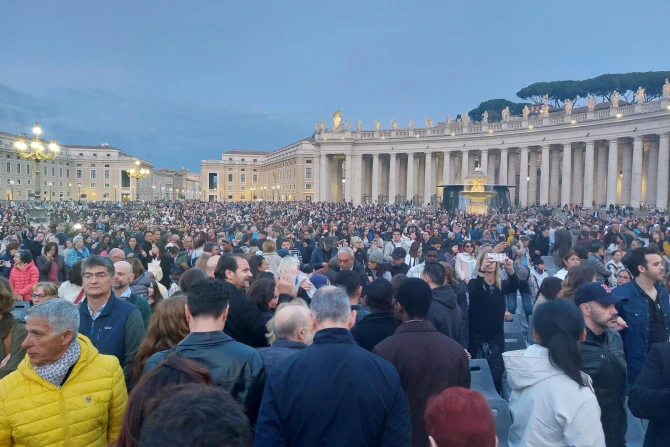
The pope’s body is currently lying in state in St. Peter’s Basilica, permitting the faithful to pay their respects. Between the fourth and sixth day after the pope’s death, a solemn funeral for the pope is celebrated in St. Peter’s Basilica by the dean of the College of Cardinals, with the other cardinals. (Obviously, this is not done in the case of a papal resignation.)
The College of Cardinals declares an official mourning period of nine days, called the “Novendiales,” typically beginning on the day of the pope’s funeral. On each of the nine days a different cardinal or Church official celebrates a public funeral rite for the Holy Father, following the Ordo Exsequiarum Romani Pontificis (2024).
Pope Francis had said that when he dies, he will be buried at the Basilica of St. Mary Major, and not — as has been the custom of popes for over a century — at the Vatican.
2. The preparation for the conclave
Preparations for the conclave to elect the new pope are begun after the papal funeral. Normally, the day on which the conclave begins is to be the 15th day after the death of a pope, the 16th day of the interregnum.
The College of Cardinals was given the faculty under Universi Dominici Gregis to defer its beginning “for serious reasons” up to the 20th day after death (21st day of the vacancy). However, under changes made by Pope Benedict XVI, the College of Cardinals is granted the faculty to start the conclave early if “it is clear that all the cardinal electors are present; they can also defer, for serious reasons, the beginning of the election for a few days more.”
3. The conclave
The conclave itself takes place in the Vatican’s Sistine Chapel under strict oath of secrecy; all of the cardinals are under penalty of automatic excommunication if they break the oath.
This article was originally published on Catholic News Agency.