“I believe in one God…” — just a few words that, for two thousand years, have shaped the faith of billions of people. But what does it really mean to recite the Creed? And how did it begin?
The Creed Christians recite every Sunday is not a random text. It was forged in the life of the first Christian communities and stood at the center of the earliest disputes about the faith. By the second century, those preparing for baptism were already professing a simple Trinitarian formula: “I believe in the Father, the Son and the Holy Spirit.”
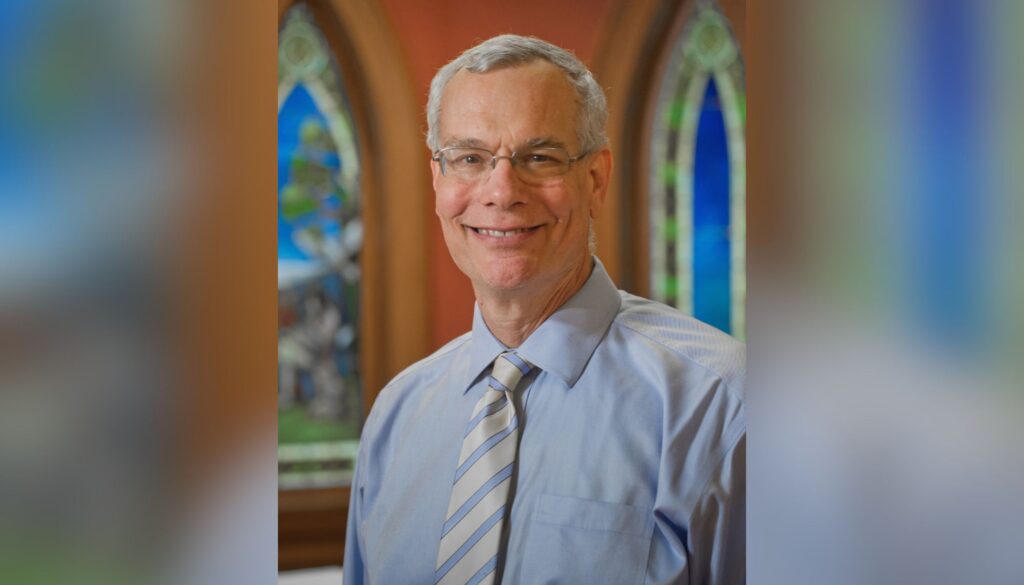
Here in Rome, at the Pontifical University of the Holy Cross, Giulio Maspero — curator of the exhibition “Light from Light: Nicaea 1700 Years Later” — explains the origins of this symbol of faith.
“The Apostles’ Creed is Roman in origin. In the early Church, every local church had its own creed: there was one in Caesarea, one in Alexandria, and so on… But over time, depending on the history and the sensitivity of each local church, certain elements were added or especially emphasized.”
For Rome, simplicity was essential. Their Creed is relatively short, while “The Greek world, on the other hand, is more intellectual, more rich in its expression.”
“… These differences between the local churches could create tensions. So while the Apostles’ Creed worked very well in Rome, tensions arose between the way the faith was handed on in Alexandria and the way it was done in Caesarea. From there a small conflict emerged, which led to the Creed of Nicaea, formulated to heal this conflict, and later to the Creed of Constantinople. That is the creed we still recite at Mass on Sundays—at least in the Latin tradition: the Nicene Creed, enriched with further elements, especially concerning the Holy Spirit.”
The Council of Nicaea, held in 325 A.D. in what is now modern-day Turkey, was the first ecumenical council of Christianity. There the bishops gathered to define, in one solemn profession, what Christians believe — the prayer known today as the Creed. But its roots reach back to Rome.
Tradition holds that in 324, on the eve of the Council, the Nicene faith was first proclaimed in Rome as part of the Church’s preparation for the gathering. That proclamation is remembered in the ancient chapel beneath the Basilica of San Martino ai Monti, where a medieval fresco commemorates the Council of Nicaea, the proclamation of the Creed, and the Church’s victory over Arianism, reaffirming the full divinity of Christ.
Built over an early Christian house-church and dedicated to Saint Martin of Tours, the basilica has been closely connected to the Roman presbyters who defended the Nicene faith through the turbulent centuries that followed.
Fr. Maspero explains that the council’s central teaching is that the Son is homoousios, one with the Father. “The meaning of this term cannot be separated from the reference to the Father. It’s not just ‘being the same thing’ in a generic way, as you might say of a chocolate bar: if you break off a piece, philosophically it’s of the same substance as the rest.
“But here it’s not about parts. The Father is Father, and so when the Father gives being to the Son, precisely because he is Father, he doesn’t give him just something – he gives him his whole self. This means that behind this expression, which is at the heart of the Creed, ‘consubstantial with the Father,’ there is the reality of a gift.”
In 381, at Constantinople, the Creed was expanded, giving rise to the Nicene-Constantinopolitan Creed still used in the liturgy today. It is not a theological treatise, but a profession of faith set against doctrinal deviations.
Fr. Maspero continues:
“Once they had, so to speak, resolved the question of the relationship between the Father and the Son, the question of the Holy Spirit arose. Because a son always has the same nature as the father: a horse begets a horse, a man begets a man, so God begets God.”
Still, the Spirit is not begotten, “so he is not the Son. Scripture is very clear on this. So who is the Spirit, then? In a certain sense, some heretics had begun to make the Holy Spirit play the role that Arius had once assigned to the Son: a kind of intermediary between God and the world. At Constantinople in 381, thanks above all to the Cappadocian Fathers – Basil, Gregory of Nyssa and Gregory of Nazianzus – the Church was able to state clearly that the Holy Spirit is God: he is not created, he is of the same reality, but not in the sense of being begotten. We say that he ‘proceeds,’ that he has his origin from.”
In the Middle Ages, the Creed underwent further development with the addition of the Filioque — “and from the Son” — a Western clarification about the Holy Spirit that would later contribute to the Great Schism of 1054.
Fr. Maspero explains the linguistic roots of the issue:
“Greek has the definite article; Latin doesn’t. It may sound like a small detail, but one of the first ways Greek theology expressed that the Son is God but not the Father was precisely this: they placed the definite article on theos — on the word ‘God’ — when referring to the Father, and left it out when referring to the Son.”
These differences are tied to language and tradition. “To make it clear in the Latin world that the Son is truly God, they stressed his role in the procession of the Holy Spirit.
Up to a certain point — let’s say until the ninth century — this was not really a problem. The Greek Fathers knew that the Latins expressed it this way, and they were in full communion. All of the first seven ecumenical councils were aware of this difference, which was not a difference in substance, but in expression.”
However, this co-existence did not last forever, as “at a certain point the Franks – Charlemagne and his theologians – partly for political reasons and partly out of ignorance, because Greek and Latin were no longer known at the respective imperial courts, began to think that the Greeks had removed the Filioque.”
This misunderstanding was considered “absurd, because to use Filioque in Greek – to say that the Holy Spirit proceeds from the Father and the Son – would be a grave heresy. It would mean that the Spirit comes from two different principles, which nobody has ever intended to say.”
Ultimately, Fr. Maspero explains, “it’s a deeply linguistic problem, even though the Latins did have their own reasons for using the formula, since in the Latin language and tradition it helped to highlight the Son’s role.”
Ilaria Vigorelli, co-curator of “Light from Light,” reflects on the meaning of Nicaea, which she understands to be a response to these anxieties.
“The faith of the Fathers was the faith of those who discovered that God does not exist without the Son — that God is Father, He doesn’t just act as a father. And this being originally, from the very beginning, Father seemed to us the key for speaking to contemporary men and women about hope, about boldness, about the possibility of forgiveness. Precisely because the Father is the One who gives life, and always gives life — He gives only life.”
Vigorelli notes “Light from Light means that God never stops illuminating the world; God never ceases to give Himself to humanity, even when humanity ignores Him, rejects Him, or keeps its distance. And yet this light is not scattered, it does not grow dim, precisely because the Son is Light from Light and has the same capital ‘L’ as the Father.”
For many, the Creed is a formula repeated automatically. Yet it remains a performative act: saying “I believe” is a lready an act of faith. In a secularized world, it continues to stand as a counterweight to relativism: “It’s not my truth — it’s the Truth that comes before me.”
Adapted by Jacob Stein. Produced by Alexey Gotovskiy; Camera by Sergio Natoli; Video edited by Giada D’Ottavi