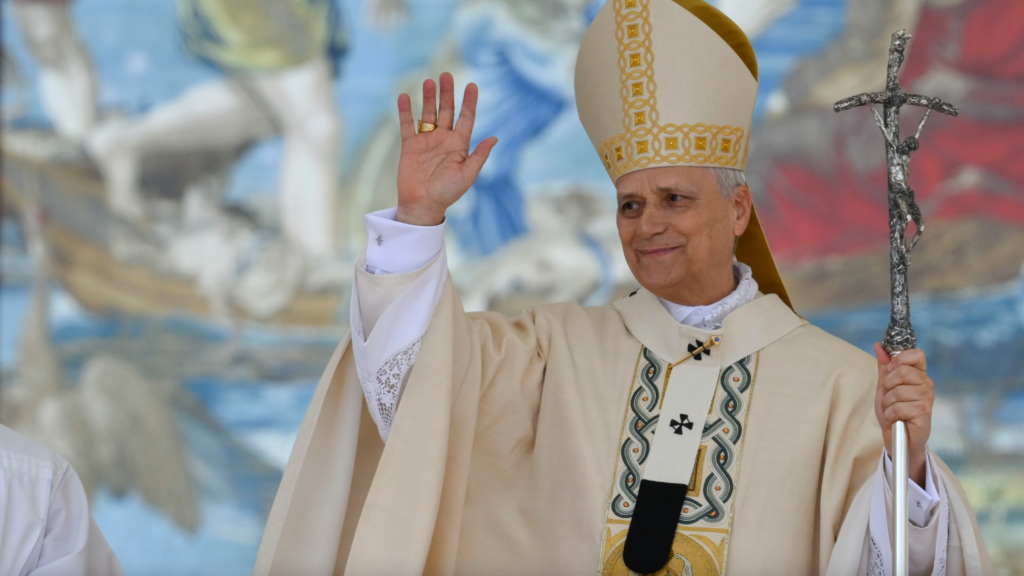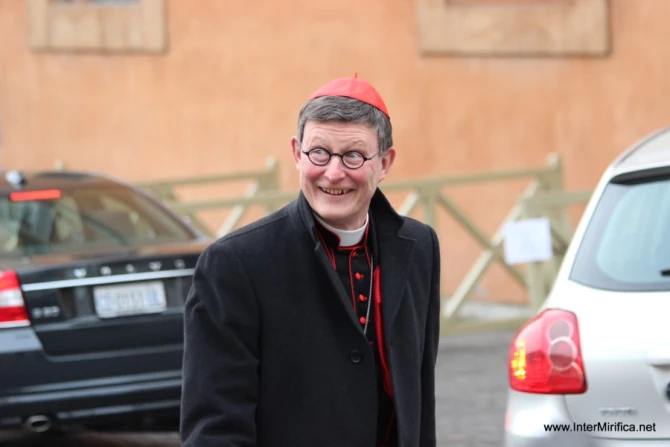
Cardinal Rainer Maria Woelki has candidly confessed he “didn’t expect” the election of Pope Leo XIV, praising the new pontiff’s “warmth and humanity” while expressing hope for theological clarity concerning synodality.
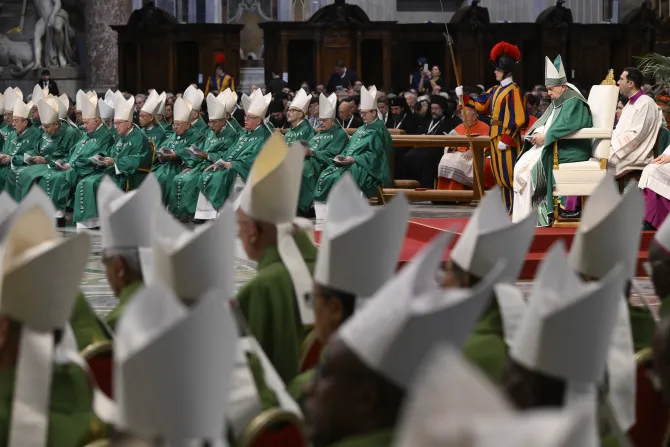
Speaking to EWTN News after attending the new pope’s first Mass in the Sistine Chapel on Friday, the German cardinal reflected on the conclave process that yielded the Church’s 267th pope.
“I entered the conclave with all the different speculations that one could perceive in the media,” Woelki acknowledged. “But it’s usually the case that on the first evening, at the first vote, certain trends become visible — whether others have also discerned in prayer that this or that candidate might be the one called by the Lord. And that’s how it turned out with regard to the current Holy Father.”
The archbishop of Cologne expressed particular appreciation for the papal name choice, connecting it to previous pontiffs who addressed social challenges.
“I think it’s wonderful that he chose this particular name, which besides Leo the Great — who naturally has special significance for Rome — also recalls Leo XIII with Rerum Novarum and its tremendous impact,” Woelki said. “And I think, given the divisions in the world, including the social divisions we face, we depend on the pope’s voice. Just as we once relied on Leo XIII, today we rely on Leo XIV.”
Woelki, who has faced controversies in his German archdiocese in recent years, highlighted qualities he finds reassuring in the new pontiff.
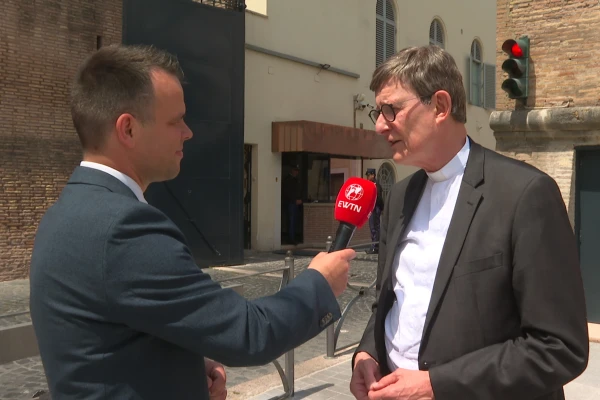
“What I associate most with Pope Leo is his approachability, his humanity,” the cardinal stated. “He radiates security. That is, I believe, something that is important and beneficial here in the Vatican and in this universe.”
Profound problems persist both globally and within the Church that will require papal attention, Woelki observed. Among these challenges, he emphasized theological questions surrounding the concept of synodality as developed during the previous pontificate.
“Major issues naturally include preserving the Church’s unity in Faith,” the cardinal explained. “Additionally, what Francis initiated must now be organized by him [Leo XIV] and theologically deepened, especially what Francis repeatedly understood as synodality — where particularly in Germany, but I believe also in other parts of the world, there remains considerable uncertainty about what synodality theologically really means for us.”
The Cologne cardinal also pointed to numerous international conflicts requiring papal leadership.
“Of course, there are the major crisis areas in the world,” Woelki added, “from the Holy Land to Ukraine. In this context, the pope has an important voice regarding peace, social justice, and where people are being exploited.”
Pope Leo XIV, formerly Cardinal Robert Francis Prevost from the United States, was elected on May 8, becoming the first U.S.-born pontiff in the Church’s history.
This story was first published by CNA Deutsch by Martin Bürger, CNA’s German-language news partner. It has been translated and adapted by CNA.