Skip to content

From portable throne to electric vehicle: Evolution of papal transportation

From a portable throne carried on the shoulders of attendants to state-of-the-art electric cars, the pope’s means of transportation have evolved considerably over time, reflecting changes in the Church, technology, and the world.

From a portable throne carried on the shoulders of attendants to state-of-the-art electric cars, the pope’s means of transportation have evolved considerably over time, reflecting changes in the Church, technology, and the world.

SIGN UP FOR OUR NEWSLETTER HERE

For centuries, pontiffs used the “sedia gestatoria” (Italian for “portable chair”), a type of ceremonial throne used for solemn events adorned with feathered fans and carried by men during solemn ceremonies. The last to use a gestatory chair was John Paul I.
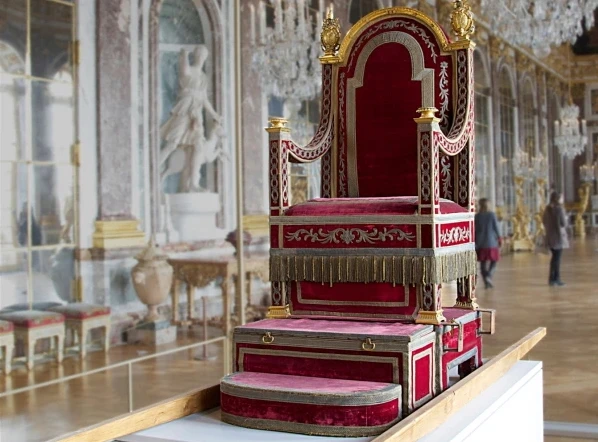
The sedia gestatoria (portable chair) of Pope Pius VII (1800-1823). Credit: Jebulon, CC BY-SA 3.0, via Wikimedia Commons

For longer journeys, the popes used horse-drawn carriages.

The oldest recorded carriage, according to the Vatican Museums website, is the Grand Gala Berliner, built in 1826 for Pope Leo XII. This carriage was crowned by a canopy decorated with a dove, representing the Holy Spirit.

The Vatican Museums houses at least five more carriages in its Coach Pavilion, including the Pontifical Landau, which could be opened to allow the pope to greet the faithful during his tours. It was used by Leo XIII and Pius XI.
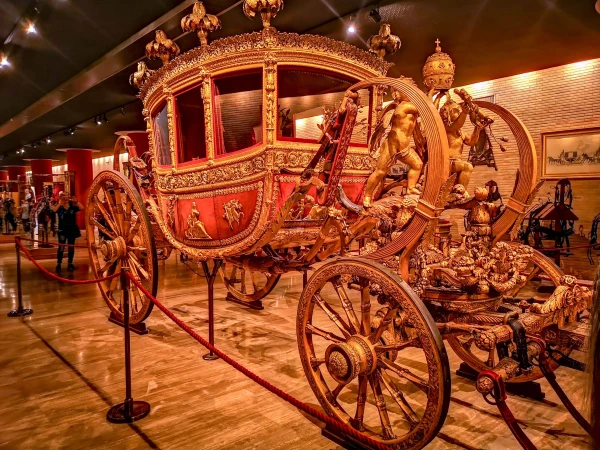
The “Gran Gala Berlin” (1826-1841) - a papal carriage used by Leo XII and Gregory XVI. Credit: Biser Todorov, CC BY 4.0, via Wikimedia Commons
The “Gran Gala Berlin” (1826-1841) – a papal carriage used by Leo XII and Gregory XVI. Credit: Biser Todorov, CC BY 4.0, via Wikimedia Commons

The great epochal change came in 1929 with Pius XI, the first pontiff to use an automobile. That same year, after the signing of the Lateran Pacts — which gave rise to Vatican City State — the pope received as a gift an American Graham-Paige 837, whose interior seat resembles the Holy Father’s throne.

This was considered a historic vehicle, as it was the first to leave Vatican City since the fall of Rome in 1870. Years later, Pope Pius XII used the same car to personally travel to Rome’s San Lorenzo neighborhood after the American bombing of July 19, 1943.
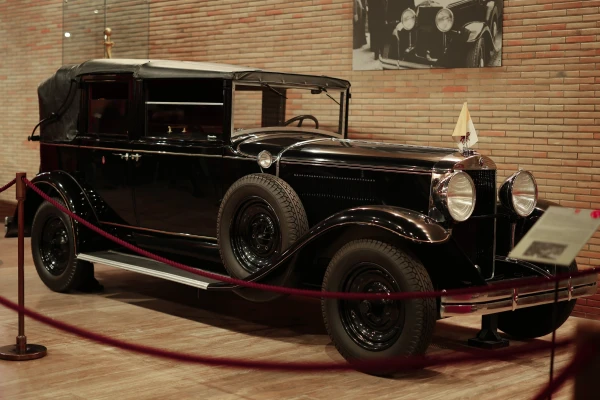
In 1929, the pope received this American Graham-Paige 837 as a gift. Credit: Fabrizio Garrisi, CC0, via Wikimedia Commons

In the following decades, papal vehicles continued to be modernized. In 1975, on the occasion of the jubilee, Paul VI commissioned an open-top car to greet the faithful in St. Peter’s Square.

This style was also adopted by John Paul II, during whose pontificate the term “popemobile” became popular. One of the most iconic was the Fiat Campagnola, in which the pope was shot during the 1981 assassination attempt. From then on, designs were outfitted with bulletproof glass and reinforced security.

Fiat "Campagnola" popemobile, the vehicle Pope John Paul II was using when he was the target of an assassination attempt on May 13, 1981. Credit: Livioandronico2013, CC BY-SA 4.0, via Wikimedia Commons
Fiat “Campagnola” popemobile, the vehicle Pope John Paul II was using when he was the target of an assassination attempt on May 13, 1981. Credit: Livioandronico2013, CC BY-SA 4.0, via Wikimedia Commons

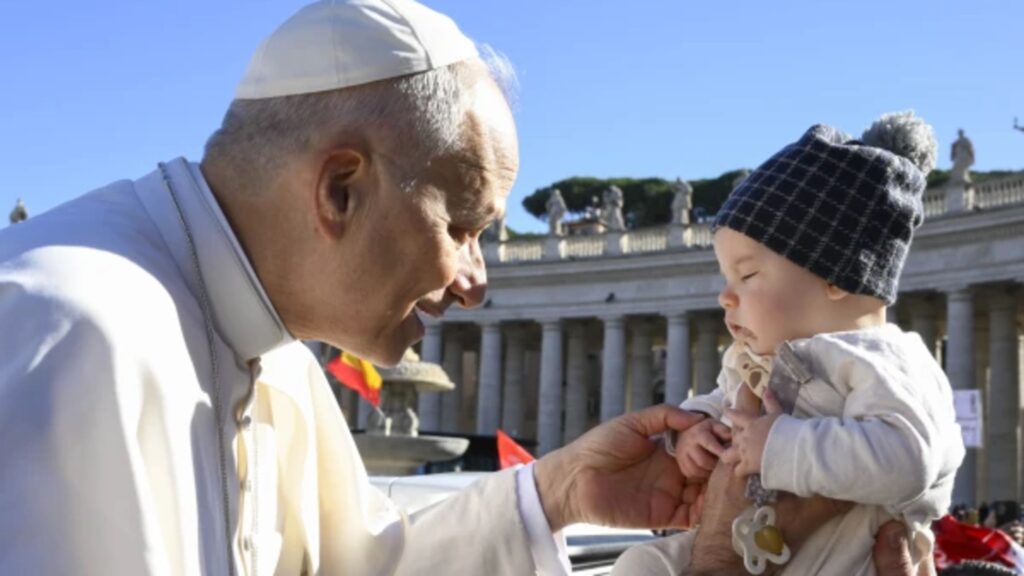
The same style of automobiles continued with Pope Francis, except that he rejected armored cars for most of his trips involving large crowds of the faithful.

Toward the end of his pontificate, the use of electric cars was promoted, both for his personal transportation and for the Vatican’s vehicle fleet.

Pope Francis is shown the new popemobile, an electric Mercedes, on Dec. 4, 2024, at the Vatican. Credit: Vatican Media

Donated vehicles 

Over time, the Vatican has also received vehicles as gifts, such as the Ferrari Enzo donated to the pope himself, who decided to auction it off and allocate the funds to the victims of the tsunami in Southeast Asia.

Similarly, in November 2017, Pope Francis received a white Lamborghini Huracán, which was auctioned six months later for $950,000. Part of this money was used to help with reconstruction in the Nineveh Plains of Iraq.

Pope Francis also requested that one of his vehicles be transformed by Caritas Jerusalem into a mobile medical unit to provide health care to children in the Gaza Strip.

This story was first published by ACI Prensa, CNA’s Spanish-language news partner. It has been translated and adapted by CNA.

LIVE UPDATES: Pope Leo XIV’s first days 

Receive the most important news from EWTN Vatican via WhatsApp. It has become increasingly difficult to see Catholic news on social media. Subscribe to our free channel today

Share

Would you like to receive the latest updates on the Pope and the Vatican

Receive articles and updates from our EWTN Newsletter.

More news related to this article

Vatican’s Jubilee of Artists: How Art and Faith Shape Culture

The Jubilee of Artists and World of Culture kicked off with an international conference at the Vatican Museums to discuss the transmission of religious and artistic heritage.

‘Peace is possible,’ Pope Leo XIV says after visits to Turkey and Lebanon

Pope Leo XIV on Sunday said his apostolic journey to Turkey and Lebanon showed that “peace is possible,”

Pope Francis says ‘no to war,’ urges climate action in livestreamed chat with Bill Clinton

In a conversation with former President Bill Clinton, Pope Francis advocated for climate action, diplomacy over war, improved child healthcare access, and addressed migrant and refugee crises.

This is Pope Leo XIV’s prayer intention for the month of August

Pope Leo XIV’s prayer intention for the month of August is for mutual coexistence.

Pope Francis’ Letter to Nicaraguan Catholics is ‘Balm for our Spirit,’ Exiles Say

Catholics exiled from Nicaragua are expressing their gratitude for the recent letter of encouragement Pope Francis sent to the persecuted Church in the Central American country. 

Igniting Faith: The National Eucharistic Congress in the United States

Join the historic National Eucharistic Congress, a pivotal event in the US bishops’ three-year revival, dedicated to restoring

LIVE
FROM THE VATICAN

Be present live on EWTNVatican.com