The Vatican’s synod office has said that final reports from Synod on Synodality study groups — including opinions on women deacons and controversial doctrinal issues such as LGBT inclusion — have been postponed until the end of the year.
SIGN UP FOR OUR NEWSLETTER HERE
The study groups, formed by Pope Francis to examine topics he took off the table for discussion at the second session of the Synod on Synodality, held in October 2024, will have until Dec. 31 to submit their final results — a six-month extension of the original mandate of June 30, according to the Secretariat of the Synod.
In the meantime, synod leadership will publish brief interim reports from the study groups in July.
A spokesman for the synod secretariat told CNA that most of the 10 commissions had requested more time to complete their reports following delays due to Pope Francis’ death and the “sede vacante.” In June, they received a green light from Pope Leo XIV to proceed.
The study commissions are made up of cardinals, bishops, priests, and lay experts from both in and outside of the Vatican.
The 10 study groups were formed at Pope Francis’ request in February 2024 on themes discussed in October 2023 during the first session of the Synod on Synodality. In his letter requesting the study groups, the pope said these issues “require in-depth study,” for which there would not be time during the second session in 2024.
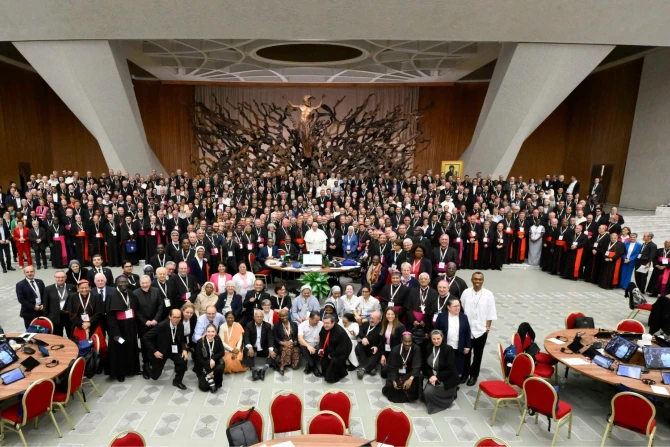
Francis’ decision effectively moved discussion of the synodal assembly’s most controversial topics — such as women deacons and LGBT inclusion — from the 200-plus synod participants and to small expert panels.
One of the most highly-watched study groups is on ministries in the Church, specifically the question of a female diaconate. This group, whose members have not been published, is under the direction of the Dicastery for the Doctrine of the Faith.
According to the Secretariat of the Synod last year, this “is the context in which the question on the possible access of women to the diaconate can be appropriately posed.”
Another group was tasked with addressing pastoral approaches to ethical and anthropological topics that were not publicly specified.
The role of the groups is consultative. Pope Leo may use the final reports to make decisions for the Church about the topics addressed.
The synod secretariat, which is responsible for coordinating the work of the study groups, on Monday published the text, “Pathways for the Implementation Phase of the Synod.”
The booklet, addressed to diocesan bishops and local synod teams, said Pope Leo has added study groups on two topics — “the liturgy in a synodal perspective” and “the statute of episcopal conferences, ecclesial assemblies, and particular councils” — to the existing groups.
The document did not say if the two additional study groups will need to produce reports and by when, and a spokesman for the secretariat said he did not think they would be providing reports by the same Dec. 31 deadline.
“It is also the secretariat’s responsibility to ensure that the pope’s decisions, developed also on the basis of the findings of these groups, will then be harmoniously integrated into the ongoing synodal journey,” the document says.
The document, intended as guidelines for bishops to implement synodality in their dioceses, also outlines what can be expected during the synod’s next phase, which will culminate with a Church assembly in October 2028.
According to synod leaders, the period from June 2025 to December 2026 will be dedicated to “implementation paths” of synodality in local Churches and groupings of Churches.
In 2027, the synod secretariat will organize diocesan-based and then national-based evaluation assemblies before holding continental evaluations in the first part of 2028.
“It is useful to reiterate that evaluation is not a form of judgment or control, rather an opportunity to ask ourselves what point we have reached in the process of implementation and conversion, highlighting the progress made and identifying areas for improvement,” the guiding document says.
Cardinal Mario Grech, synod secretary-general, said in the introduction that “the intention is to ensure that the process moves forward with a deep concern for the unity of the Church.”
This article was originally published by CNA.