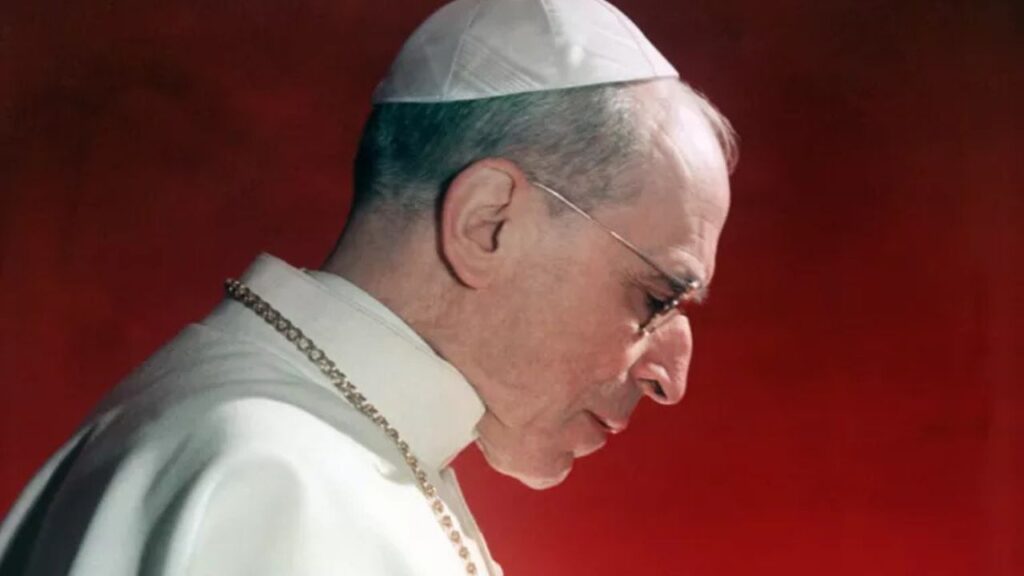
On the 150th anniversary of Pius XII’s birth, Emilio Artiglieri pays tribute to the late wartime pontiff and challenges a longstanding smear campaign that includes a new Netflix film.
March 2 marked the 150th anniversary of the birth of Eugenio Pacelli, who became Pope Pius XII and whose life and pontificate remain among the most studied and debated of the modern papacy.
To mark the occasion, the Register spoke Feb. 27 with Emilio Artiglieri, president of the Pope Pacelli Committee – Pius XII Association, which for many years has held cultural events in Rome to encourage historical discussion about him, and highlight his wide-ranging teachings on theology, morality, society and bioethics.
Artiglieri also discusses whether the “black legend” that has sought to smear the late pontiff for many years has succeeded; a new film that further tries to blacken his name; how Pius might have dealt with today’s SSPX-Holy See standoff, and why the late pontiff continues to inspire both devotion and scholarly interest.
Mr. Artiglieri, do you believe that the smear campaign started by the Soviets against Pius XII has been successful and that he will always be portrayed negatively in relation to the Nazis?
I believe that, with regard to the “black legend” surrounding the figure of Pius XII, a distinction must be made between two levels: the scientific level and that of popular dissemination.
From a scientific point of view, in-depth studies and investigations have been carried out since the time of Paul VI, such as those conducted by Father Pierre Blet, together with Father Angelo Martini, Father Burkhart Schneider, and Father Robert A. Graham, which produced the famous work Actes et Documents du Saint Siège relatifs à la Seconde Guerre Mondiale (Acts and Documents of the Holy See Relating to the Second World War.)
Following Pope Francis’ decision to grant access to the Vatican archives relating to the period of the [Eugenio] Pacelli pontificate, further valuable studies have been carried out, such as those by Professor Johan Ickx (Pius XII and the Jews), Professor Matteo Luigi Napolitano (The Century of Pius XII), and Professor Pier Luigi Guiducci (Pius XII and the Shoah. What “Silences”?).
In light of the extensive documentation, no historian could seriously speak of “Hitler’s Pope.”
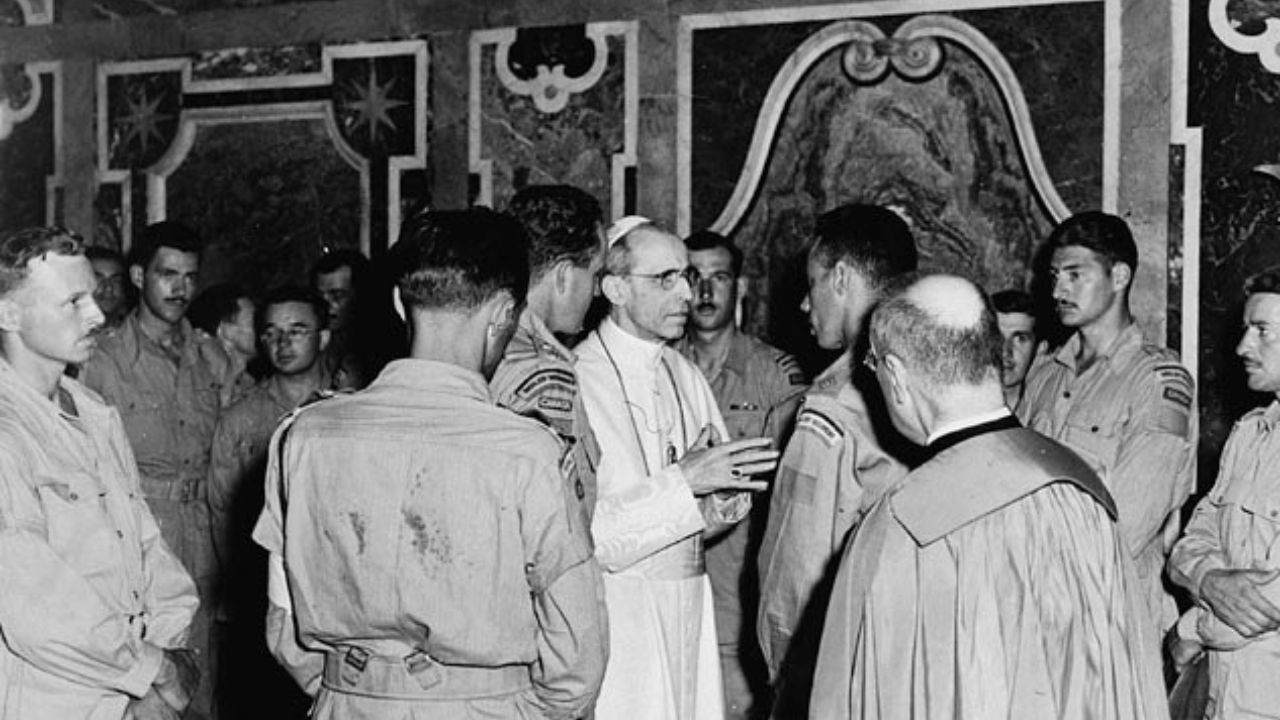
Unfortunately, it is true that some traces of the smear campaign against Pope Pacelli still remain in the collective image, and it is precisely at this level of dissemination that we need to make an impact in order to restore a shared historical truth. In this regard, greater effort is certainly needed at the media level.
A new film on Netflix entitled Nuremberg “calls out” Pius XII and portrays him as lenient toward Nazism and reluctant to support the trials. What is your opinion of such portrayals?
Regarding James Vanderbilt’s latest film, Nuremberg, I can only refer to the article by Professor Matteo Luigi Napolitano, which appeared in L’Osservatore Romano on January 12, in which the historical reconstruction of the film is radically dismantled, the film’s dramatic reconstruction, not only with regard to the alleged meeting between Pius XII and Prosecutor [Robert H.] Jackson, but also with regard to the substance of the message it seeks to convey, namely that the Pope had an ambiguous attitude towards Nazi criminals.
Napolitano rightly pointed out that the Holy See, at the request of the Nuremberg judges, had agreed to hand over to the Tribunal secret material considered useful for clarifying many aspects of Vatican policy between the two wars and during World War II, as well as various aspects of the struggle between the Church and the Nazi regime in Germany.
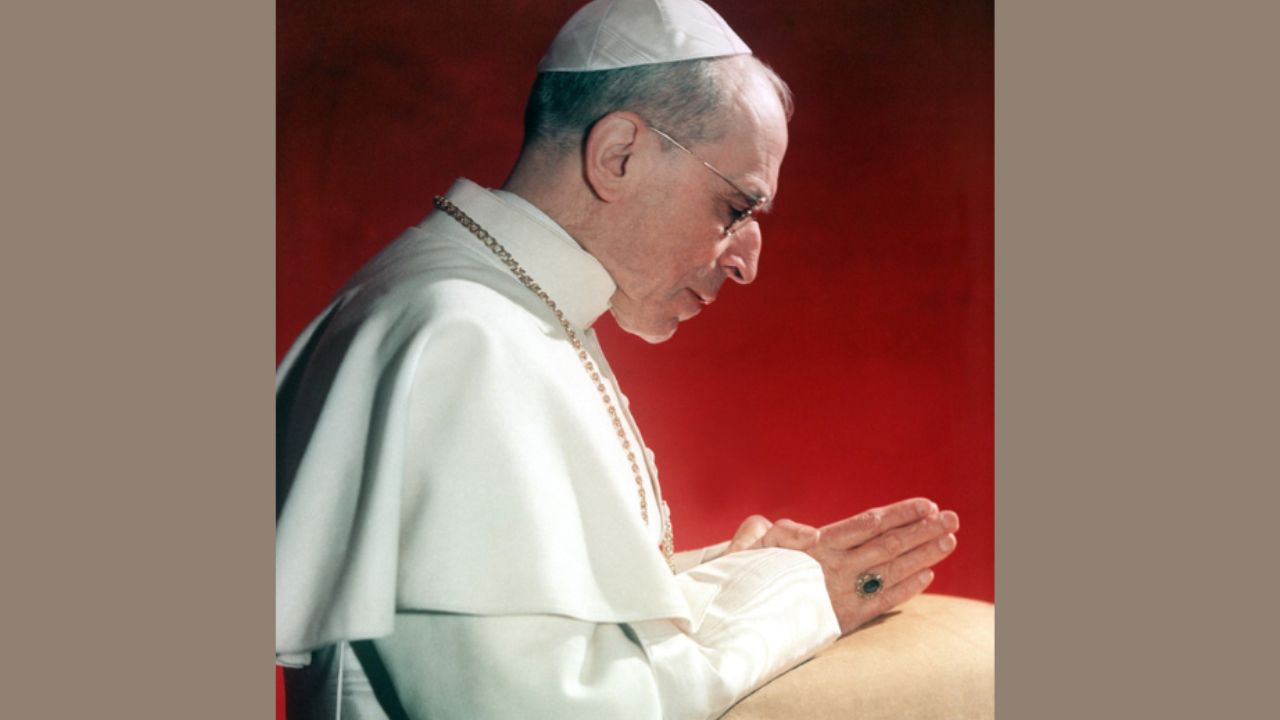
The Vatican documents were made available to the Tribunal at the very beginning of the Court’s work, in the first half of November 1945, and were considered by Prosecutor Jackson to be of extreme importance.
Suffice it to say that one of the major Nazi criminals on trial at Nuremberg, Hans Frank, wondered whether the Vatican was acting as an “assistant prosecutor” in that trial.
Once again, history tells a very different story from the media’s trivial, unfounded, and slanderous reconstruction.
How can the true story of Pius XII in relation to Judaism during the war and his popular acclaim by Jews in the postwar years help combat growing anti-Semitism in the world and also in the Church?
Without a doubt, the true story of Pius XII tells us of a Pope who, since his adolescence, had shown not only a lack of prejudice, but a genuine friendship towards Jews, such as his school friend Guido Mendes, whom he helped to emigrate with his family in 1938 and with whom he maintained a constant relationship throughout his life.
There were many expressions of esteem and gratitude from Jewish leaders towards Pius XII in the period following the end of the war.
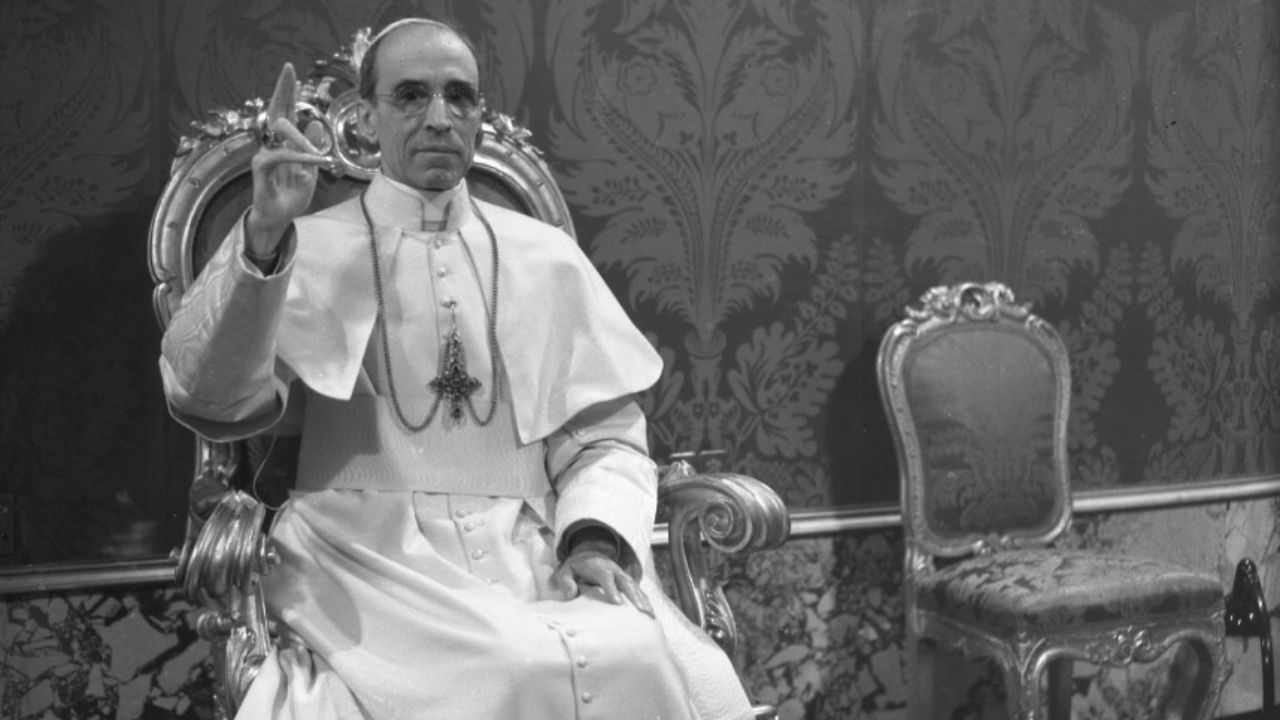
I will mention just a few examples: the conversion of the Chief Rabbi of Rome, Israel Zolli, who, upon receiving baptism on February 13, 1945, chose the Christian name Eugenio in gratitude to Pius XII for what he had done for the Jews during the war, “with a spirit — he said — of unparalleled humanity and Christian charity.”
In March 1946, the third congress of Italian Jewish communities approved a motion, which was then engraved on a plaque and placed in Via Tasso, in the infamous headquarters of the SS in Rome, expressing “the deepest sense of gratitude that animates all Jews” towards Pius XII.
And again, on May 26, 1955, the Israel Philharmonic Orchestra performed Beethoven’s Seventh Symphony in the Vatican in the presence of the Pope, as a sign of homage and gratitude for the help offered to Jews during the persecution.
Pius XII’s concern was truly for everyone, as explained in a note published in L’Osservatore Romano on October 25-26, 1943, which emphasized “the universally paternal charity of the Supreme Pontiff, which does not stop at any border of nationality, religion, or race.”
This is clearly a lesson that is still relevant today, in order to overcome all unjust discrimination and prejudice against any people.
Do you foresee Pius XII ever being beatified and perhaps canonized?
We know that Pius XII has already been proclaimed Venerable by Pope Benedict XVI, meaning that the Church has recognized that he exercised all virtues in a heroic manner and can therefore be considered an exemplary Christian. For beatification, according to current regulations, proof of a miracle attributed to the intercession of the Venerable is required.
Some reported cases, while undoubtedly belonging to what we might call “signs,” do not seem to present all the characteristics required by the notion of a “miracle” attributed to the intercession of the Venerable.
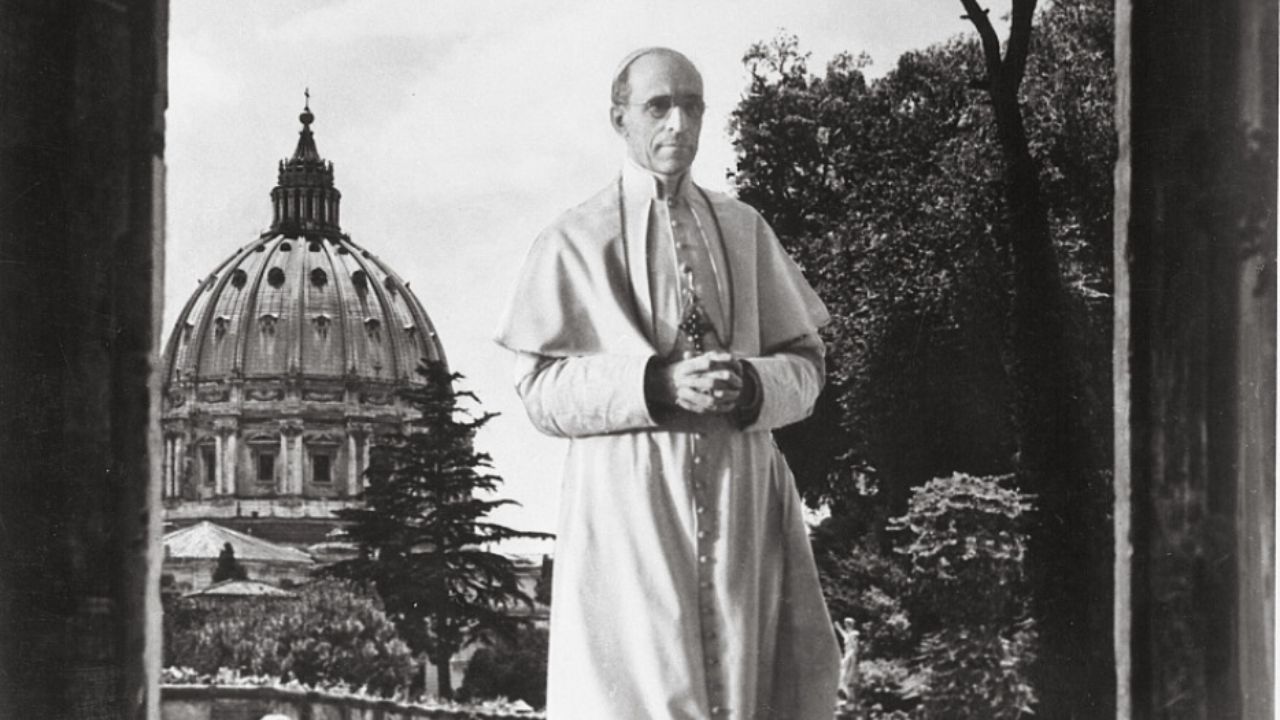
For this reason, we continue to invite you to pray, precisely so that we may have evidence of a true “miracle” that will allow us to proceed with the hoped-for beatification.
I must say that, based on the requests for images and relics that arrive both at the Postulation and at the Pope Pacelli Committee, there is widespread devotion throughout the world to the Pastor Angelicus.
As for the timing of beatification and canonization, as I often repeat for other figures, we must be aware that the Lord knows the most opportune moment to manifest His glory through the Saints.
Given that Pius XII was the last Pope of the pre-conciliar era, what do you think he would have thought of the standoff between the Society of St. Pius X and the Vatican, and how do you think he would have tried to resolve it?
The question may appear historically out of context, given that the issues relating to the Society of St. Pius X belong to a different period from that experienced by Pius XII.
With regard to the Council, it should be remembered that concrete plans for an Ecumenical Assembly had already been drawn up during the pontificate of Pius XII, but it was not convened by Pope Pacelli, mainly because of the very difficult post-war situation.
In fact, Pacelli’s magisterium was the main source, after Sacred Scripture, of the quotations found in the documents of the Second Vatican Council: 219 references to 95 acts of this Pope.
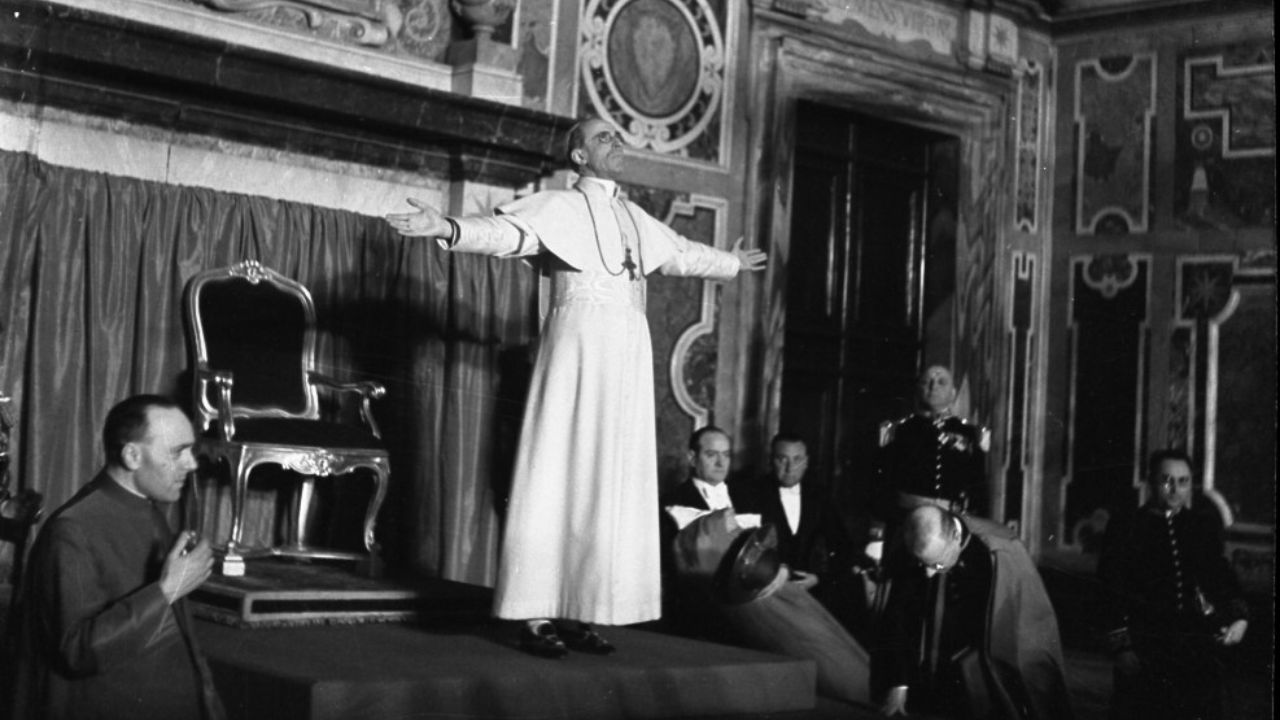
The Council Fathers quoted Pius XII over a thousand times in their speeches.
That said, in order to attempt to answer this question, I would like to highlight two fundamental aspects of his character: he was both a jurist and a diplomat.
Pacelli had a deeply rooted sense of law and justice, partly due to a longstanding family tradition, and therefore also of the necessary ecclesiastical discipline.
However, he was also gifted with a very fine diplomatic ability, dating back to his time as Nuncio during World War I, then as Secretary of State to Pius XI, and finally as Pope, who found himself steering the barque of Peter through the stormy seas of World War II and the Cold War.
I can therefore imagine that, even in the face of this situation, albeit internal to the Church, he would, on the one hand, have enforced compliance with the law and, on the other, would have made every possible attempt at reconciliation, for the good of the Church and of souls.
Could you tell us about the initiatives undertaken by your organization to promote Pius XII?
Since 2009, the Pope Pacelli Committee – Pius XII Association, in collaboration with the General Postulation of the Jesuit Fathers, has been organizing and promoting, especially in Rome, cultural meetings, conferences, and liturgical celebrations, always presided over by a cardinal, both to meet the desire of many faithful who cultivate the reputation for holiness of this Pontiff, and to update the historical debate concerning him, as well as to expose the richness of his vast magisterium, which embraces more strictly theological issues, such as ecclesiology and liturgy, as well as moral, social, and bioethical issues.
This year we will commemorate a very important anniversary, namely the 150th anniversary of his birth in Rome on March 2, 1876.
On that date, starting at 5:00 p.m., a conference will be held in Rome at the Chiesa Nuova, or Santa Maria in Vallicella dei Padri Filippini, which he frequented during his childhood and adolescence, followed by a Solemn Mass.
Other meetings are planned throughout the year to illustrate his work in favor of peace and in aid of the persecuted, as well as his defense of Christian civilization, threatened by ideologies and, even in his time, by insidious secularism.
We would like to present Pius XII not only with reference to the important issues of war, but also as the Pope of the arts, sciences, historical and legal culture, thanks also to his personal “Romanità” (Roman character, spirit, and identity).
This article was originally published on National Catholic Register.