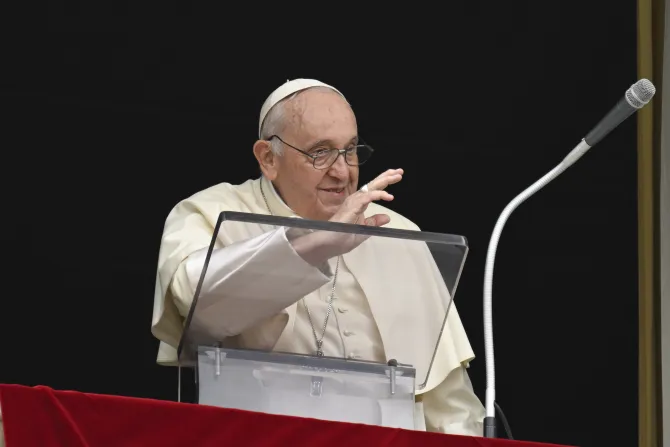
The Pontifical Academy for Life has launched a new initiative appealing to the scientific and academic world to contribute to the pursuit of peace.
The Pontifical Academy for Life launched the initiative Scientists for Peace, an appeal to scientists, researchers, and academics worldwide to promote the concrete pursuit of peace through scientific research and international cooperation.
The project, promoted under the auspices of the Vatican’s Dicastery for Promoting Integral Human Development, was announced amid global tensions and armed conflicts that, according to the organizers, threaten not only the affected populations but also freedom and cooperation in scientific research.
Promotion and defense of human life
In a press release, the Vatican body recalled that its mission is to study, from an interdisciplinary perspective, issues related to the promotion and defense of human life. Within this framework, it poses a central question: “Can scientific research, in its methods and objects of study, contribute to the pursuit of peace?”
Rev. Ciucci (#PAV) presents "Scientists for #Peace". Promoted by @PontAcadLife, sponsored by @vaticanIHD, inviting scientists from all disciplines, of any nationality, cultural tradition, political or religious orientation to sign a global call to action: https://t.co/yzlQeynPvH pic.twitter.com/Fdht0IGXP8
— Pontifical Academy for Life (@PontAcadLife) March 9, 2026
According to the document, science — guided by the pursuit of truth and based on rigorous methodologies — develops through the exchange of knowledge and a constant willingness to engage in critical debate.
Although competition and debate are part of academic life, the manifesto’s proponents emphasize that these can be addressed through transparent communication and an effort to overcome individual interests in favor of the common good and the advancement of knowledge beyond national borders.
In this context, the initiative invites the international scientific community to actively advocate for peace and to work toward reconciliation and conflict resolution through the daily practice of research.
The appeal is also inspired by the words of Pope Leo XIV in his message for the 59th World Day of Peace in 2026, where he states: “Peace exists; it wants to dwell within us. It has the gentle power to enlighten and expand our understanding; it resists and overcomes violence.”
The initiative is open to scientists from all disciplines, nationalities, and cultural backgrounds, regardless of their political or religious beliefs.
Researchers with a significant international presence
So far, 80 scientists have already signed it. Among them are several researchers with a significant international presence in academic and media debate.
One signatory is ecologist David Tilman, considered one of the most influential researchers in the fields of biodiversity, climate change, and sustainable agriculture; another is developmental psychologist Michael Lamb, a professor at the University of Cambridge recognized for his studies on child development and family law.
In the field of education, prominent figures include character development expert Thomas Lickona, professor emeritus at the State University of New York at Cortland, and cultural psychologist Barbara Rogoff, a researcher at the University of California Santa Cruz, known for her work on sociocultural learning.
In the field of bioethics, the Dutch expert Henk ten Have, professor at Duquesne University and former head of scientific ethics at UNESCO, signed on, along with philosopher of law Laura Palazzani, professor at LUMSA University, and Spanish jurist Federico de Montalvo Jääskeläinen, professor at the Comillas Pontifical University and former president of the Bioethics Committee of Spain.
The list also includes social theologian Emilce Cuda, responsible for the Pontifical Commission for Latin America; Italian pediatrician Alberto Villani of the Bambino Gesù Pediatric Hospital in Rome, known for his media presence during the pandemic; neonatologist Daniele De Luca, professor at Paris-Saclay University; and agricultural researcher Felix Prinz zu Löwenstein of the FiBL Research Institute for Organic Agriculture, a leading figure in the European debate on organic farming and food sustainability.
This story was first published by ACI Prensa, the Spanish-language sister service of EWTN News. It has been translated and adapted by EWTN News English.