During a pastoral visit to a Rome parish, the pope warned against invoking God to justify violence.
Pope Leo XIV said Sunday that God cannot be used to justify violence or war, warning that “God cannot be enlisted by darkness.”
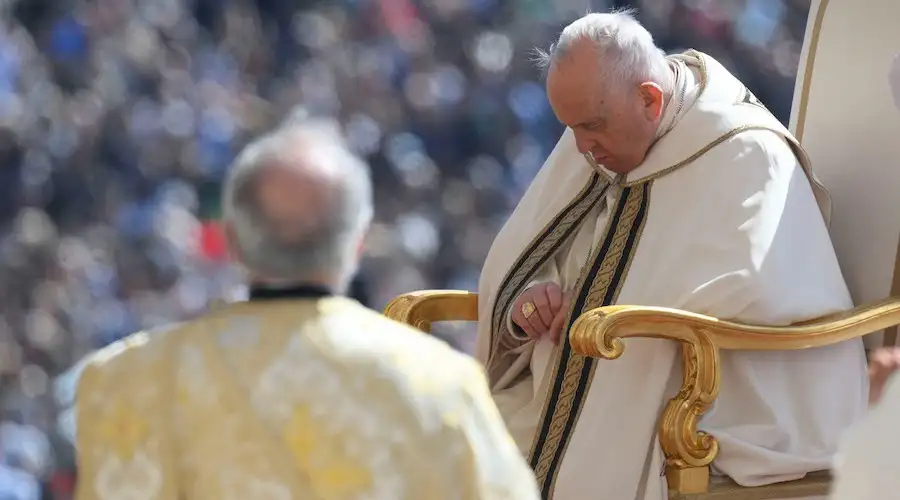
The pope made the remarks March 15 during a pastoral visit to the Parish of the Sacred Heart of Jesus in Ponte Mammolo, a neighborhood on the outskirts of Rome, where he celebrated Mass on the Fourth Sunday of Lent, known as Laetare Sunday.
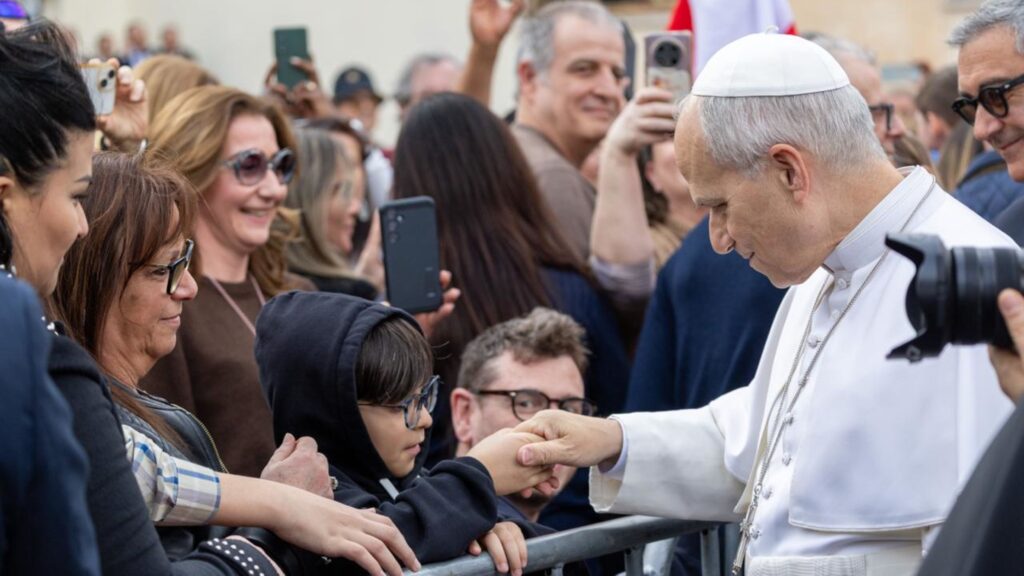
Before the Mass, Leo XIV met with various parish groups, including children, young people, families, the sick, the elderly, and the poor assisted by volunteers from Caritas, the Catholic Church’s charitable aid network, and the Community of Sant’Egidio, a Rome-based Catholic lay community known for its service to the poor and peacemaking efforts.
During his pastoral visit to the Parish of the Sacred Heart of Jesus in Ponte Mammolo on the Fourth Sunday of Lent (Laetare Sunday), Pope Leo XIV warned against using God’s name to justify violence and conflict.
— EWTN Vatican (@EWTNVatican) March 15, 2026
In his homily for Laetare Sunday, the Pope said that amid the many… pic.twitter.com/08NxfPRD53
In his homily, the pope reflected on the suffering caused by armed conflicts around the world.
“Many of our brothers and sisters today suffer because of violent conflicts, caused by the absurd claim that problems and differences can be resolved with war,” he said. “Instead, we must tirelessly pursue dialogue for peace.”
“Some even claim to involve the name of God in these choices of death,” the pope continued. “But God cannot be enlisted by darkness. Rather, he always comes to give light, hope, and peace to humanity — and it is peace that those who invoke him must seek.”
Reflecting on the Gospel story of the man born blind, Leo XIV said the passage teaches believers to see others with the eyes of God.
To see in this way, he said, means overcoming prejudice — especially the tendency to look at someone who suffers “only as an outcast to be despised or a problem to be avoided,” retreating into “the fortified tower of selfish individualism.”
Jesus, by contrast, looks at the blind man with love, “not as an inferior being or a nuisance but as a person who is dear and in need of help,” the pope said.
By healing him, Jesus reveals his divine power and restores the man’s dignity as a creature made in the image and likeness of God. Having regained his sight, the man becomes “a witness to the light,” the pope said.
Leo XIV also warned of another form of blindness — the refusal to recognize God’s presence.
Those who accused Jesus and the healed man, he said, showed a deeper blindness: failing to see “right before them the face of God,” preferring instead the sterile security of rigid legalism.
“Jesus does not stop before such obstinacy,” the pope said, showing that “there is no Sabbath that can hinder an act of love.”
The pope also urged Christians to examine their own lives.
“We too can be blind when we fail to notice others and their problems,” he said. The first Christian community, he added, understood the call to live differently — sharing their goods, persevering in prayer, and living in communion and peace despite trials.
Addressing the parish community directly, Leo XIV praised its outreach to the poor and marginalized, including its attention to inmates at the nearby Rebibbia prison and its efforts to assist migrants with learning the language, finding housing, and securing stable employment.
He also commended the parish’s charitable initiatives, including family homes that welcome women and mothers in difficulty.
The pope concluded by encouraging the faithful to continue nurturing the “gift of light” entrusted to them through prayer, the sacraments, and charity.
“Let it grow within you and among you in all its gentleness,” he said, “and spread it throughout the world.”
Earlier, greeting children and young people, the pope also addressed parishioners who could not enter the church because of limited space, telling them that a vibrant parish community can be a sign of hope even in places marked by hardship.
“We who believe in Jesus Christ and live as brothers and sisters united can be a sign of hope in a world where these signs are often lacking,” he said. “In Jesus Christ there is salvation, and we want to live, receive, and share this great love that the Lord offers us.”
This story was first published by ACI Stampa, the Italian-language sister service of EWTN News, and has been translated and adapted by EWTN News English.