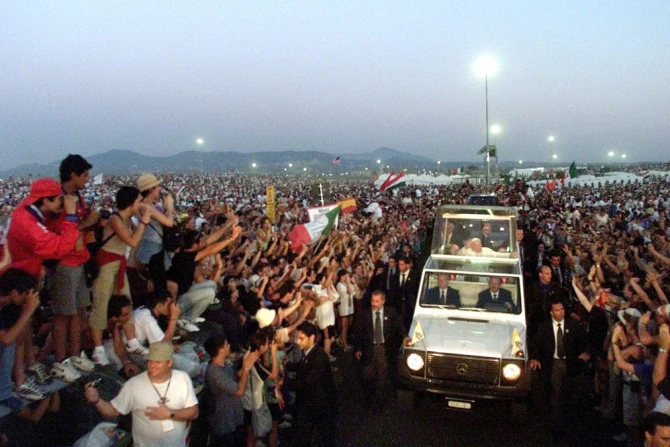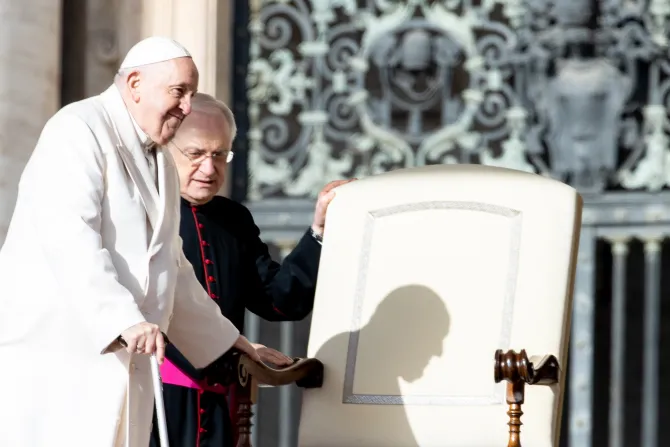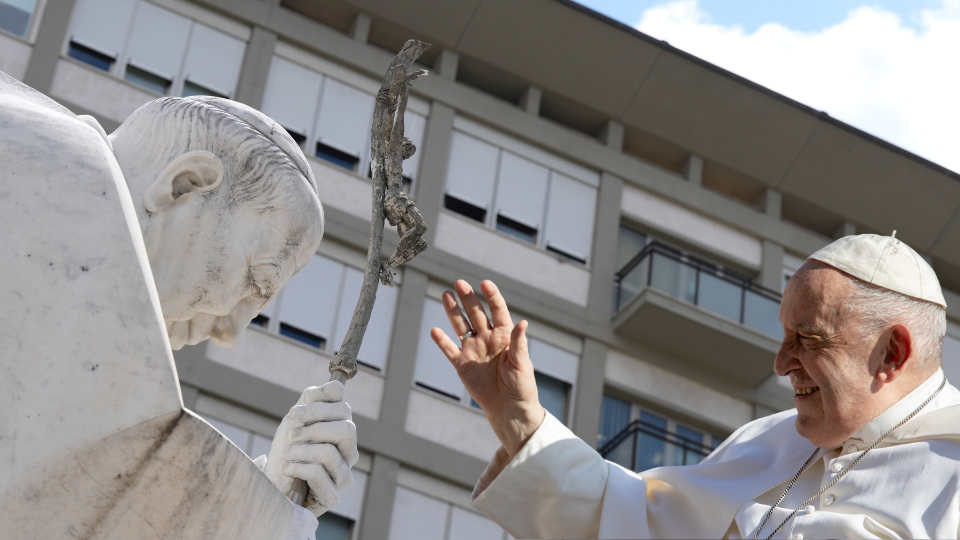
It is a familiar scene in Rome. Every Sunday at noon, the Pope appears at the window of his apartment overlooking St. Peter’s Square to greet the faithful gathered below and those watching around the world.
“Cari fratelli e sorelle, buona domenica!” Pope Leo XIV calls out, beginning a tradition that has endured for generations.
At the heart of this weekly encounter is the Angelus—a prayer recited by Catholics worldwide, rooted in one of the most decisive moments in human history: the Annunciation.
“The Angel of the Lord declared unto Mary, and she conceived of the Holy Spirit. Hail Mary, full of grace…” the Pope prays, echoing words that have been repeated for centuries.
The “Yes” That Changed History
The Angelus centers on Mary’s response to God’s plan—her “yes” to becoming the Mother of Christ. This moment, often described as the turning point of salvation history, continues to shape the Church’s life today.
During the Jubilee dedicated to Marian spirituality in October 2025, Pope Leo XIV reflected on the enduring significance of Mary’s response.
“Brothers and sisters, Marian spirituality is at the service of the Gospel: it reveals its simplicity,” he said. “Our affection for Mary of Nazareth leads us to join her in becoming disciples of Jesus. Jesus invites us to be part of his Kingdom, just as he asked Mary for her ‘yes,’ which, once given, was renewed every day.”
Mary’s fiat was not a single act confined to the past—it became a model of daily fidelity, a path of discipleship that continues to inspire believers.
Nazareth: The Place Where the Word Became Flesh
The place where Mary gave her “yes” can still be visited today. In Nazareth, once a small village, now stands the Basilica of the Annunciation—built over the site traditionally believed to be Mary’s home.
Inside, pilgrims descend into the grotto where, according to tradition, the angel Gabriel appeared.
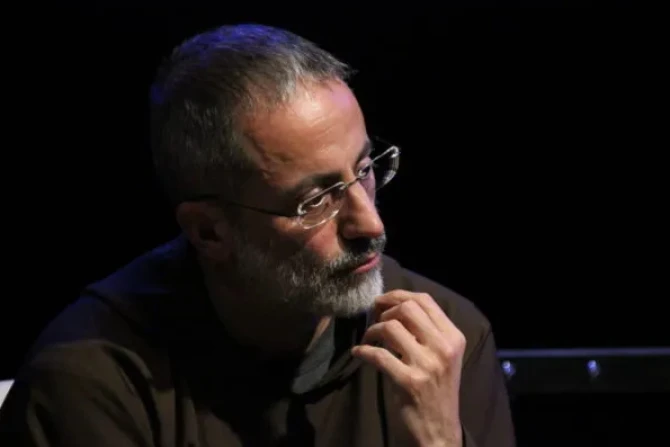
“Now we’re here, actually inside the grotto of the Annunciation,” explains Father Chris Alar of the Marian Fathers of the Immaculate Conception. “This is the place we all know from the Bible. The angel Gabriel appeared… God did not interrupt humanity with cracks of thunder. He asked for consent. And the incarnation didn’t begin with some miraculous miracle or miracle of power. It began with a young lady’s Yes. It is the most important event in human history.”
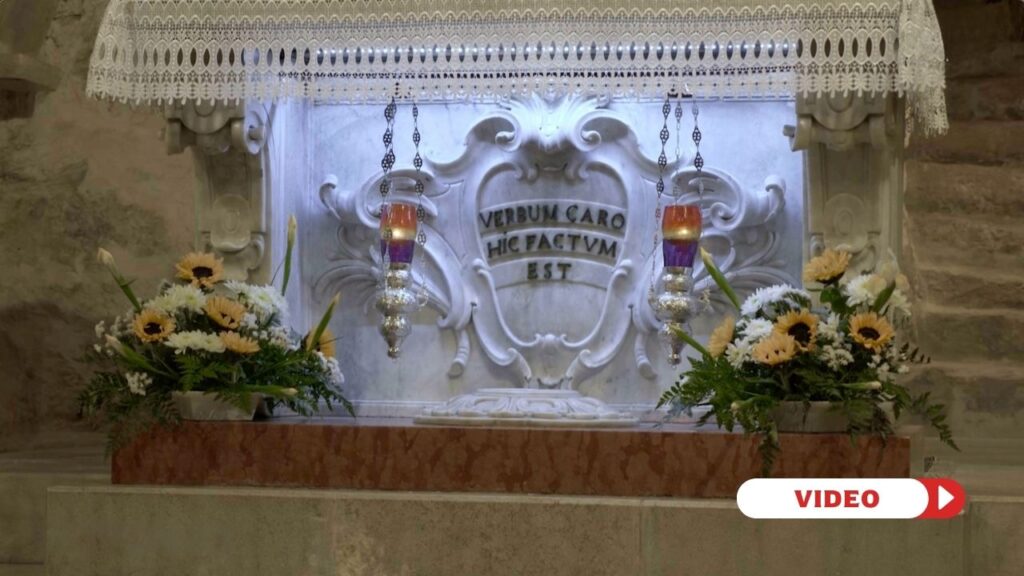
On the altar in the grotto, a Latin inscription marks the mystery that took place there: Verbum caro hic factum est—“Here the Word became flesh.”
Understanding the Scene of the Annunciation
For many pilgrims, the question naturally arises: is this truly the place described in the Gospel?
Tour guide Tony Azraq affirms the historical context of the site. “When you come here, many people want to know, is this the spot? Yes. Do I know this is the spot? Absolutely,” he says.
He explains that homes in the first century were often built around caves, which served practical purposes but also provided private spaces. “These grottos were the isolation rooms for women,” he notes.
This helps illuminate the Gospel account, in which Mary is described as “much perplexed” by the angel’s greeting. Azraq adds, “All of a sudden, coming down that staircase, she hears somebody saying, Hail Mary. Would you panic? Yes, you will panic because you don’t expect to see somebody.”
Father Alar points to the remains of what is believed to be the original staircase. “This would have been the original staircase of the first century. That’s incredible,” he says.
A Mystery That Endures
Despite her initial fear, Mary responded with trust. After her “yes,” the Gospel tells us, the angel departed. Yet the significance of that moment has never faded.
Pilgrims who visit Nazareth today often speak of a profound sense of closeness to this mystery.
“I get goosebumps, coming over here and feeling her presence,” says guide George Stephan. “Because the whole Bible and salvation history stands on Genesis 3, ‘Salvation comes from a woman’… That woman is Mary.”
Mary’s response continues to echo through Scripture, tradition, and devotion—especially in the Angelus prayer, recited daily by millions of Catholics.
A Prayer That Connects Past and Present
From the quiet grotto in Nazareth to the window overlooking St. Peter’s Square, the dialogue between Mary and the angel continues to live on in the Church’s prayer.
Each Sunday, Pope Leo XIV leads the faithful in repeating those same words:
“Behold the handmaid of the Lord: Be it done unto me according to Thy word. Hail Mary, full of grace, the Lord is with Thee…”
A simple exchange, first spoken in silence over two thousand years ago—yet one that continues to resound across the world, inviting each generation to respond, as Mary did, with faith.
Adapted by Jacob Stein. Anthony Johnson contributed to this story. Video edited by Anthony Johnson. Special thanks & Credits to Nativity Pilgrimage and Khaled Jacoub.