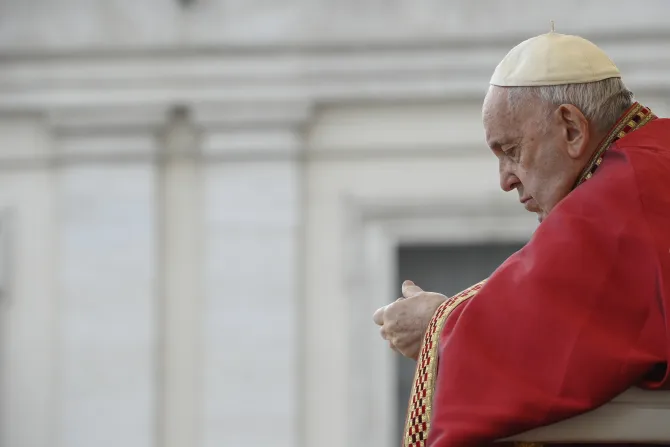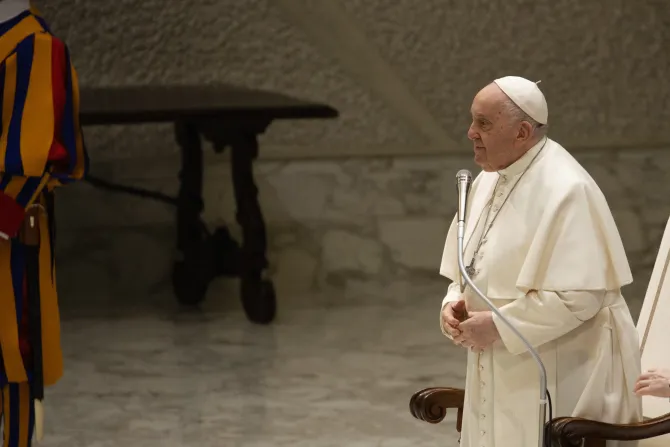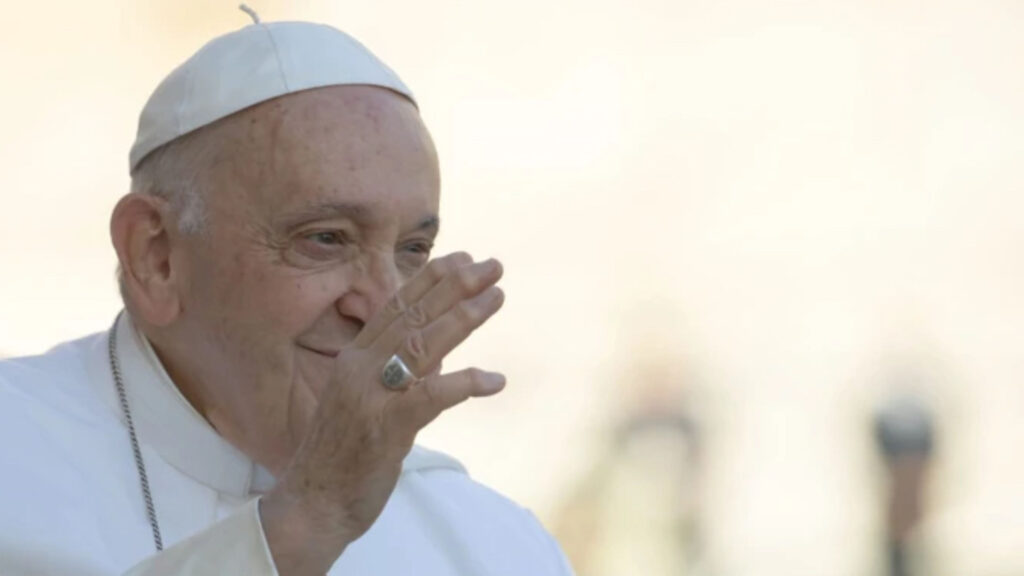
On the first anniversary of Pope Francis’ death, we remember the late pontiff and some of the most significant moments of his papacy.
On April 21, 2025, the bells of St. Peter’s Basilica tolled for Pope Francis, marking the end of his life and his 12-year papacy. As the 265th successor of St. Peter, the Argentinian pontiff left a lasting impact on the Catholic Church.
Here are nine significant moments that have become part of Pope Francis’ legacy:
1. Election of the first Latin American pope
Born in Buenos Aires, Argentina, Pope Francis was the first pope from Latin America and the first Jesuit to hold the office — two “firsts” that signaled a shift away from a historically Eurocentric Church. His choice of the name Francis, inspired by St. Francis of Assisi, hinted at priorities rooted in humility, poverty, and care for creation.
Even his first appearance broke with convention: no traditional vestments, no grand proclamations — just a quiet “buona sera” and a request that the crowd pray for him before he blessed them.
2. The publication of Laudato Si’
With the release of his encyclical Laudato Si’ in 2015, the Holy Father positioned the Catholic Church as a major moral voice in the global climate conversation. The document framed environmental destruction not just as a scientific or political issue but as a spiritual and ethical crisis tied to inequality and human dignity. He spoke of the Earth as “our common home,” urging collective responsibility across nations and religions. The encyclical resonated far beyond Catholic circles, earning praise from environmental advocates worldwide.
3. Visit to the United States and address to Congress
In September 2015, Pope Francis made his one and only visit to the U.S. and became the first pope to address Congress. He used the platform to speak about immigration, economic inequality, and the moral responsibilities of political leadership. Referencing figures like Martin Luther King Jr. and Dorothy Day, he framed his message in terms of justice and human dignity and encouraged lawmakers to work toward promoting the common good.
4. Launch of World Day of the Poor
In November 2017, Pope Francis held the first-ever World Day of the Poor and sat down to eat lunch with 4,000 poor and in need people from Rome. Celebrated on the 33rd Sunday of Ordinary Time, Pope Francis established the World Day of the Poor in his apostolic letter Misericordia et Misera, presented Nov. 20, 2016, at the end of the Church’s Jubilee Year of Mercy. The purpose of the event is to encourage Catholics to reflect on how poverty is an important aspect of the Gospel and to encounter the poor.

Pope Francis raises his glass at the start of a lunch with poor and economically disadvantaged people in the Vatican’s Paul VI Hall on Nov. 19, 2023. | Credit: Daniel Ibanez/CNA
5. Confronting the clergy abuse crisis
Confronting the clergy sexual abuse crisis became one of the most defining and difficult aspects of Francis’ papacy. In 2014, he established the Pontifical Commission for the Protection of Minors, which works to protect the dignity of minors and vulnerable adults, such as the victims of sexual abuse.
His most significant legal reform came with Vos Estis Lux Mundi (2019), which created a global system for reporting abuse, required dioceses worldwide to set up accessible reporting mechanisms, and introduced procedures to investigate bishops accused of misconduct or cover-ups. That same year, he abolished the “pontifical secret” — a rule of confidentiality protecting sensitive information regarding the governance of the universal Church — in abuse cases.
6. A shepherd praying for the world during a global pandemic
The early days of the COVID-19 pandemic produced one of the most enduring images of Francis’ papacy: the pope standing alone in a rain-soaked St. Peter’s Square, offering an extraordinary “urbi et orbi” blessing for a world in crisis. It was a moment of stark symbolism — emptiness, vulnerability, and quiet solidarity. Throughout the pandemic, he called for global cooperation, urged respect for scientific guidance, and advocated for equitable vaccine distribution.

Pope Francis gives an extraordinary “urbi et orbi” blessing from the loggia of St. Peter’s Basilica on March 27, 2020. | Credit: Vatican Media
7. Historic visit to Iraq
Among the most striking journeys of Pope Francis’ papacy was his 2021 trip to Iraq, the first ever by a pope, undertaken despite security risks and the lingering devastation left by years of war and the rise of ISIS. Visiting cities like Mosul and Qaraqosh — places scarred by violence and the persecution of Christians — the Holy Father delivered a message of resilience, coexistence, and hope.
His historic meeting with Grand Ayatollah Ali al-Sistani in Najaf marked a powerful moment of interfaith dialogue, underscoring his commitment to building bridges between religions. Praying amid the ruins of churches and addressing displaced communities, the pope sought to amplify the voices of those who had endured conflict and displacement, reinforcing a central theme of his papacy.

Pope Francis meets with Grand Ayatollah Ali al-Sistani in Najaf, Iraq, on March 6, 2021. | Credit: Vatican Media
8. The Synod on Synodality
Another defining initiative of Francis’ papacy was the Synod on Synodality — an ambitious multiyear process aimed at reshaping how the Catholic Church listens, discerns, and makes decisions.
Launched in 2021 and culminating in global assemblies in Rome in October 2024, the synod invited unprecedented participation from laypeople, women, and marginalized groups, signaling Francis’ desire for a more inclusive and consultative Church.
Rather than focusing on a single issue, it centered on the idea of “synodality” itself: shared responsibility and dialogue across all levels of the Church. Some topics of discussion included the role of women and laity, clerical accountability, outreach to marginalized groups, and ecumenism.
9. His final, international papal trip
Only seven months before he passed away, Pope Francis embarked on a 12-day trip of more than 20,000 miles over seven flights through Asia and Oceania. The trip to Indonesia, Papua New Guinea, East Timor, and Singapore was his most ambitious international trip and the longest of his 12-year pontificate.

Pope Francis celebrates Mass at the Esplanade of Taci Tolu in Dili, Timor-Leste, on Tuesday, Sept. 10, 2024. | Credit: Daniel Ibáñez/CNA
Traveling to regions where Catholics are a minority, he emphasized interreligious dialogue in Muslim-majority Indonesia, emphasized care for the environment and supporting Indigenous communities in Papua New Guinea, encouraged the youth to embrace hope, fraternity, and the faith in East Timor, and stressed the importance of social cohesion and protecting the vulnerable in a wealthy society in Singapore.
This article was originally published by EWTN News English.