The pontiff urged Catholics in the country to help build a future of hope, justice, and peace.
MONGOMO, Equatorial Guinea — Pope Leo XIV on Wednesday urged Catholics in this Central African country to help shape the nation’s future, saying there is “a need for Christians to take the destiny of Equatorial Guinea into their own hands.”
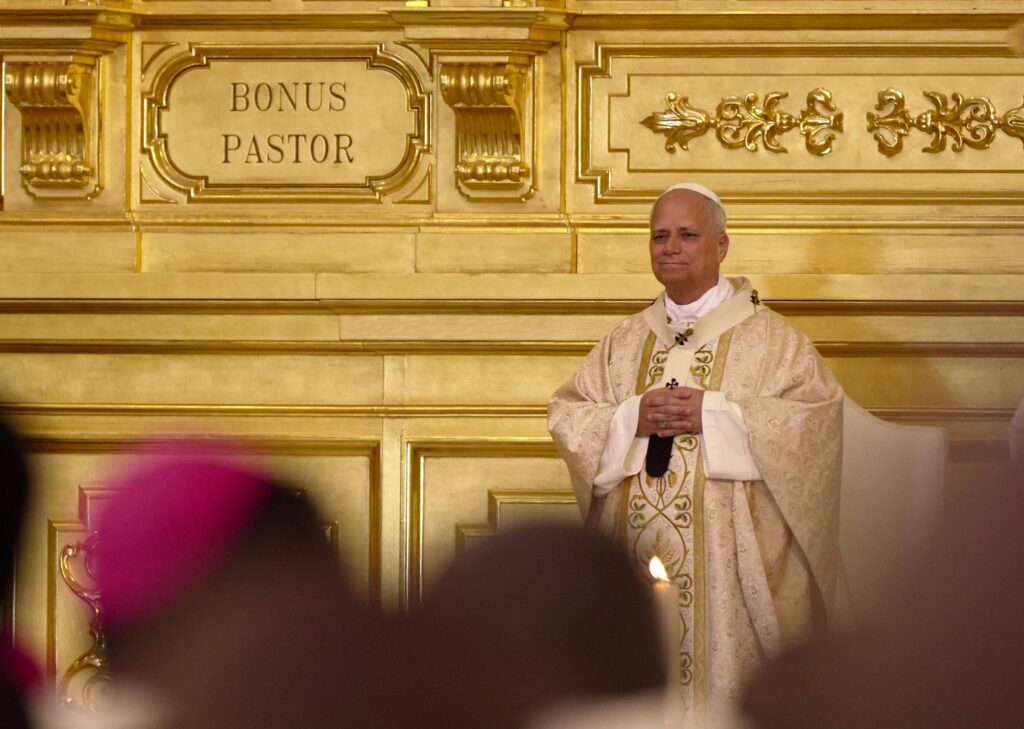
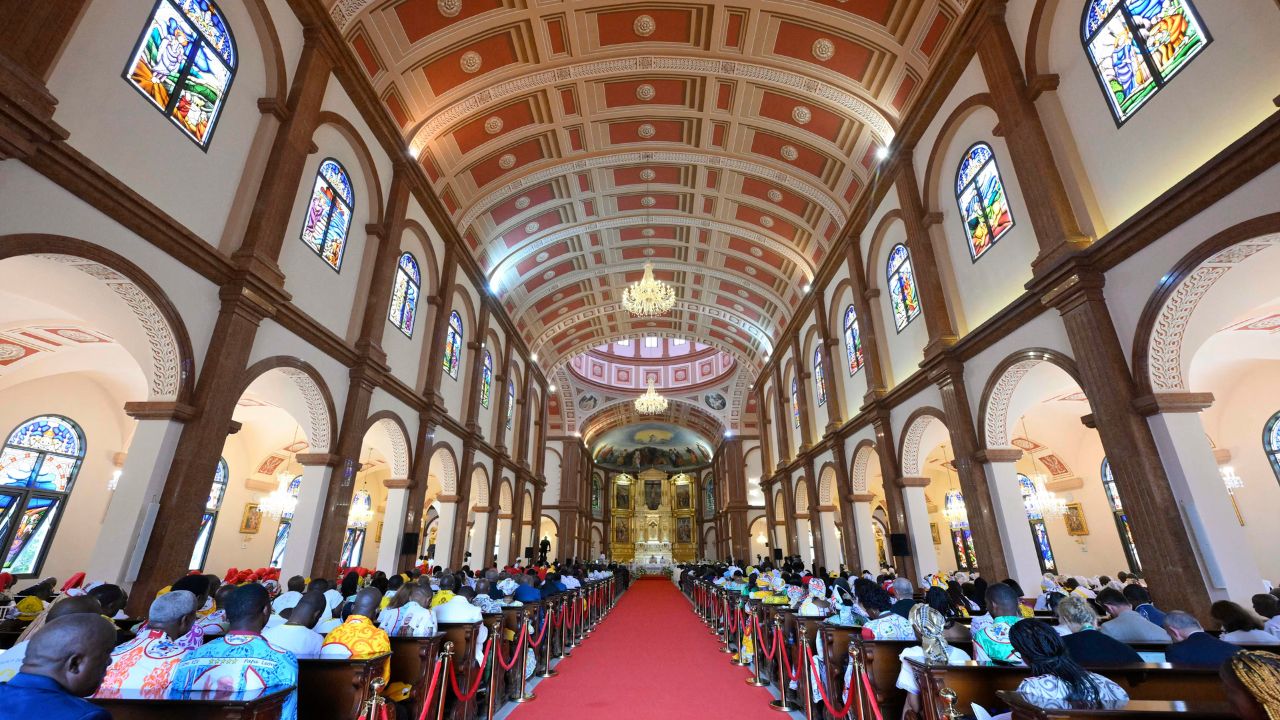
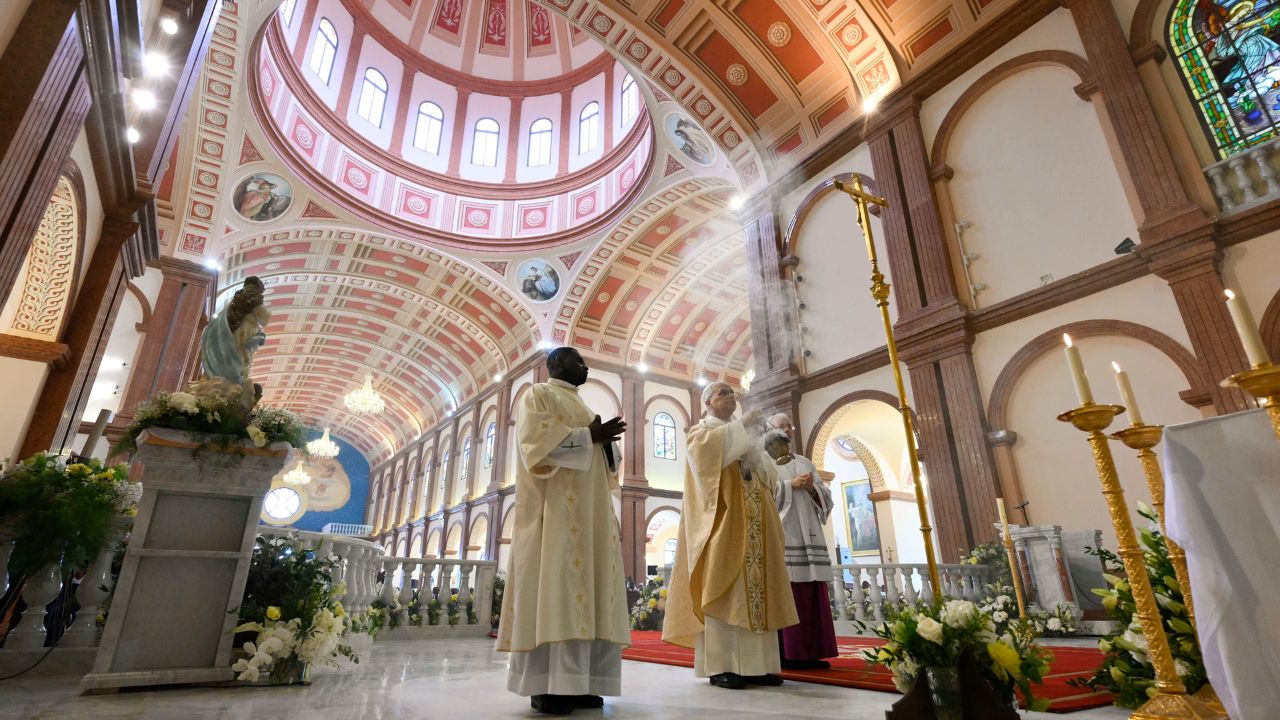
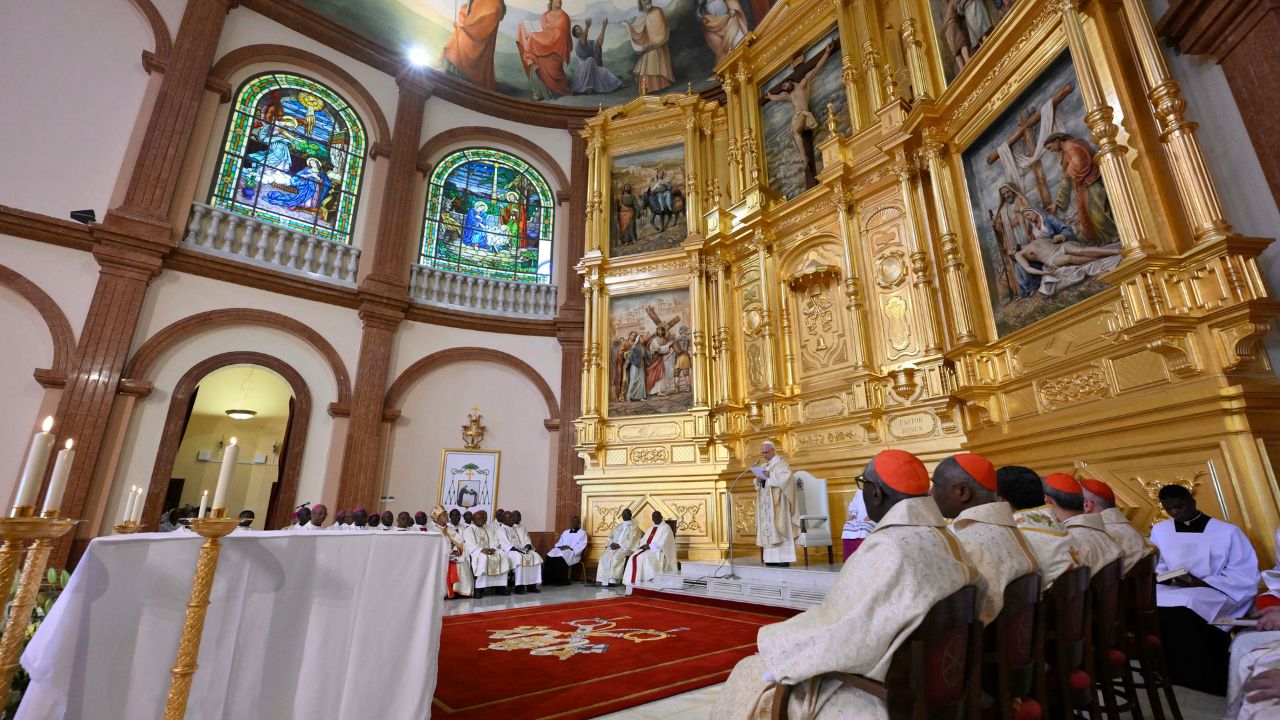
The second day of the pope’s apostolic journey in the country opened with the celebration of Mass at the Basilica of the Immaculate Conception in Mongomo. The Immaculate Virgin is patroness of Equatorial Guinea.
The basilica is the largest religious building in central Africa and the second-largest basilica on the continent, after the Basilica of Our Lady of Peace in Yamoussoukro, Ivory Coast.
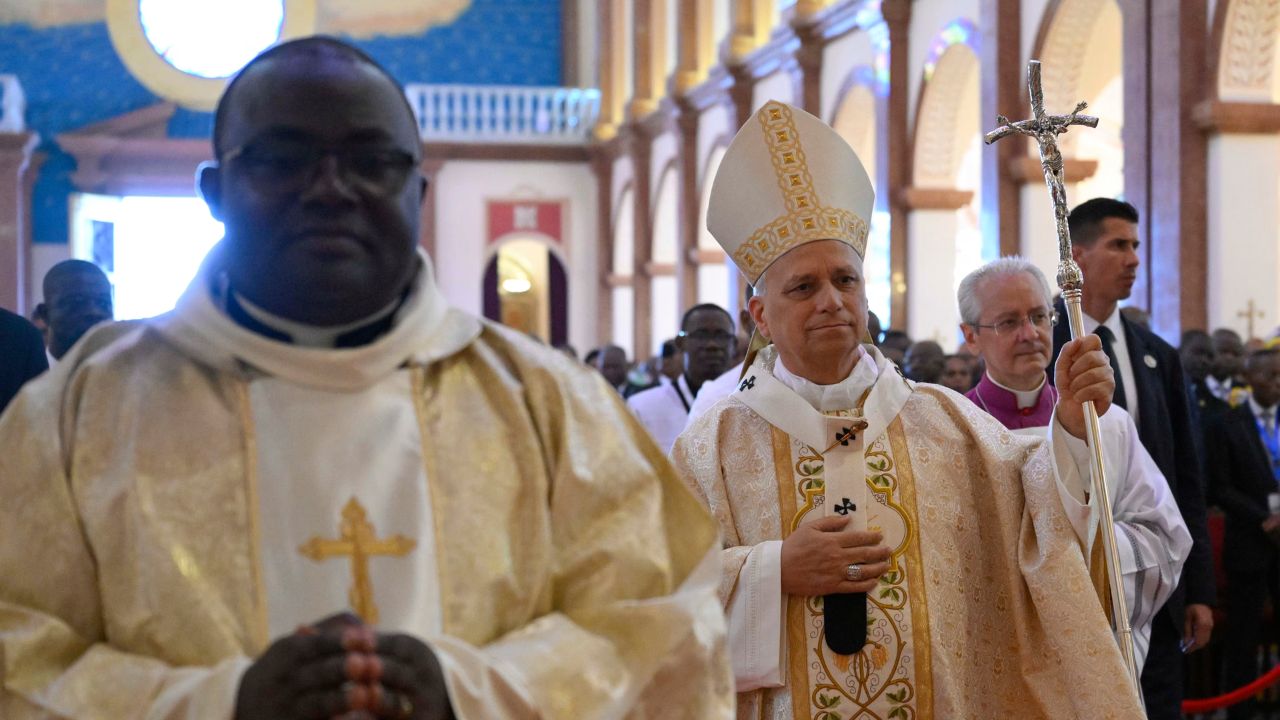
Emotion and affection for the pope were palpable before the Mass.
“I feel great joy at the arrival of the Holy Father in our country,” said Emmanuel, a young man from Mongomo who came to attend the Mass.
“I am here with my fellow citizens, waiting for the pope’s arrival. And I am very moved,” added Pedro Ngema outside the basilica.
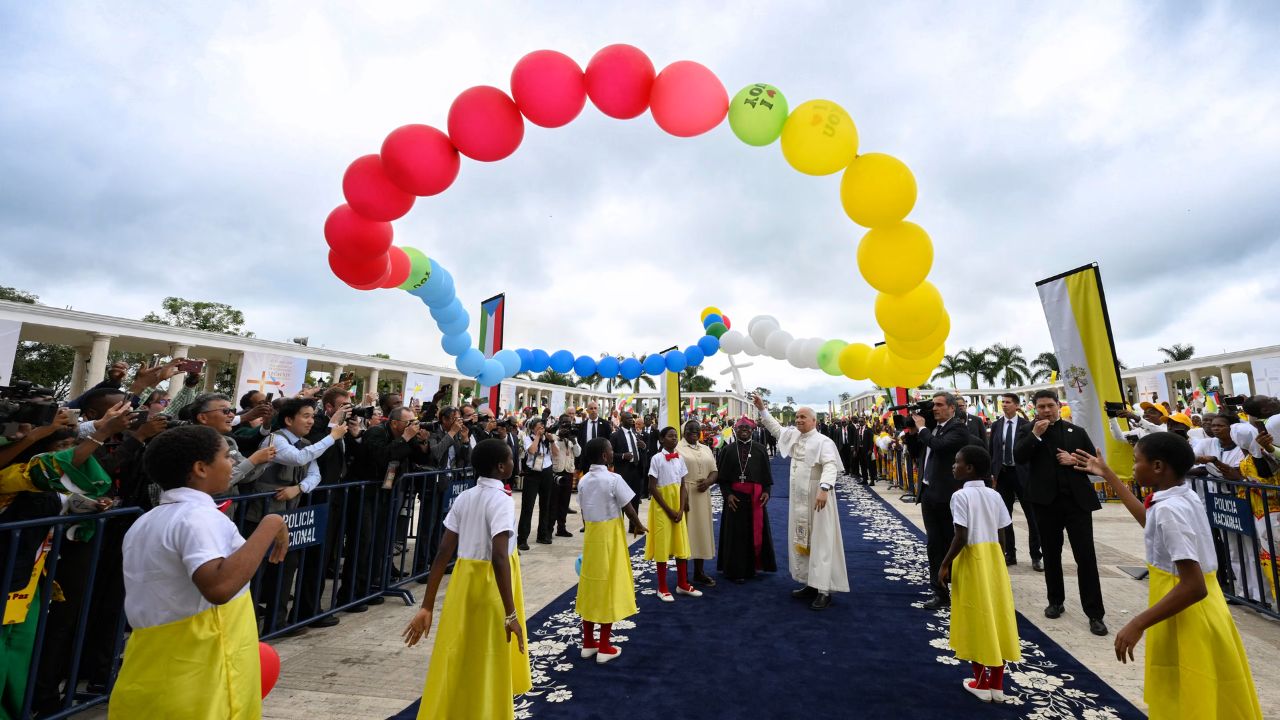
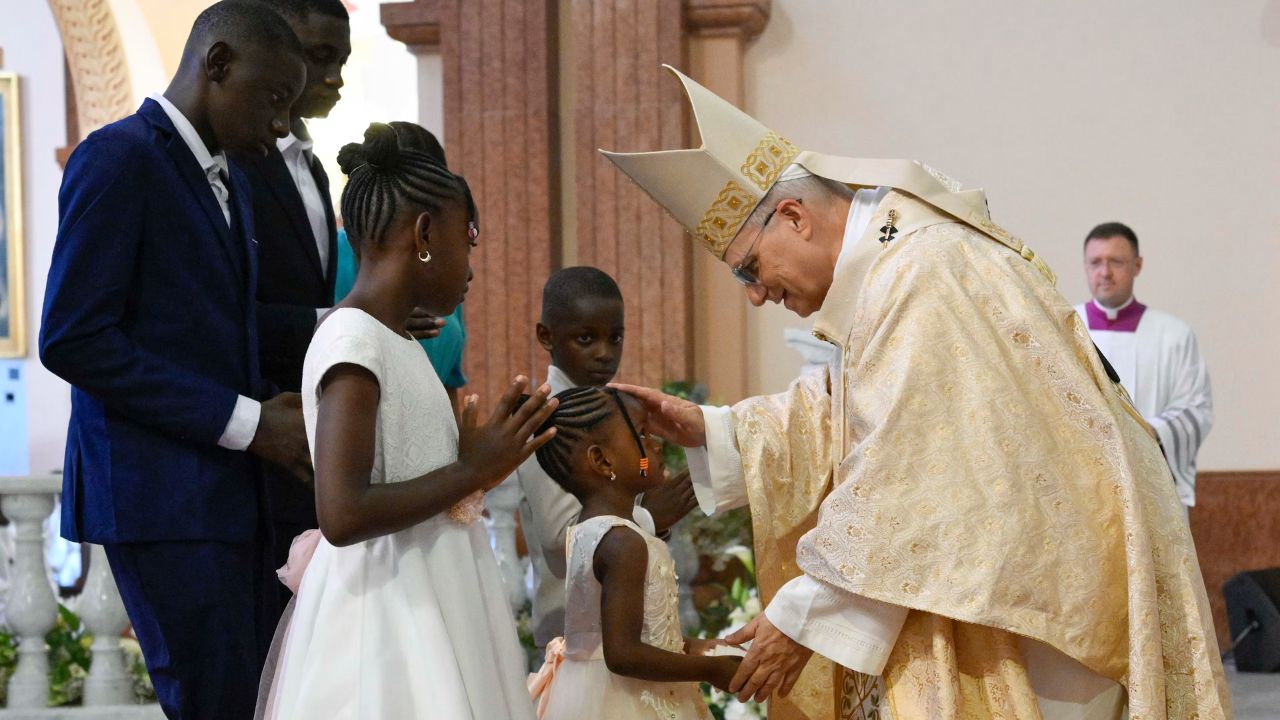
Before celebrating Mass, Leo greeted a group of children, and together they released balloons tied in the shape of a rosary into the sky. He then blessed the foundation stone for the future cathedral of Ciudad de la Paz. In brief spontaneous remarks, he thanked those present and said it was “wonderful” to be united in praising the Lord. He said he wanted to ask God’s blessing on those gathered, on their families, and on the foundation stone that would mark the beginning of the future cathedral.
“We want to renew our faith,” the pope said. “We want to renew our commitment to follow Jesus Christ faithfully in his Church, in the Catholic Church.”
In his homily, the pope began by reflecting on the Eucharist.
“The Eucharist truly contains every spiritual good of the Church: It is Christ, our Passover, who gives himself to us, he is the living Bread that nourishes us,” Leo said. “His presence in the Eucharist reveals God’s infinite love for the entire human family and the way he encounters every woman and every man even today.”
The pope said he was pleased to celebrate with the faithful and “give thanks to the Lord for these 170 years of evangelization in Equatorial Guinea.”
“It is a fitting occasion to recall all the good that the Lord has done,” he said, “and at the same time, I wish to express my gratitude to the many missionaries, diocesan priests, catechists, and lay faithful who have devoted their lives in service to the Gospel.”
He praised those missionaries for their witness, saying: “Through the example of their lives, they have played their part in bringing about the kingdom of God, unafraid of suffering for their fidelity to Christ.”
“It is a history that you must never forget,” the pope continued. “On the one hand, it links you to the universal and apostolic Church that came before you. On the other, it has made you protagonists in proclaiming the Gospel and bearing witness to the faith.”
Leo said Catholics in the country are now called to continue along that path.
“Each and every one of you is invited to make a personal commitment that encompasses your entire life, so that the faith — celebrated so joyfully in your communities and in your liturgies — may also nourish your charitable works and the sense of responsibility toward your neighbor, for building up the common good,” he said.
“Such a commitment requires perseverance; it demands effort and, at times, sacrifice. Yet it is the sign that we are truly the Church of Christ,” he added.
The pope acknowledged that personal, family, and social circumstances are not always favorable but urged the faithful to remain steadfast.
“Even when faced with personal, family, and social situations that are not always favorable, we can trust that the Lord is at work, making the good seed of his kingdom grow in ways unknown to us, including when everything around us seems barren, and even in moments of darkness,” he said.
“With such confidence, rooted in the power of his love rather than in our own merits, we are called to remain faithful to the Gospel, to proclaim it, to live it fully and to bear witness to it with joy.”
Recalling the motto of his apostolic journey — “Christ, Light of Equatorial Guinea, Towards a Future of Hope” — Leo said the country’s deepest hunger today is “for a future imbued with hope that is capable of engendering a new sense of justice and producing fruits of peace and fraternity.”
“This is not an unknown future that we must passively await but rather one that we ourselves are called to build with God’s grace,” he said. “The future of Equatorial Guinea depends upon your choices; it is entrusted to your sense of responsibility and to your shared commitment to safeguarding the life and dignity of every person.”
The pope then called all the baptized to active participation in the Church’s mission and in the country’s development.
“It is therefore necessary for all the baptized to feel that they are part of the work of evangelization, and so become apostles of charity and witnesses to a new humanity,” he said.
“The Creator has endowed you with great natural wealth: I urge you to work together so that it may be a blessing for all,” he continued.
Leo concluded with an appeal for a more just society, one in which all work “to serve the common good rather than private interests, bridging the gap between the privileged and the disadvantaged.”
“May there be greater room for freedom, and may the dignity of the human person always be safeguarded,” he said. “My thoughts go to the poorest, to families experiencing difficulty and to prisoners who are often forced to live in troubling hygienic and sanitary conditions.”
Then came the line at the heart of the homily: “Brothers and sisters, there is a need for Christians to take the destiny of Equatorial Guinea into their own hands.”
“For this reason, I would like to encourage you: Do not be afraid to proclaim the Gospel and bear witness to it with your lives!” the pope said. “Be builders of a future of hope, peace, and reconciliation, carrying on the work begun by the missionaries 170 years ago.”
Among those reflecting on the pope’s visit was Ndende Njoya Soulemanou, founder and director of the Francophone Institute of Bata, who said Leo’s repeated emphasis on peace during his African journey had especially struck him.
“One word struck me above all during his passage through Cameroon, Angola, and here in Equatorial Guinea,” Soulemanou said. “That word is peace — peace in capital letters. Hearing that word went straight to my heart.”
After Mass, the pope walked to the nearby Pope Francis Technical School for a brief visit to the training center named after his immediate predecessor. In the afternoon, his schedule was set to continue in Bata.
This story was first published by ACI Stampa, the Italian-language sister service of EWTN News. It has been translated and adapted by EWTN News English.