At the funeral Mass in St. Peter’s Basilica, the pontiff praised the late Italian cardinal’s humble service, trust in God, and commitment to truth.
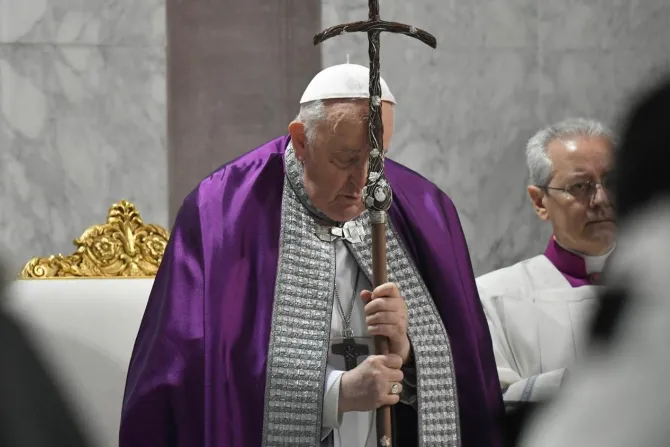
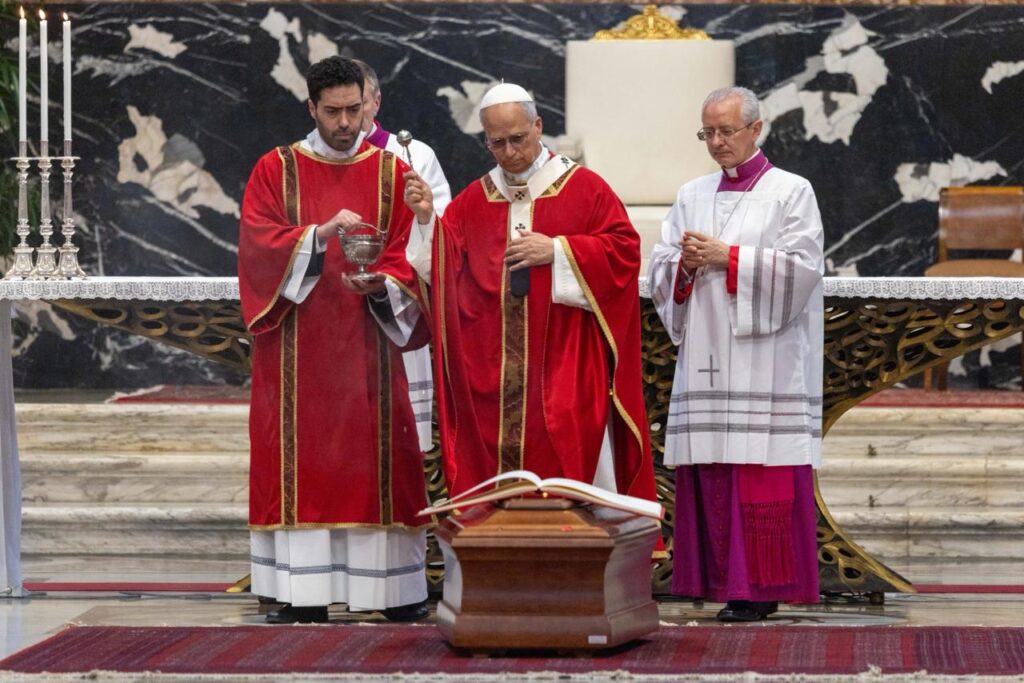
VATICAN CITY — Pope Leo XIV presided Thursday over the funeral rites for Cardinal Camillo Ruini, remembering him as a servant of the Church who “knew how to guide the people of God.”
The funeral liturgy took place June 18 at the Altar of the Chair in St. Peter’s Basilica, two days after Ruini died late Tuesday, June 16. Several cardinals, archbishops, and bishops were present to bid farewell to one of the most prominent figures of the Italian Church.
“For many years he served the Church, carrying out with the same dedication both the humblest tasks and those most laden with responsibility that the Lord wished to entrust to him,” Pope Leo said in his homily.
The pope recalled Ruini’s long and influential ecclesial service, pointing in particular to the initiatives that “left a deep mark on the journey of the ecclesial community and also on civil society.”
Among them, Leo cited Ruini’s “Cultural Project,” his efforts to promote the contribution of Catholics in Italian religious, civil, and political life, the diocesan synod in Rome and its implementation, and his “active and dialoguing presence at the various levels of the life of the Church, as well as of the secular world and society.”
Reflecting on the readings proclaimed during the liturgy, the pope cited St. Paul’s words that neither death nor life, nor angels, principalities, the present, the future, powers, height, depth, or any other creature “will be able to separate us from the love of God.”
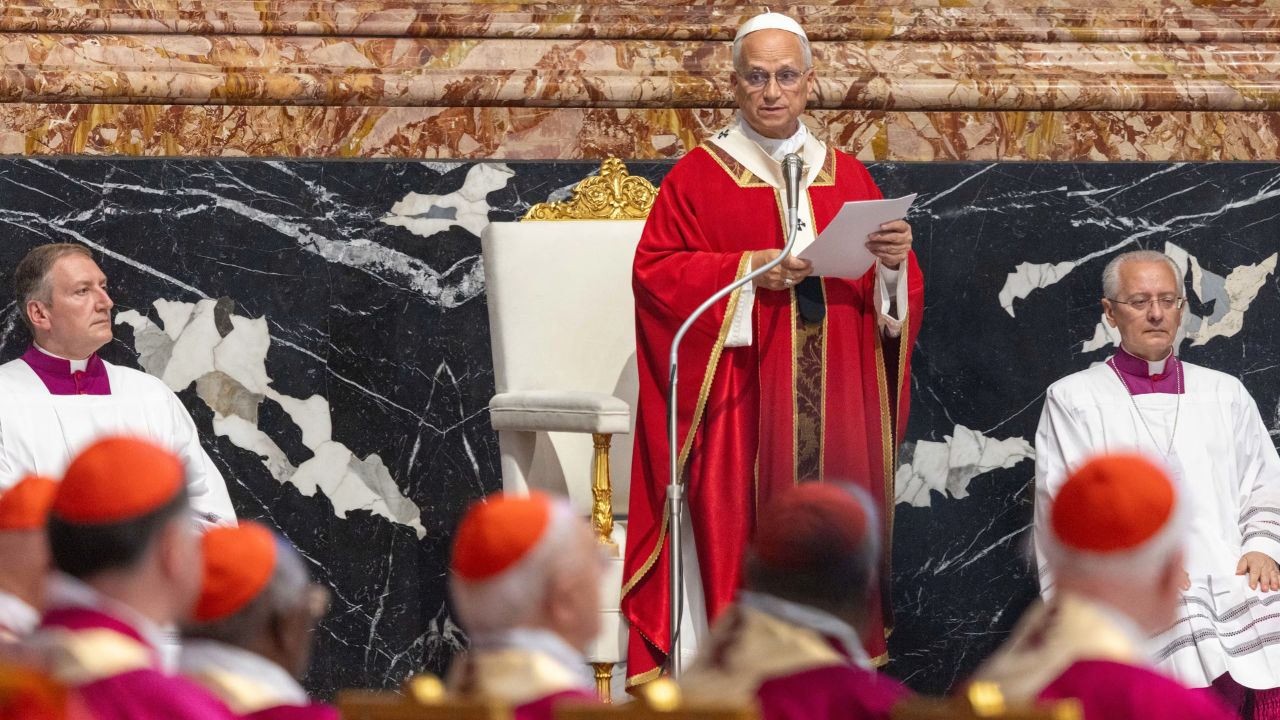
According to Pope Leo, this was “the truth that also animated Cardinal Ruini in his ministry.”
“The love of God is faithful,” the pope said. “Nothing can defeat it or separate us from it, because it is his gift, it comes from him, and it is poured out upon us beyond any merit of our own.”
Leo also quoted from Ruini’s spiritual testament, in which the cardinal, speaking of the many people to whom he felt gratitude for the good he had received, wrote: “From them I received no less than what I tried to give.”
“I think these are words that can also help us to live our responsibilities and our various forms of service with the same humility and the same trust in God,” the pope said.
The pope then turned to another passage from the day’s liturgy, taken from the Gospel of John: “Father, I desire that they also, whom you have given me, may be with me where I am.”
In those words, Pope Leo said, one can see the summary of a program of life — “the direction and ultimate purpose of a life spent for the good of one’s brothers and sisters and lived in the constant search for God’s designs for one’s own salvation and theirs.”
Again citing Ruini’s spiritual testament, the pope recalled the cardinal’s words: “I hope, Lord, that I have acted not for personal interests but for the goals that were entrusted to me and that I shared from the heart.”
Leo’s homily was also marked by memories of the popes Ruini served, including St. Paul VI and especially St. John Paul II, in whom — as Ruini himself wrote in his spiritual testament — the cardinal “experienced” the presence of the Lord.
At the end of the homily, the pope reflected on the episcopal motto Ruini chose as a bishop: “The truth will set us free.”
Those words, Leo said, “summarize the profound understanding of the person and of freedom that Christ has revealed to us and that the Church teaches: We are made for truth and for goodness, and only in this do we find unity, peace, and full fulfillment, in earthly life and for eternity.”
Looking at Ruini’s life, the pope concluded, “at how he lived and how he left this world, we can perceive a sign of the strength and solidity with which a person grows and matures when he finds in the truth that comes from God the center and foundation of his existence.”
This story was first published by ACI Stampa, the Italian-language sister service of EWTN News. It has been translated and adapted by EWTN News English.