ROME — Long after the crowds have left the Eternal City’s streets, thousands of pilgrims begin a journey that has endured for nearly five centuries.
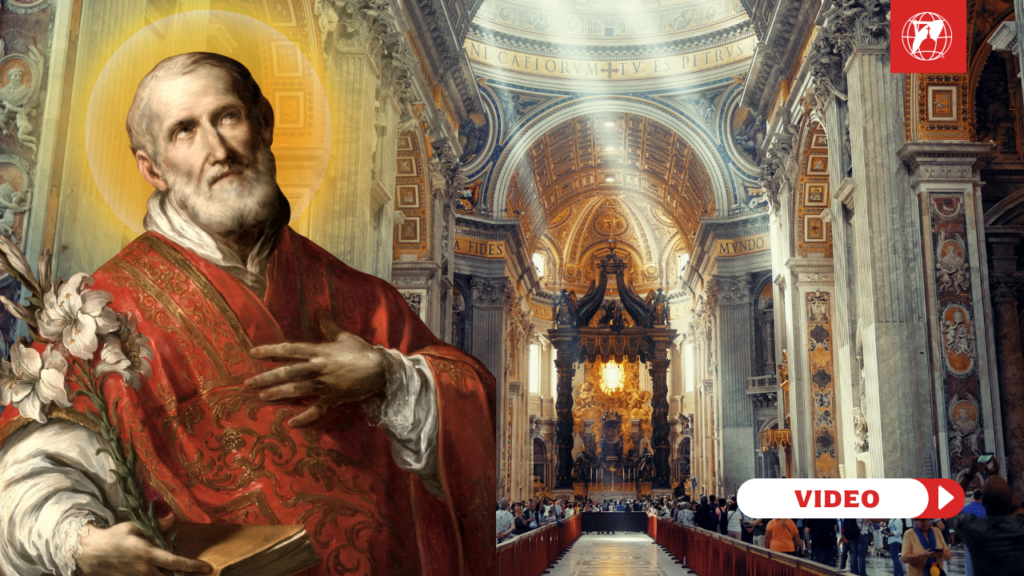
Each year, around 2,000 faithful set out on foot to complete the traditional Seven Churches Pilgrimage, retracing the route established by St. Philip Neri, the beloved “Apostle of Rome.” Covering approximately 25 kilometers (15 miles), the overnight pilgrimage takes participants to Rome’s four major papal basilicas and three additional ancient churches, combining prayer, sacrifice, and fellowship in a tradition that continues to inspire Catholics of every generation.
For many, the pilgrimage is more than a physical challenge. It is a spiritual journey toward Christ.
A pilgrimage born from joy
St. Philip Neri first revived the medieval tradition in 1552, offering it as a Christian alternative to Rome’s often extravagant Carnival festivities.
Initially, the saint made the journey alone in prayer. Over time, friends began accompanying him, and the group steadily expanded as members of the Oratory joined him. Even during his lifetime, thousands of pilgrims were reportedly walking alongside him through the streets of Rome.
“He loved making this journey often, at first on his own, in solitude,” explained Father Rocco Camillo, Superior of the Congregation of the Oratory.
“Later, he began bringing along his closest friends, and the group gradually grew as more members of the Oratory joined him.”
The seven churches
The pilgrimage follows a route connecting seven of Rome’s most important churches:
- St. Peter’s Basilica
- St. Paul Outside the Walls
- St. Sebastian Outside the Walls
- St. John Lateran
- Basilica of the Holy Cross in Jerusalem
- St. Lawrence Outside the Walls
- St. Mary Major
Yet the journey is more than visiting historic churches.
According to Father Camillo, each stop recalls one of the seven times Christ shed His Precious Blood. At every basilica, pilgrims pray for a particular virtue and one of the seven gifts of the Holy Spirit while asking for the grace to overcome one of the seven deadly sins.
“In this way,” he explained, “the pilgrimage became a journey through the seven virtues, the seven gifts of the Holy Spirit, and the seven deadly sins.”
A night of sacrifice and prayer
Today, the pilgrimage remains remarkably vibrant, particularly among young Catholics.
Walking throughout the night with little sleep, pilgrims accompany one another through prayer, singing, silence, and reflection.
“It’s going to be long, all through the night, but it’s also a small sacrifice that we’re making for the Lord,” one French pilgrim said. “It’s a time to grow in my faith and to keep moving forward.”
For organizers, the experience mirrors the Christian life itself.
“We set out rested, refreshed, and peaceful,” said volunteer Giuseppe. “By the end of the pilgrimage we are completely exhausted, both we organizers and the faithful. It allows us to experience an entire lifetime in the course of a single night.”
Genicia Dabu, a student at the Pontifical University of St. Thomas Aquinas (the Angelicum), said she views the pilgrimage as a reflection of life’s ultimate destination.
“I definitely want to get closer to God,” she said. “I want this to be a reflection of my pilgrimage to heaven… I want this to be a prayer, receiving clarity from God about what He wants me to do.”
A saint who continues to inspire
St. Philip Neri became renowned not only for his joyful spirituality but also for his extraordinary ability to reach young people.
Rather than distancing himself from them, he entered into their lives, helping them discover that holiness and joy belong together.
Antonio Francesco Mauro, an Oratorian from Assisi, says the saint’s example continues to transform lives today.
“There are too many adjectives to describe St. Philip Neri,” he said. “I see him as someone who had tremendous courage in life and who knew how to create something lasting.”
Since joining the Oratory and working with young people, Mauro said, his entire outlook on life has changed.
For Dabu, the saint feels almost like a personal friend.
“I have a very special devotion to him,” she said. “He is just super joyful in whatever he did and how he loved God. I feel like he’s an extrovert like me, so I feel that connection.”
Seeking Christ above all
For those who complete the pilgrimage, every kilometer becomes an act of prayer and every step an opportunity to draw closer to Christ.
As pilgrims walk through Rome in the footsteps of St. Philip Neri, they also embrace the spiritual legacy he left behind: a life centered entirely on Jesus.
Father Camillo recalled one of the saint’s best-known sayings, repeated until his final days:
“Whoever wants anything other than Christ does not know what he wants. Whoever seeks anything other than Christ does not know what he is seeking. And whoever does not act for Christ does not even know what he is doing.”
He described these words as St. Philip’s spiritual testament.
“What St. Philip left behind was a passion for seeking Jesus Christ as the one true good—the one thing that must be pursued throughout one’s entire life. Without Him, everything else is ultimately vanity.”
Adapted by Jacob Stein