Eight hundred years after the death of St. Francis of Assisi, his call to live the Gospel continues to resonate across the Catholic Church.
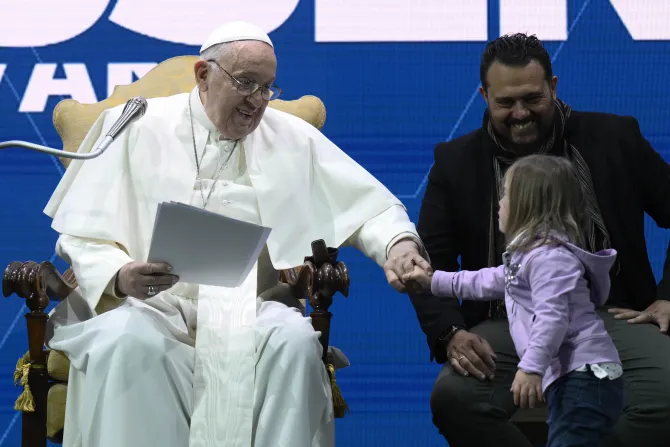
In 2026, that legacy is being remembered in a special way. To mark the 800th anniversary of the saint’s death, Pope Leo proclaimed a Special Year of St. Francis, inviting the faithful to rediscover the mercy, simplicity and peace that shaped Francis’ life.
But the story behind this Franciscan Jubilee begins centuries earlier, in a small, crumbling church outside Assisi.
“Francis, Rebuild My Church”
In the early 13th century, Francis was praying before the crucifix in the church of San Damiano when he heard Christ call him to a new mission: “Francis, rebuild my Church.”
At first, Francis understood the command literally.
He began repairing San Damiano and then other churches around Assisi. Among them was the small chapel of St. Mary of the Angels, better known as the Portiuncula.
The chapel would become one of the most important places in Franciscan history.
Br. John Wong, OFM, General Definitor for the Asia-Oceania Region, explained that the Portiuncula became, for Francis, above all a place of mercy.
Francis wanted others to experience that mercy too.
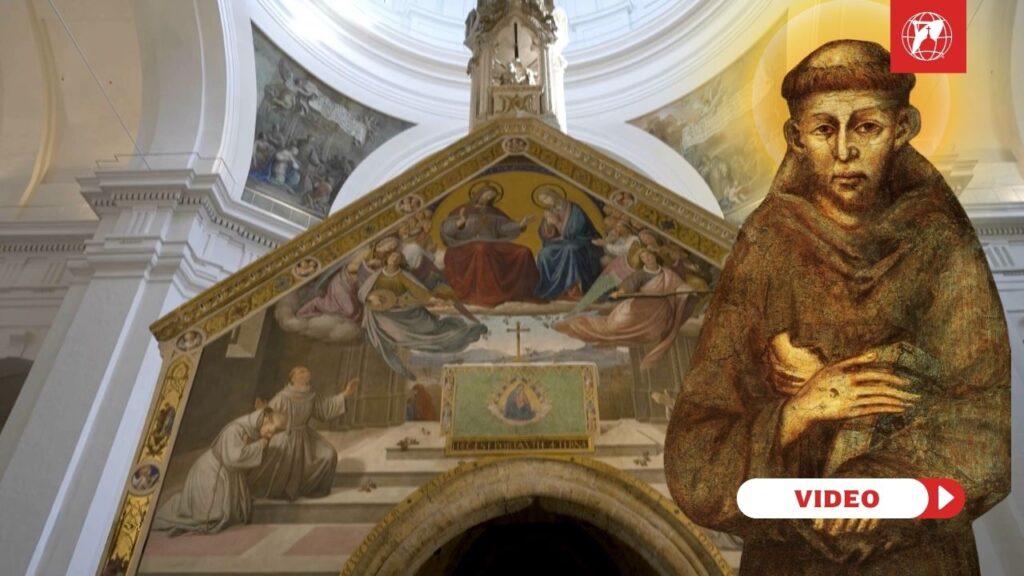
According to Franciscan tradition, while praying in the Portiuncula in 1216, Francis experienced a vision of Christ and the Virgin Mary surrounded by angels. Asked what he desired for the salvation of souls, Francis requested forgiveness for those who came to the chapel seeking God’s mercy.
He then approached Pope Honorius III, who approved the indulgence that became known as the Pardon of Assisi.
That desire to make God’s mercy accessible to everyone lies at the heart of the Franciscan Jubilee eight centuries later.
From Knighthood to the Gospel
The young Francis, however, had once dreamed of a very different life.
He pursued wealth, honor and the glory of knighthood. He lived in medieval Europe at a time marked by political struggles, warfare and social division.
For Br. John Wong, that world was not entirely unlike our own.
Francis experienced the turmoil of his age firsthand. Yet one of the most important moments of his conversion did not happen in a palace, church or battlefield.
It happened on the road, when he encountered a leper.
Francis had previously found lepers unbearable. But in this encounter, something changed. He began to recognize Christ in the suffering person before him.
The experience transformed his understanding of God, poverty and the human person.
Francis eventually renounced his former ambitions and chose a radically different path: to live according to the Gospel of Jesus Christ.
“The rule of St. Francis is quite simply to live the Gospel,” Br. John explained.
For Francis, evangelical poverty was not simply about possessing less. It was a way of becoming free enough to love God and others without fear.
The Stigmata of St. Francis
That desire to follow Christ eventually brought Francis to Mount La Verna in Tuscany.
In 1224, Francis withdrew there for prayer and solitude. It was at La Verna that he received one of the most extraordinary mystical gifts associated with his life: the stigmata.
Stigmata are wounds corresponding to those suffered by Christ during the Crucifixion. In Catholic tradition, they are understood as an exceptional mystical sign of participation in Christ’s suffering.
St. Francis is traditionally regarded as the first person in Christian history known to have received them.
For Br. Matteo Brena, OFM, the event represented “the pinnacle of his spiritual life.”
Fr. Massimo Fusarelli, OFM, Minister General of the Order of Friars Minor, described what happened at La Verna as the fulfillment of Francis’ spiritual journey: a union with Christ so profound that Francis became increasingly conformed to the One he loved.
But the wounds also point back to an earlier chapter of Francis’ conversion.
Long before receiving the wounds of Christ on his own body, Francis had drawn close to the wounds of society by serving lepers and the poor.
As Fr. Fusarelli explained, there is a profound connection between the wounds of the lepers Francis served and the wounds of Christ that were later impressed upon him.
In this sense, the stigmata were not isolated from the rest of Francis’ life. They were the culmination of a journey that began when he learned to recognize Christ in the suffering of another person.
Why St. Francis Still Draws Pilgrims
Eight centuries later, pilgrims continue to travel to Assisi, the Portiuncula and La Verna.
For many, devotion to St. Francis is deeply personal.
American pilgrims Marilyn and Peter Salibi, for example, described how the cross became woven into their own story.
Peter received a San Damiano cross from his godmother as a child and prayed with it throughout his life. His family name, Salibi, also means “of the cross” in Arabic.
For Marilyn, that connection carried another meaning. At one point, while discerning religious life, she had hoped to take the title “of the Cross.” Her vocation ultimately took a different direction—and she later married Peter, whose own name carried that meaning.
Stories like theirs show why Francis continues to attract people from vastly different backgrounds.
His life presents a Christianity that is demanding yet remarkably simple: follow Christ, love the poor, seek peace, care for creation and trust in God’s mercy.
The Special Year of St. Francis
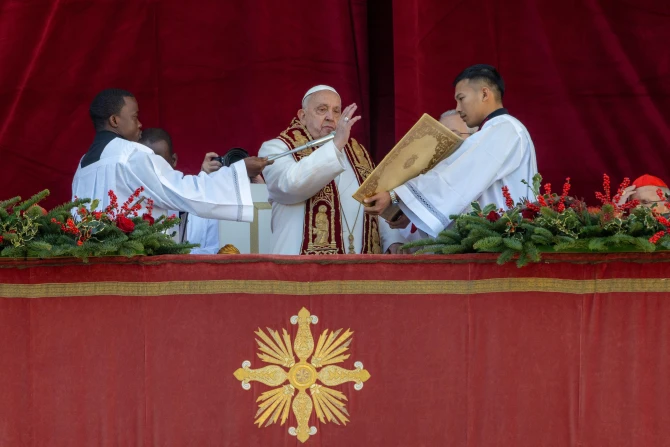
On January 10, 2026, Pope Leo proclaimed a Special Year of St. Francis to commemorate the 800th anniversary of the saint’s death.
The Jubilee renews the connection between Francis’ desire for mercy at the Portiuncula and the Church today.
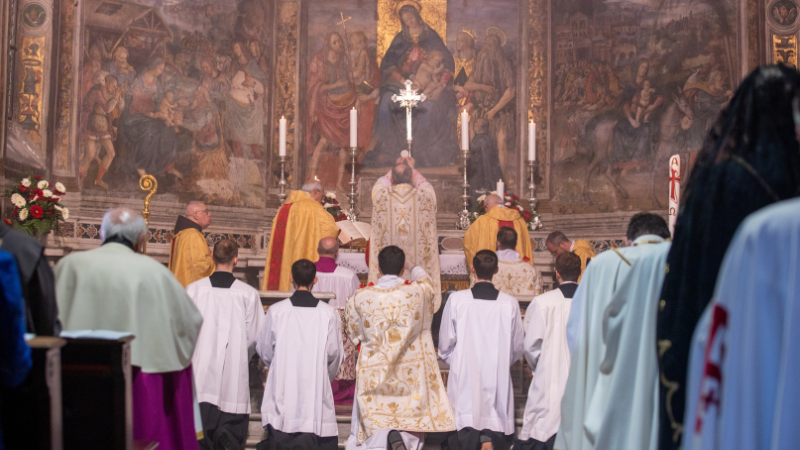
During the special year, the faithful can receive a plenary indulgence under the conditions established by the Church through pilgrimage and prayer at designated Franciscan churches.
The invitation also extends spiritually to those unable to make such a pilgrimage, including the sick, elderly and bedridden who unite themselves in prayer with the Franciscan Jubilee.
In this way, the Jubilee returns to something Francis desired eight centuries ago: that God’s mercy should reach as many people as possible.
An 800-Year-Old Message for the World Today
St. Francis died in 1226. Yet the world in which his 800th anniversary is being celebrated faces many of the same fundamental struggles that marked his own age: war, division, fear, poverty and uncertainty.
That may be one reason his witness remains so compelling.
Francis did not respond to the turmoil of his age by withdrawing from the Gospel. He embraced it more radically.
He sought Christ among lepers. He chose poverty over status. He prayed for peace. And at the Portiuncula, he asked that sinners be given the opportunity to encounter God’s mercy.
For Br. John Wong, that is ultimately what the Franciscan Jubilee offers the world today: an invitation to believe that mercy remains possible, charity can grow and peace is still worth seeking.
Eight hundred years later, the call Francis heard at San Damiano has not lost its urgency.
The Franciscan Jubilee is therefore more than an anniversary of a beloved medieval saint. It is an invitation to return to the heart of his vocation—and, in his words and example, to live the Gospel.
Adapted by Jacob Stein. Anthony Johnson and Alexey Gotovskiy contributed to this production. Produced by Bénédicte Cedergren. Camera by Anthony Johnson and Alberto Basile.