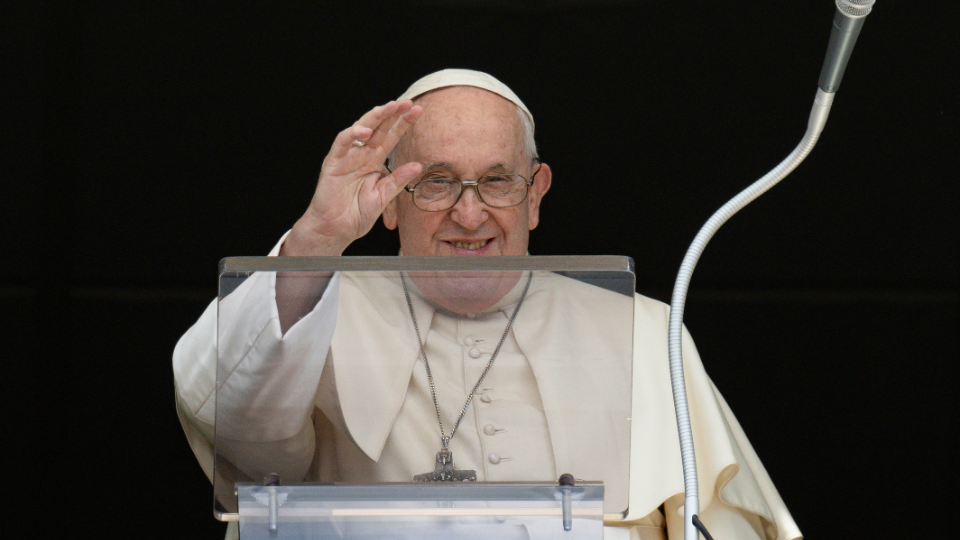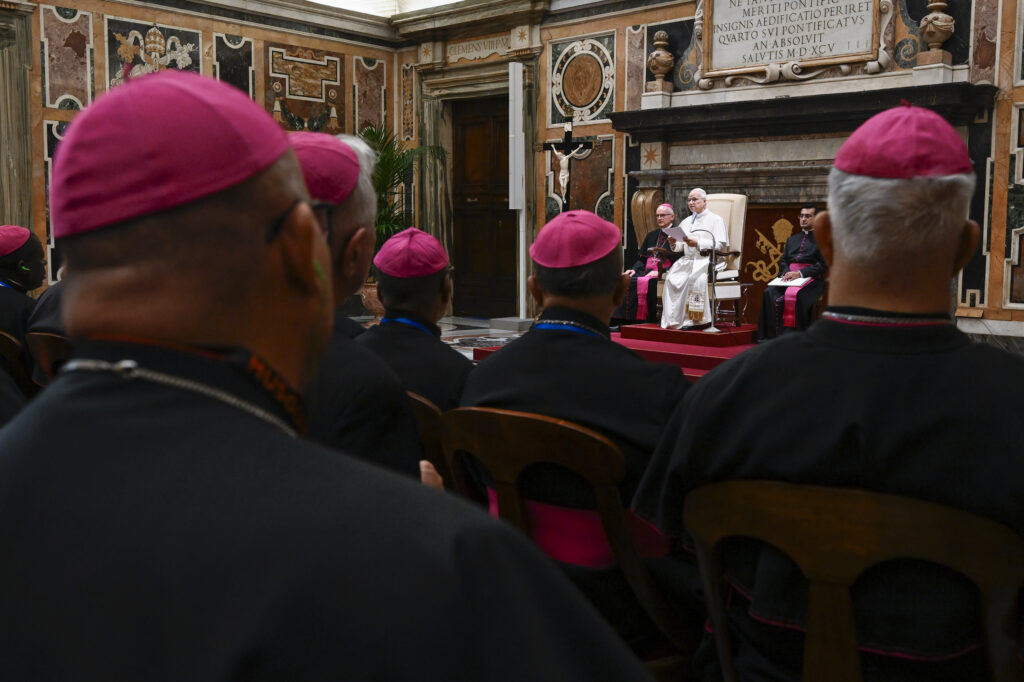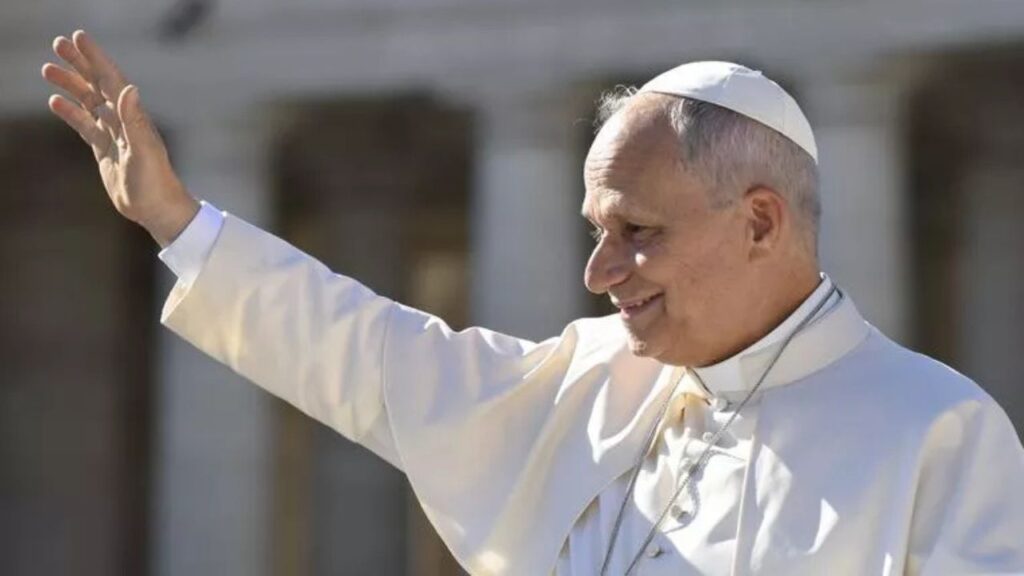
The unexpected success of the campaign funding the Pope’s September trip is reaching well beyond the Church’s usual donors — a ‘stirring,’ its organizer says, that says something about France’s current state of mind when it comes to the faith.
France is experiencing a wave of enthusiasm ahead of Pope Leo XIV’s Sept. 25-28 visit that has no real precedent in living memory. It is the first official papal journey to the country since 2008 and the first to unfold on this scale — from stops at major sites in and around Paris to the town of Lourdes.
Tickets for the Sept. 25 youth vigil at the Stade de France, the country’s national stadium sold out in under an hour. More than 400,000 people have already registered for the Sept. 26 Mass at Paris’ Place de la Concorde. And as many as 500,000 people are expected to gather along the Champs-Élysées for a chance to catch a glimpse of Pope Leo. Meanwhile, the Sanctuary of Our Lady of Lourdes had to close registration a full month early after reaching its cap of 150,000 participants. Hotels in the towns along the Pope’s route have been fully booked for more than a month — a hint of the popular fervor awaiting him.
A notable measure of the enthusiasm surrounding the papal visit is the financial generosity it has been inspiring. Every day this summer, roughly 100 checks and 100 bank transfers have arrived at the Archdiocese of Paris to help pay for Pope Leo XIV’s stay in the capital. This flow of donations— which had reportedly reached around 2 million euros as of late August — has not let up, even through France’s summer vacation season when giving typically stalls.
For Sylvie Bretones, who has overseen the fundraising campaign since its July 10 launch, what is most significant is not only the amount of donations, but also the people who have been donating, with the archdiocese observing a wave of unfamiliar donors. “People showed up despite the summer,” Bretones told the Register, describing the “phenomenon” as “truly notable.”
An Unusual Generosity
The frequency of donations, especially in a season when financial giving tends to dry up, is all the more striking because France has nothing like the American tradition of grassroots philanthropic fundraising. Large-scale, onetime appeals to the general public are rare and also rarely so effective. Against that backdrop, an average gift of 200 euros — about $215 — stands out, as it is twice the national average for a one-off donation in France, which France Générosités put at a round 100 euros in 2024. Gifts of 10,000 euros and more have also come in, Bretones said, reflecting an “unusual generosity.”
Under France’s 1905 law separating church and state — the bedrock of the country’s strict secularism, which bars the government from funding or organizing religious activities — the government’s role in the papal visit is limited to security; estimates for everything else now run as high as 20 million euros and fall to the Archdiocese of Paris and the Diocese of Lourdes and Metz. “Nobody is obligated to give,” Bretones said, describing a mobilization in which “some contribute financially, others through volunteering, others through prayer.”
Much of that money still comes from the archdiocese’s registered annual-appeal donors — the regular Massgoers already enrolled to support parish finances year after year. But the campaign for the Pope’s visit was built from the outset to reach beyond that circle, with a dedicated committee formed to solicit larger donations from people who are not necessarily practicing the faith. “Among our donors are people who are searching for meaning, for more spirituality, who are of Catholic culture but who are not publicly known as practicing Catholics,” Bretones said.
Larger Picture Behind Donations
Once the papal visit has passed, Bretones plans to study the profiles of these new donors to get a sense of the reasons behind this renewed interest in the Church, which she describes as a “stirring.” “I would like to understand whether some are people returning to the faith who drifted away as teenagers and later found their way back, through life’s hardships or through their own children.” That, she added, will help the Church take the pulse of the people of France.
The extent of this enthusiasm, in Bretones’ view, has as much to do with what this Pope is saying as with the novelty of his upcoming visit to France. “Each pope leaves his own mark,” she said, pointing to Pope Leo XIV’s recent encyclical, Magnifica Humanitas, on artificial intelligence, which has become one of the summer’s bestselling titles in French bookstores — and not only Catholic ones. “The role of a pope is also to challenge us,” she said. “He challenges us on AI, the very first words of his pontificate on peace were very strong, and so are his words on end-of-life issues.” The Pope, in that sense, is “someone who hands the faith on to the people he comes to meet.”
The Pope is resonating with the people of France, as demonstrated by renewed interest in the Church that French dioceses are taking seriously.
For instance, on Sept. 24, the night before Leo’s arrival, a broad cross section of French Catholic influencers, including Dominican Brother Paul-Adrien, traditionalist influencer Father Matthieu Raffray and the creators of the popular YouTube channel “Two Disciples,” will gather at the Church of the Madeleine for a joint prayer vigil — an unusual show of unity among online figures who normally cultivate separate followings.
The vigil at the Stade de France on the first night of Pope Leo’s visit also aims to leave an indelible mark on a young audience, with the main event built around the great saints of French history. The music will blend Gregorian chant with contemporary pop louange (“pop praise”) worship under the direction of Alexis Duffaure, choirmaster of Bordeaux Cathedral, who has spent weeks rehearsing 2,500 choristers, a symphony orchestra and a contemporary music orchestra.
“People understand what it means when a pope comes to visit a country,” Bretones said. “It marks a generation.”
This article was originally published by National Catholic Register.