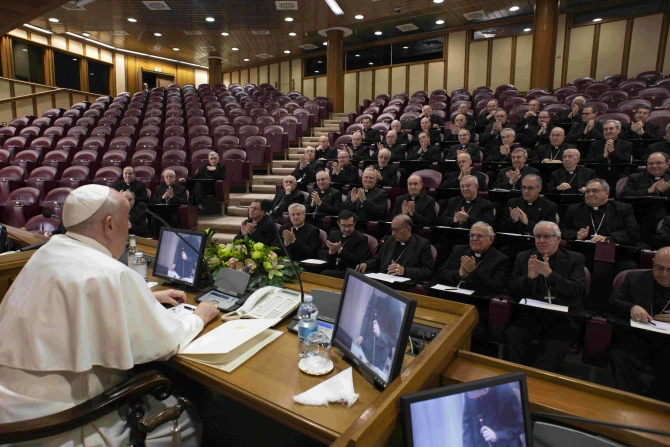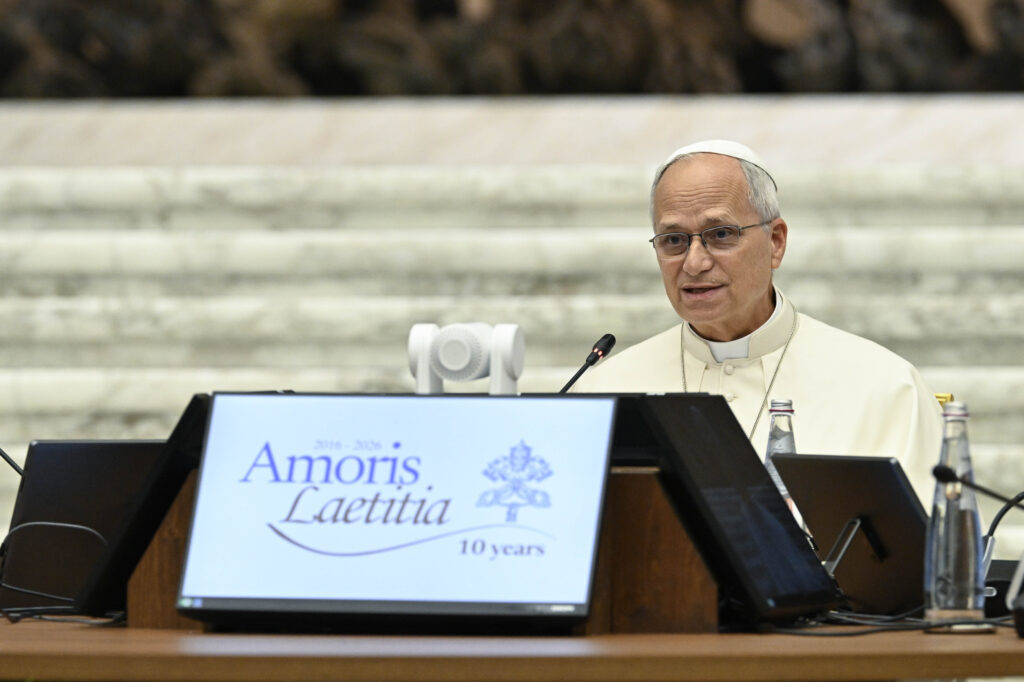
Pope Leo XIV on Wednesday urged bishops from around the world gathered at the Vatican for a meeting on the family to face with “courage” the challenge of learning from and responding to families marked by hardship and “apparent failure.”
“The wisdom of the people of God reaches us through our common faith, which enlightens all families, including situations marked by difficulties, loneliness, and at times even apparent failure,” the pope said in his opening address to the gathering, being held in the Paul VI Audience Hall and scheduled to conclude Oct. 14.
The closed-door assembly, which is not open to journalists, is expected to produce a synthesis document without doctrinal authority that will later be presented to the pope.
The meeting is part of the synodal evaluation assemblies proposed at the conclusion of the 2021-2024 Synod on Synodality process.
Ten years after the two synods on the family and the widespread debate sparked by Amoris Laetitia, 154 bishops and cardinals, 53 priests and lay faithful, and 11 invited families began a series of meetings Wednesday aimed at assessing the current situation and evaluating the reception of Pope Francis’ 2016 apostolic exhortation on the family.
The document generated significant debate after its publication because it opened the possibility, in certain cases, for some divorced and civilly remarried Catholics to receive the sacraments of reconciliation and the Eucharist.
The pope made no direct reference to that issue during his address, which he delivered in English following a time of prayer.
Leo XIV said the lives of families pose to the Church “questions that deserve to be faced with courage” and highlighted several situations that concern him.
“In many contexts, a growing distance has emerged between the ways in which sex and intimacy are lived and the Christian vision of marriage,” he said.
“Young people continue to long for love, fidelity, and belonging, yet many find it difficult to embrace how such a vision of love can take shape in their own lives or to believe that a lifelong commitment is the condition for reaching what they desire,” he continued.
“Economic insecurity, migration, violence, loneliness, and other forms of emotional fragility also shape the choices people make and the possibilities they can imagine for their future,” he added.
‘What are people truly seeking?’
Focusing on contemporary challenges, the pope encouraged bishops to listen to families and stressed that the Church still has much to learn from them.
In that context, he posed a series of questions that he said should accompany the meetingʼs work, which is being conducted according to the synodal method and conceived as a space for listening and discernment.
“What are people truly seeking beneath these cultural changes? What do their joys and hopes, griefs and anxieties reveal to us? Where do our pastoral language and practices succeed in opening a path, and where do they fail to touch people’s hearts or assist their efforts to do what is good? What is the lived experience of families teaching us — an experience from which we have not yet fully learned? What can we offer as formation for healthy and holy family life? In particular, what can we learn from parents as they seek to accompany their children and young people in such contexts?”
‘Fragility deserves special attention’
The Holy Father also emphasized that “fragility deserves special attention” because it can “profoundly shape the way people see themselves, their future, and even their relationship with God and with the Church.”
“We all know the gap between the good we desire and what we are able to live. We need grace, forgiveness, and new beginnings to accomplish God’s will, and we learn that fidelity is itself a grace to be received and a path to be gradually renewed, often through trial,” he said.
He added that recognizing this “shared challenge” should shape the way members of the Church accompany families. He then posed additional questions to participants.
“What kind of Church, then, do people encounter precisely when they are most fragile? Do our communities help them discover that they still have a place, a responsibility, and gifts to offer? Can the truth we proclaim be encountered through the patience, closeness, and mercy of our pastoral presence? How can we announce to them the fullness of the Gospel’s teaching about the family?”
The pope urged participants to give these questions the attention they deserve.
“The Holy Spirit often speaks through the very situations that challenge us and enlightens us that we may discover how God’s mercy and the salvific grace of Christ can reach our families today, particularly in their weakness and resilience, in their hopes and disappointments, in their longing for communion and their search for meaning,” he said.
In the final portion of his address, Leo XIV called for the meeting’s work to unfold in a spirit of authentic “evangelical freedom” and encouraged participants to share honestly both the joys and challenges experienced in their local Churches.
Confidentiality requested
The pope also underscored the importance of prayer during the gathering and expressed hope that the meeting would help develop a shared assessment of the past decade of family ministry in the Church.
Finally, he asked all participants to exercise “discretion” and preserve “the confidentiality that this time of listening and discernment requires.”
This story was first published by ACI Prensa, the Spanish-language sister service of EWTN News. It has been translated and adapted by EWTN News English.