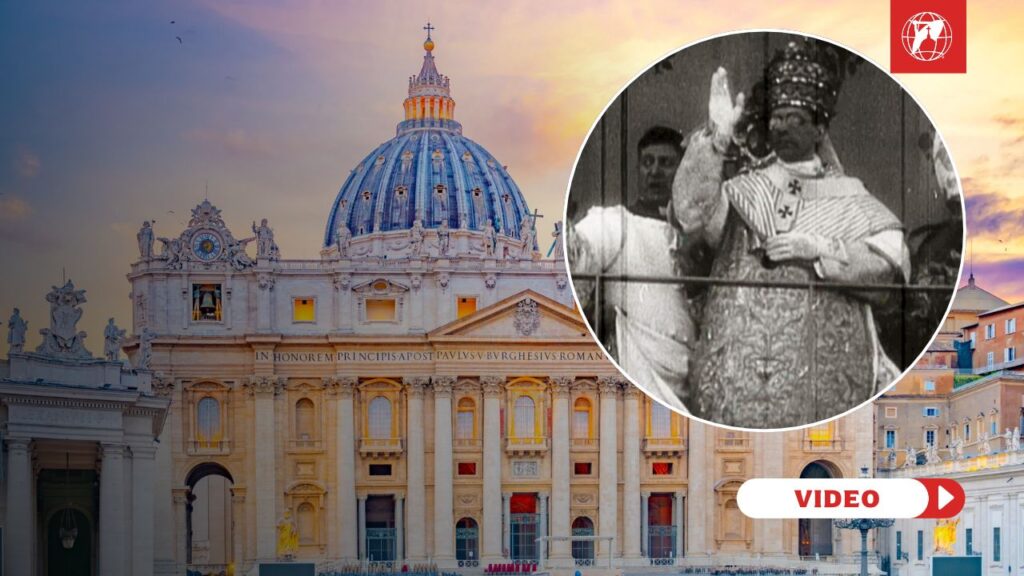
The opening of the Vatican Apostolic Archives in 2020 gave historians access to thousands of documents shedding new light on the wartime pontificate of Pope Pius XII and the Holy See’s efforts to assist Jews facing persecution during the Second World War.
Among the newly accessible records was a vast dossier documenting requests for help from Jews across Europe and beyond. The documents reveal an extensive network of assistance coordinated from Rome, reaching religious communities, dioceses, and diplomatic representatives around the world.
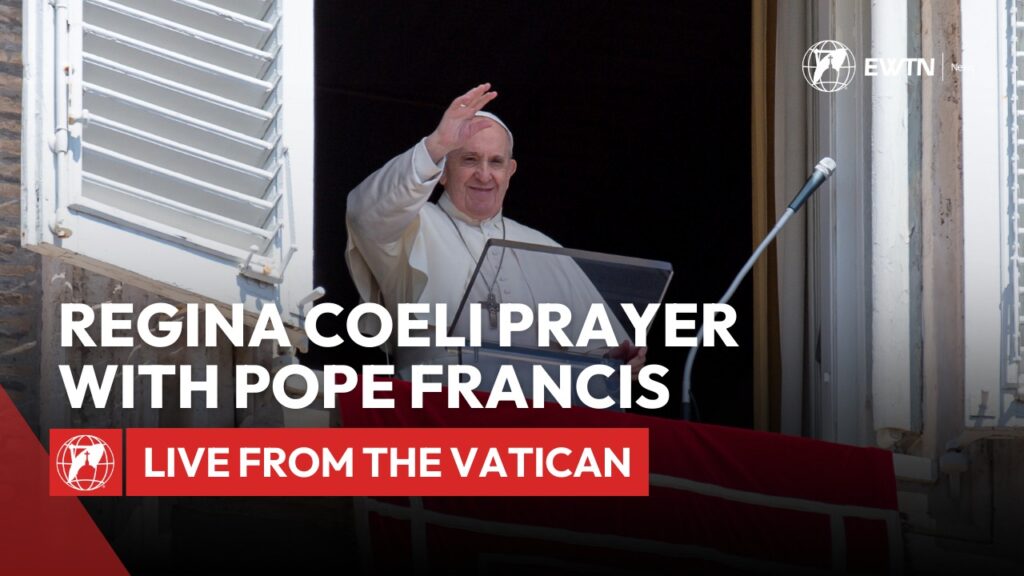
In an interview with EWTN News Deputy Vatican Editor Hannah Brockhaus, Dr. Johan Ickx, director of the Historical Archives in the Holy See’s Section for Relations with States, explains how this network operated and what the archival material reveals about the Vatican’s response to wartime persecution.
A worldwide network of assistance
According to Dr. Ickx, the Vatican’s assistance operated on four interconnected levels, beginning in Rome and extending internationally.
The first level involved local assistance in Rome, where figures such as Irish priest Monsignor Hugh O’Flaherty played an important role. Ickx explains that O’Flaherty and others were acting on the instructions of Pope Pius XII.
The second level extended throughout Italy, connecting Rome with dioceses, monasteries, and abbeys that could provide assistance to those in danger.
A third network operated through apostolic nunciatures and dioceses across Europe, coordinated by the Vatican Secretariat of State. These institutions received requests from Rome and were tasked with intervening to help people escape persecution, find safety, or cross borders.
The fourth level extended beyond Europe, reaching South America, the United States, and even Asia.
“There are four levels of help organized all over the world,” Ickx explains.
Describing the reach of the operation, he says: “So we see that these tentacles were all over, like an octopus, over the world, working and functioning.”
The network did not always succeed in its efforts. As Ickx acknowledges, “Sometimes it went wrong and sometimes we were not able to save people.”
Reexamining the wartime pontificate of Pius XII
The opening of the archives has provided historians with new material for examining Pope Pius XII’s decisions during the war, including what he knew about the persecution of Jews and how the Vatican responded.
Asked how historians should weigh the Pope’s knowledge against his diplomatic and pastoral responsibilities, Ickx points to what he describes as a longstanding gap in the historical understanding of Pius XII.
“There is, let’s say, a black hole in the whole history on Pius XII,” he says. “This black hole, of course, was shaped by a false narrative on him.”
Ickx traces this narrative to Soviet propaganda in the 1960s, which he says spread throughout Europe and America within a few years. It portrayed Pius XII as “the Pope of Hitler,” a pontiff who remained silent and did nothing to help Jews facing persecution.
Ickx rejects this characterization, pointing to the German reaction to Pacelli’s election as Pope as evidence of the opposition he faced from the Nazi regime.
“The Germans were outrageous about the election of Pope Eugenio Pacelli because he was a anti-racist and they knew it,” he says.
He also addresses criticism of the Pope’s public statements during the war, explaining that Pius XII sometimes chose silence on the diplomatic and political level while assistance efforts continued through the Vatican’s network.
Ickx refers in particular to the deportation of Jews from Rome, emphasizing that it was a decision made by the Nazi authorities rather than the Holy See. He argues that the Pope was simultaneously working to save thousands of people elsewhere in Europe through the assistance network.
What the archives reveal about the Vatican’s response
The documents examined by historians offer insight into an international system that responded to requests for help from people facing persecution.
Rather than being confined to Rome, the operation connected local clergy and religious communities with dioceses, diplomatic representatives, and Vatican officials. Its reach extended across continents, including cases involving people who found refuge as far away as China.
For Ickx, the newly accessible records are important to understanding the scale of the Vatican’s efforts and the coordination behind them.
The four levels of assistance demonstrate how requests could move from local communities to the Secretariat of State and then to representatives capable of intervening on the ground. The network relied on cooperation between people and institutions in different countries, all working to help those in danger.
The archives also preserve evidence of the limitations of these efforts. As Ickx notes, not every intervention succeeded, and not everyone could be saved.
A legacy of defending human dignity
Asked how history will ultimately remember the Vatican’s contribution during the Second World War, Ickx says he believes its opposition to Nazism and communism will become clearer.
He describes Pius XII as a decisive leader who stood for human dignity and freedom, without distinction between individuals.
“The Pope was not one who wanted half the way, who wanted, you know, maybe, not. No. He was a decision maker. And he knew what way to choose.”
For Ickx, the central legacy of the pontificate was its defense of the dignity and liberty of every human being.
“And that was the truth for humanity dignity of the human being and defense of the liberty of the human being, every human being, and without any distinction,” he says.
He concludes: “And it will be a glorious pontificate.”
As scholars continue examining the Vatican’s wartime records, the documents offer further insight into the people, institutions, and international connections involved in efforts to assist those persecuted during the Second World War.
Adapted by Jacob Stein. Produced by Bénédicte Cedergren, Camera by Alberto Basile; Video Edited by Andrea Manna.