ANALYSIS: In a secularized world where God seems to have been sidelined in history, awareness of the human need for God appears to be returning with great force and in ways yet to be fully understood.
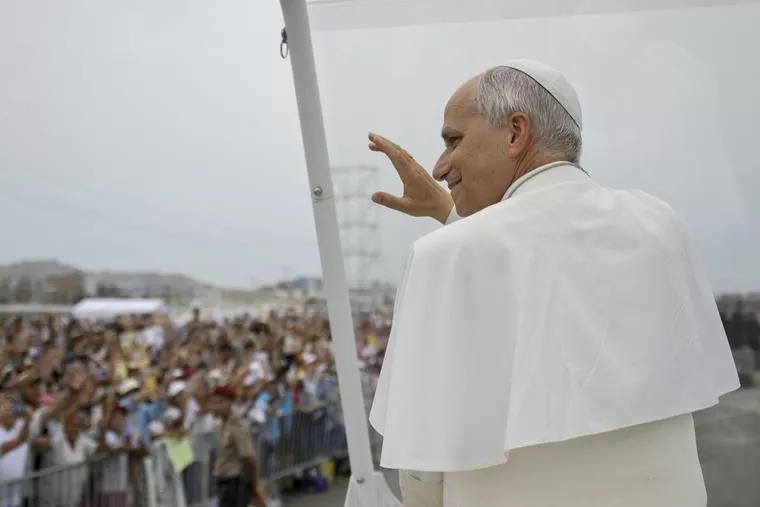
Leo XIV’s homecoming in Peru, the third and final country in his Nov. 6 to 16 South American tour, was extraordinary. Soon after Leo’s arrival in the country where he had served for nearly two decades, 3 million people lined the streets to watch the popemobile pass by — and the crowds never stopped coming.
Similarly, in Argentina, attendance also reached 2.5 million for a Mass. Uruguay recorded more modest numbers, but its population is much smaller, and the prayer vigil for young people drew 100,000, a remarkable achievement considering the country’s secularization.
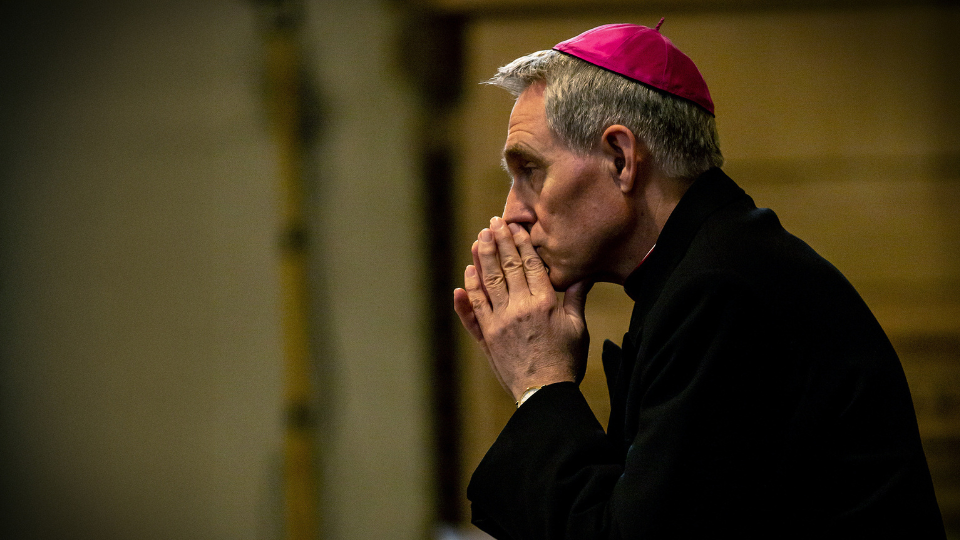
If one thing can be said about all of Leo XIV’s international travels to date, it is that the Pope’s presence has highlighted a great longing for God. I would describe this as a form of nostalgia, meaning a desire that God’s people have to “return home,” one that manifests itself whenever the Pope’s presence allows it.
In Paris, 800,000 people attended Mass on Sept. 26 in the Place de la Concorde, where two centuries ago Catholics were executed. Earlier this year, 1.2 million people crowded in Madrid’s Plaza de Cibeles.
Everywhere the Pope has gone, people have responded.
They responded, of course, because he is the Pope and his presence is necessary for the people of God. The welcome in Argentina, for example, was very warm. A pope had not been seen in Argentina for 39 years, and not even Francis, himself Argentinian, ever returned home.
In a secularized world where God seems to have been sidelined in history, awareness of the human need for God appears to be returning with great force and in ways yet to be fully understood.
France knows this well, where adult baptisms at the Easter vigil have been steadily rising for at least five years. This year, more than 21,386 adults and adolescents were baptized, a 28% increase over the previous year and a figure that has more than tripled in the space of 10 years (in 2015, there were fewer than 4,000 baptisms annually).
This return to God is so incredible and mysterious that the region of the Archdiocese of Paris, the Île de France, convened a large assembly to better understand the reason for the conversions.
The 2026 “Easter surge” extended to Asia, where Singapore surpassed 1,250 adult catechumens, and Hong Kong recorded over 2,500 baptisms.
But the increase in adults coming into the Church has also been exponential in other Western countries, including the United States. The Register conducted an analysis and found great growth in various dioceses and regions. Adult baptisms are also growing in Belgium, the Netherlands, Switzerland, Ireland, Australia and the United Kingdom.
In short, the world is seeking to embrace the faith, and this is something the Pope must consider carefully.
The messages Leo sent to young people, specifically, during this South America trip were heartfelt and encouraging. In Uruguay, during the vigil with young people, he urged them to “never be afraid of forever” and asked them to focus on love and family.
In Argentina, before a million young people, he invited them to let Christ transform them.
In Peru, he gave young people a missionary mandate, asking them to care for those going through difficult times.
Future of Apostolic Travels
This Latin American trip has, in some ways, established a pattern for papal travel.
While we wait to see how the new direction of Vatican communications will be managed under the helm of former EWTN News head Montse Alvarado, we do know how Leo organizes his trips.
Speeches to the diplomatic corps always have three parts: one concerning the country being visited, one addressing global challenges, and a conclusion intended to leave a message.
In Uruguay, Argentina and Peru, the Pope made appeals for life, but above all he addressed the political situation, calling for policies that serve citizens and emphasizing that “the economy is for man, not man for the economy.”
He also called for the dignity of work and respect for human rights and addressed some of the common challenges facing the average Latin American.
The Pope’s homilies always have a missionary mandate. His meetings with young people are always a call to commitment.
Defense of life and family, mission and daily commitment are Leo XIV’s three key themes.
On this trip, the Pope added another dimension: proximity.
The joy in his eyes when he arrived in Peru was palpable. Leo XIV is, first and foremost, a missionary Pope. And he is decidedly a Pope from the Americas — some would argue more South American than American and, to be precise, Peruvian.
As the Peruvian anthem played, Leo XIV followed along, singing it from memory.
It was long thought that the era of papal journeys was over — did people care anymore? Today, we can say that this is not the case; rather, a new spring has begun, as Christianity blossoms in a turbulent world — and people are flocking to the faith and its representative, the Pope.
Challenges Ahead
Now, Leo XIV is called not only to carry forward the missionary mandate, but also to balance it with the needs of governance.
Faced with a world yearning for God, the Church is nonetheless confronted with challenges that threaten unity within the Church.
For instance, during his in-flight press conference at the conclusion of his trip, Leo addressed questions over married priests, as well as Traditionis Custodes and the Latin Mass. One of the priorities of his pontificate, he stressed, is the promotion of “unity and communion among us as members of the Church.”
Meanwhile, the Pope met with victims of abuse during this trip, and it was an important gesture. In Argentina, Uruguay and Peru, addressing clerical abuse has been difficult, and the Church’s loss of credibility has been enormous. Yet people continue to seek out the Pope; people continue to seek out the Church.
Now is the time to reap the fruits, amid this longing for God that the world seems to be experiencing.
Governing the Church is important: Appointments will be necessary, and the generational transition must be carefully managed, but the center of everything can only be evangelization, as Leo reminded us on his just-concluded papal trip.
As Leo exhorted the faithful at his Nov. 13 Mass in Chiclayo: “The world is waiting for us and the mission is only beginning.”
This article was originally published by National Catholic Register.