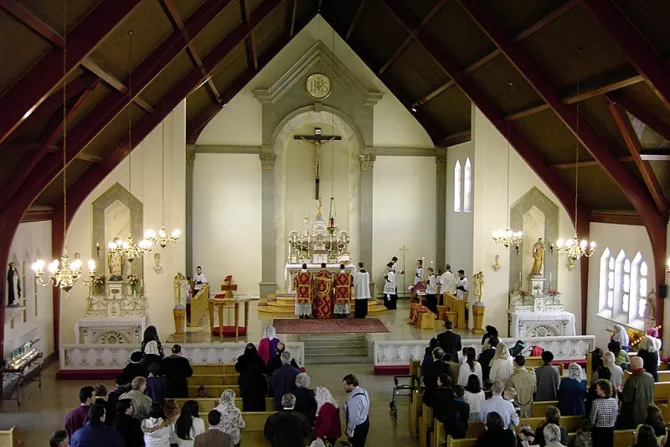
The Vatican has announced it will carry out an apostolic visitation to the Priestly Fraternity of St. Peter (FSSP), an institution whose priests celebrate the Traditional Latin Mass (TLM) and which is in full communion with the Catholic Church.
The FSSP should not be confused with the Priestly Fraternity of St. Pius X (SSPX), a traditionalist group that is not in full communion with the Catholic Church and which has an irregular canonical status.
The Sept. 30 statement from the Dicastery for Institutes of Consecrated Life and Societies of Apostolic Life says that “it has called for an apostolic visitation to the Priestly Fraternity of St. Peter … in order to deepen the understanding of this society of apostolic life of pontifical right and to offer the most appropriate support to its journey of following Christ.”
The apostolic visit, says the text signed by the prefect of the dicastery, Cardinal Joăo Braz de Aviz, and Sister Simona Brambilla, the dicastery’s secretary, is taking place “in the context of the process of accompanying the Institutes of Consecrated Life and the Societies of Apostolic Life that were previously established by the Pontifical Commission Ecclesia Dei and which Pope Francis’ motu proprio Traditionis Custodes has placed under the jurisdiction of this dicastery.”
In a statement published by the FSSP on Sept. 26, the institution specified that “as the prefect of this dicastery himself made clear to the superior general and his assistants during a meeting in Rome, this visit does not originate in any problems of the fraternity but is intended to enable the dicastery to know who we are, how we are doing, and how we live so as to provide us with any help we may need.”
“The last ordinary apostolic visit of the fraternity was undertaken in 2014 by the Ecclesia Dei commission,” the statement added.
What is the Priestly Fraternity of St. Peter?
The Priestly Fraternity of St. Peter states on its website that it is a society of apostolic life of pontifical right whose priests “work together for a common mission in the Catholic Church, under the authority of the Holy See.”
In its apostolate and mission, the FSSP uses “the liturgical books in force in 1962,” meaning it celebrates the Traditional Latin Mass, “as specified in its decree of erection of 1988, confirmed by decree of Pope Francis dated Feb. 11, 2022.”
In February 2022 the Holy Father authorized the FSSP to continue celebrating the TLM, but he also encouraged them to reflect on what is established in Traditionis Custodes. The authorization was then confirmed by the Holy Father himself in March of this year.
The general house of the FSSP is in Fribourg, Switzerland, and has about 368 priests and 201 seminarians. The society has eight members in Mexico, 10 in Chile, 13 in Spain, and a group of 25 in Canada.
What is the Pontifical Commission Ecclesia Dei?
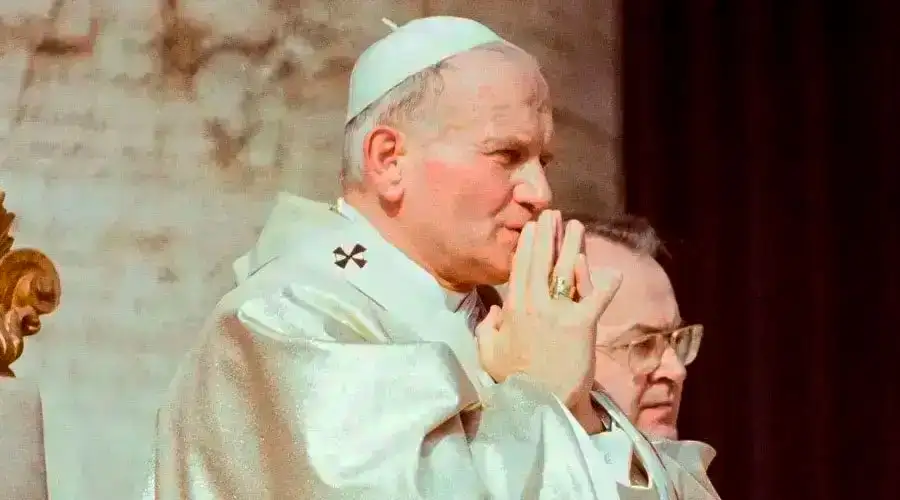
The Pontifical Commission Ecclesia Dei was created by Pope John Paul II in 1988 to dialogue with the Lefebvrists and to facilitate full communion with the Catholic Church for those “linked in various ways to the society founded by Archbishop [Marcel] Lefebvre” (the SSPX).
The Vatican further noted that “the pontifical commission exercises the authority of the Holy See over the various religious institutes and communities erected by it, which have as their own rite the ‘extraordinary form’ of the Roman rite [TLM] and preserve the preceding traditions of religious life.”
Pope Francis’ motu proprio Traditionis Custodes
The Vatican published Pope Francis’ motu proprio Traditionis Custodes on July 16, 2021. The text severely limits the celebration of the Traditional Latin Mass (extraordinary form), or Tridentine Mass, i.e. celebrated with the 1962 missal.
Pope Francis thus modified the provisions given by Pope Benedict XVI in his motu proprio Summorum Pontificum, which in 2007 had liberalized the celebration of the Traditional Latin Mass.
This story was first published by ACI Prensa, CNA’s Spanish-language news partner. It has been translated and adapted by CNA.