Theologians and others involved in the October gathering of the Synod on Synodality met this week to offer their expert opinions on the synodal process as it moves into the “reception” or implementation phase.
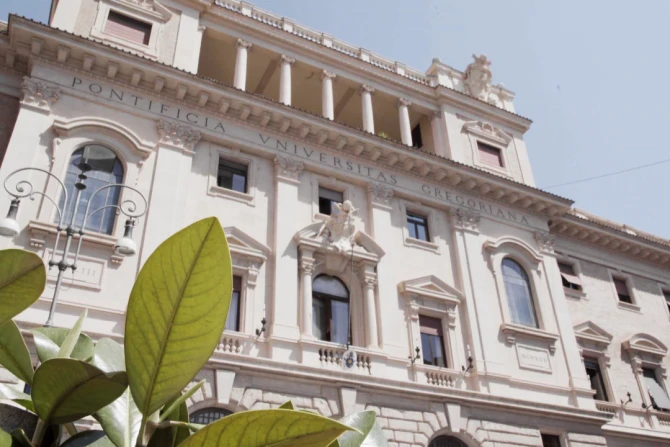
The academic congress — “From the Council to the Synod: Rereading a Church’s Journey, 60 Years on Since Lumen Gentium (1964–2024)” — was hosted by the Pontifical Gregorian University in Rome from Oct. 28–30.
“We are still in this synodal process, and with the approval of the final document, in fact, the third phase of the synod opens, which is that of reception,” said Father Dario Vitali, a theology professor and theological coordinator at the Synod on Synodality assemblies.
Speaking during the conference’s opening Oct. 28, Vitali said: “It will be the Churches above all that will do the work [of implementation], but it also becomes important to have an event like this in which theological experts and canonists who participated in the synod sessions can offer their reflection after having served in the assembly, a reflection based on expertise.”
The congress, which immediately followed the monthlong gathering of the second session of the Synod on Synodality at the Vatican, featured many of the experts who presented at four theological forums during the synodal assembly.
Those included theologians Father Gilles Routhier, Father Carlos Galli, Cardinal-designate Archbishop Roberto Repole, Thomas Söding, and canonists Myriam Wijlens and Father José San José Prisco.
Synod leadership also participated in the three-day academic event, including the synod’s general secretary, Cardinal Mario Grech, and the synod’s special secretaries Jesuit Father Giacomo Costa and Father Riccardo Battochio.
“It is urgent to foster dialogue between pastors and those engaged in theological research,” Grech said in his opening remarks Oct. 28.
“We could say that for something that closes, there is something else that opens,” he continued. “The final document that is the mature fruit of the consensus reached is now returned to the holy people of God, because there is circularity between the universal Church and local Churches.”
“The stage of celebration ends and the stage of reception begins,” he said.
On the second day of the conference, which was focused on the theme of synodality and the role of the bishop, French Canadian theologian Routhier highlighted how “bishops’ conferences are not simply a grouping of hierarchs,” that is, bishops, “but express the ‘communio ecclesiarum,’” the communion of Churches.
Wijlens said in her presentation that “with this synod, Pope Francis has invited us to enter into a process of reconfiguration of the active principles of the Church,” and “the people of God have entered into this new path,” which represents a “Church on the move where canonical norms must provide for the implementation of this path and not stifle it.”
The third day of the conference was titled “The Church and Her Institutions: A Reinterpretation from a Synodal Perspective.”
Grech spoke at length about the connections between the Second Vatican Council and the Synod on Synodality and said he was joyful that Pope Francis chose to approve the synod’s final document, allowing it to participate “in the ordinary magisterium of the successor of Peter.”
“It seems to me that I can say that Vatican II has been the inspirational model, the certain horizon for the path accomplished until today, a sort of compass to orient the path of the Church, our path,” the synod leader said.
“It is not out of place,” he continued, “to speak of the synod as a moment of mature, or at least more mature, reception of the council.”
“It could be said that the final document re-proposes the ecclesiological doctrine of the council. In fact, one catches here an advance in line with the council but one that significantly advances the council’s doctrine,” Grech said.
“But the final document does not just take up the council: It rethinks it, translates it, embodies it in processes,” he added. “As in the case of the third part, devoted to the conversion of processes, here participation in decision-making processes is a matter that the council had not intended to touch.”
Veronica Giacometti, Antonio Tarallo, and Marco Mancini of CNA’s Italian-language news partner ACI Stampa contributed to this report. Published originally on Catholic News Agency.