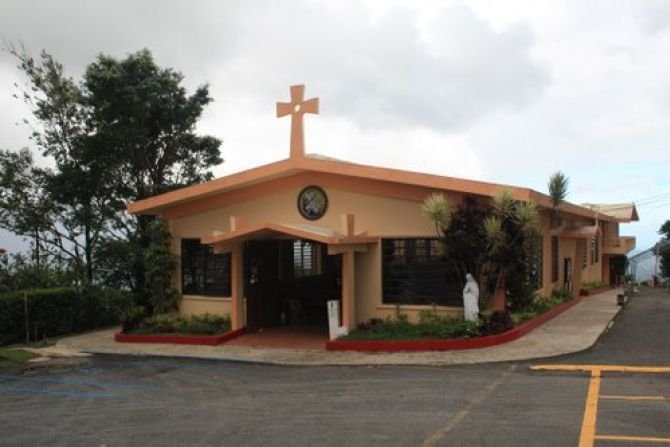
Based on the new norms for studying alleged apparitions in the Catholic Church, the Dicastery for the Doctrine of the Faith has denied the supernatural nature of the events related to Elenita de Jesus and Holy Mountain Shrine in Puerto Rico.
In an Aug. 1 letter addressed to the bishop of Caguas, Puerto Rico, the prefect of the dicastery, Cardinal Víctor Fernández, confirmed that Elenita de Jesus “is not the Virgin Mary.”
In his letter, the cardinal said that Elenita de Jesús, a missionary catechist of the 19th century, “lived under the impulse of the Holy Spirit, in charity and in the proclamation of the Gospel, inspired by a profound love for our mother in heaven, the Virgin Mary.”
He also noted that she served the Catholic Church at a decisive moment in history, when faith was seriously threatened, and that people called her “mother” for the “beautiful attitudes they saw in her.”
“It is true that in her life we find signs of her great union with the suffering Jesus Christ, and that in many of her gestures she extended the affection of Mary, the mother of heaven. Various testimonies say that she resembled the Virgin and some, in an excess of admiration, made the mistake of affirming that she was the Virgin,” Fernández said.
The cardinal therefore declared that “identifying Elenita de Jesús with Our Lord Jesus Christ, the only redeemer, or with the Virgin Mary, the first cooperator in the work of her Son, must be completely avoided.”
“In the face of any attempt to attribute to Elenita de Jesús the identity of the Lord, or of the Blessed Virgin Mary, the judgment cannot be other than ‘constat de non supernaturalitate’ (clearly not supernatural). Elenita de Jesús is not the Virgin Mary,” the prelate confirmed.
However, he pointed out that “it cannot be denied that the figure of Elenita de Jesús has great value for the Church in Puerto Rico and must be considered to foster total dedication to the kingdom of God.”
“It would be a joy for her if those who love her would use the figure of her person as a motivation to dedicate themselves solely to God and avoid directing toward her the gestures of veneration that belong to the mother of Jesus Christ. It is better not to damage this treasure by distorting its original meaning,” Fernández continued.
Fernández expressed his hope that the Holy Mountain Shrine “will always be a place where Jesus Christ, the only Lord and Redeemer, is adored, as Elenita de Jesús, humble and poor among the poor, would surely have wished.”
This story was first published by ACI Prensa, CNA’s Spanish-language news partner. It has been translated and adapted by CNA.