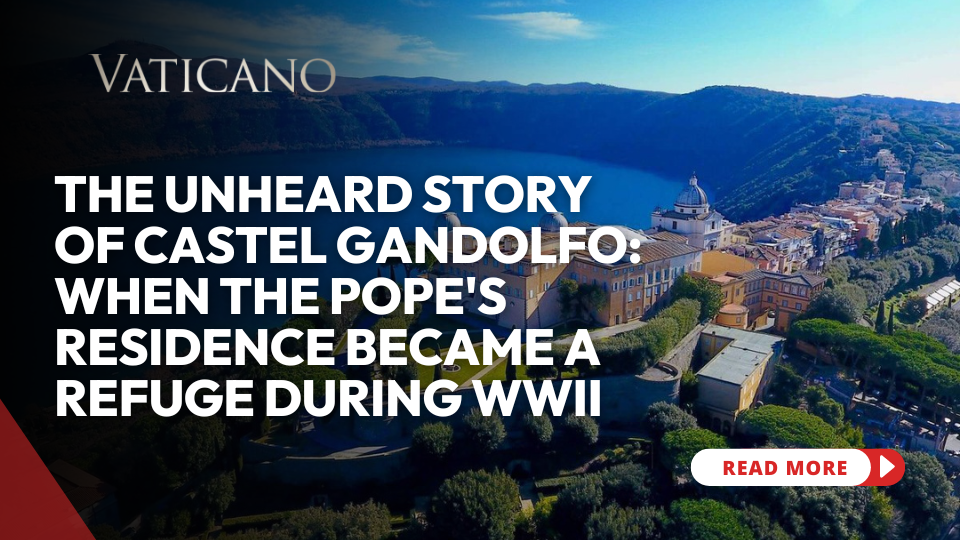
Castel Gandolfo is an Italian village on the shores of Lake Albano. Its Papal Villas are known to have been the summer residence of the popes for many years. However, during World War II, it became a refuge for people seeking to escape the war.
On the morning of February 10th, 1944, the war descended upon Castel Gandolfo.
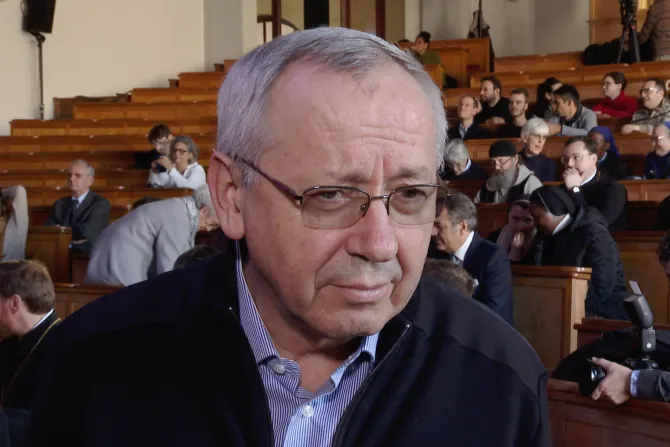
Professor Giorgio Badiali, a survivor of the bombing of the Pontifical Villas of Castel Gandolfo, told EWTN Vatican, “There was a priest who at a certain point raised the cross towards the sky shouting, ‘Blood of Christ protect us, Holy Mother come with us.'”
Barbara Jatta, Director of the Vatican Museums, explained, “In January 1944, the Pope opened the papal palace in Castel Gandolfo and the gardens to more than 12,000 people to welcome and save them.”
American military bombers were mistakenly informed of the presence of German armed forces in the area and dropped bombs on Castel Gandolfo, causing 500 deaths.
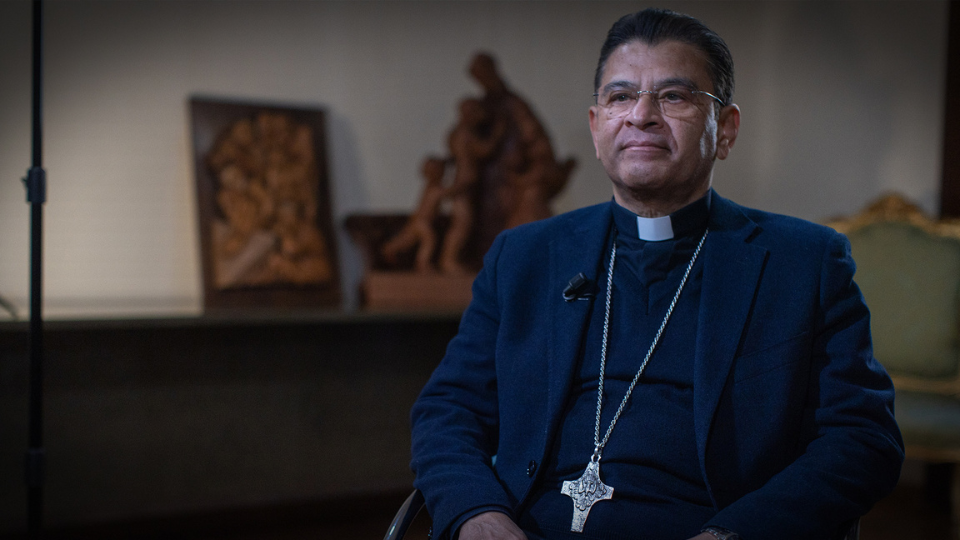
Cardinal Fernando Vérgez Alzaga, the president of Vatican City State, presided over a conference commemorating the 80th anniversary of the bombing of Castel Gandolfo. The event also inaugurated a photo exhibition providing a detailed account of the events through historical reconstructions and actual photographs.
The exhibition is entitled “Castel Gandolfo 1944” and is curated by Luca Carboni. It aims to tell the story of those dramatic weeks, the survivors, and the victims.
Luca Carboni, the exhibition curator, showed a picture of the exhibition and explained, “This picture never had a name because of the wishes of the child’s father, who had lost her, her sister, and her mother here. Today, though, the surviving sister authorized me to give the name: ‘Fernanda.’ This picture looks like hope. Unfortunately, that little girl with her head bandaged died two days later. In this photograph, she was only four years old.”
Pope Pius XII had done his utmost to prevent the tragedy, offering shelter in the palace’s most private rooms. The Pope’s welcome allowed the birth of 36 babies in just the first months.
Barbara Jatta explained the Vatican Museums’ collaboration on the exhibition, highlighting that “The Vatican Museums are masters in Museography and organizing exhibitions, so we worked together with the Secret Archive, Vatican Apostolic Archive, and the direction of the Pontifical Villas. We worked all together, but specifically, the museums worked to make this exhibition available to the large public.”
This exhibition is a significant opportunity to keep alive the memory of all those who lost their lives on that tragic day. It also testifies to Pius XII’s zeal, spirit, and charity toward war refugees, without distinction of religion or political creed.
Immediately after the bombing, the Pope opened the doors of the Pontifical Villas to refugees and the wounded.
Adapted by Jacob Stein