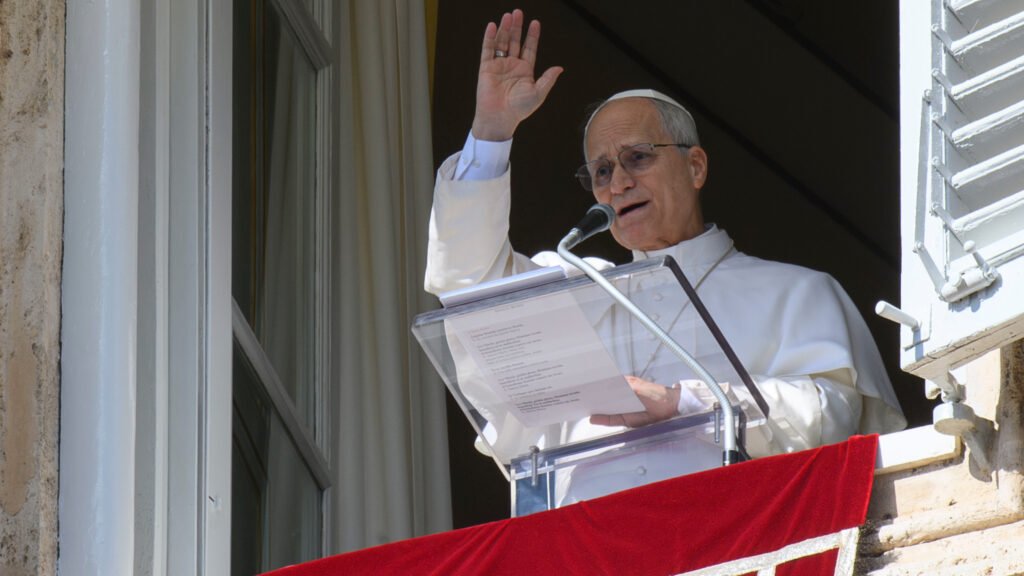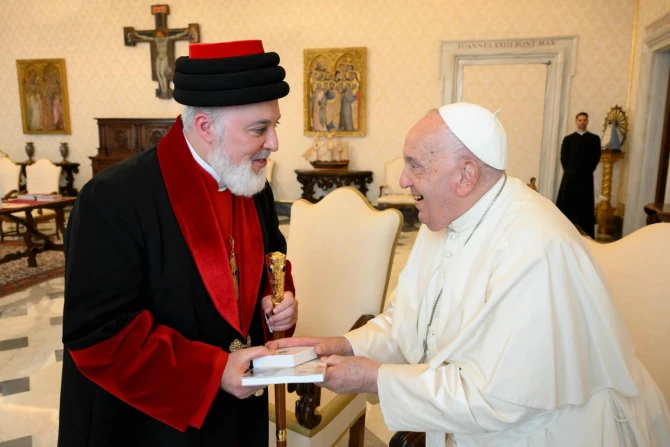
Rome’s Aventine Hill—one of the city’s seven historic hills and a place steeped in early Christian worship—will mark the beginning of Pope Leo XIV’s first Lenten journey as Bishop of Rome.
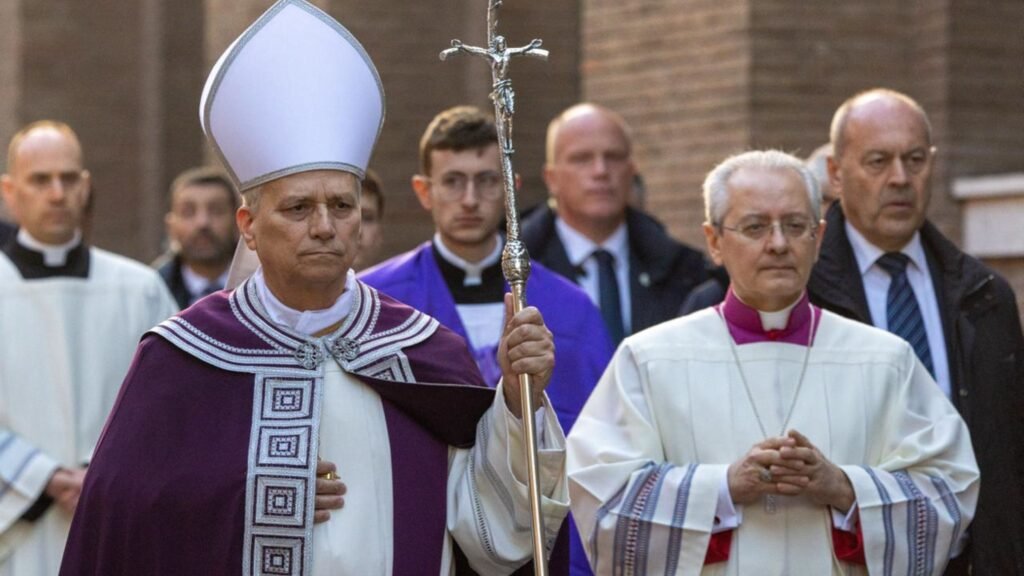
On Ash Wednesday, the Holy Father will join cardinals and the Benedictine and Dominican religious communities for one of the most moving traditions of the Roman liturgical year: a penitential procession that begins at the Basilica of Sant’Anselmo and concludes with Mass at the Dominican Basilica of Santa Sabina.
Fr. Eusebius Martis, a monk of Marmion Abbey, explains that the day begins inside Sant’Anselmo with a brief liturgy before the procession sets out through the neighborhood. “The procession on Ash Wednesday will start here,” he says. “So the Pope will come in and he’ll begin there from the chair. The [Benedictine] monks and the Dominican friars will be up in the choir stalls and there’ll be a little prayer service. And then we all gather here in procession and go down the center aisle there, out the door, out through the courtyard, there at the gateway, and on our way to Santa Sabina.”
The Station Churches: A Pilgrimage Through Lent
The Ash Wednesday procession is part of the ancient Roman tradition of the “Station Churches,” a Lenten pilgrimage that traces the memory of the early Christian martyrs and prepares the faithful for Easter. Pope John XXIII revived the custom in 1959, restoring a practice that dates back to the fourth century.
For the Church, the physical act of walking together is never merely symbolic. Fr. Eusebius says the procession itself reflects something sacramental about Christian life. “The idea of a pilgrimage is kind of sacramentalized in the Church’s use of processions,” he explains. “So, in the Mass, for example, there are four processions. The Entrance Procession, the Gospel Procession, the Offertory Procession, and the Communion Procession.”
Each of these movements, he says, carries a deeper meaning. “Every one of those processions kind of symbolizes our movement from this world closer to the mystery of God… That becomes a metaphor or symbol for the more global procession of pilgrimage that each one of us has from this world to heaven.”
Santa Sabina’s Door: The Cross and the Meaning of Lent
As the procession continues from Sant’Anselmo to Santa Sabina, Pope Leo will pass through one of the oldest church doors in Rome: a large wooden door dating to around 432 A.D., carved with some of the earliest surviving images of Christian faith.
Dominican Fr. Patrick Briscoe, General Promoter of Social Communication for the Order, points to one panel in particular as an essential Lenten meditation. “On the door we have a very important Christian symbol,” he says. “In the upper left-hand corner can be seen the oldest depictions of Jesus Christ Crucified.”
For Fr. Briscoe, the door becomes a kind of threshold into Lent itself. “It allows us to think of the meaning of Lent, to embrace the suffering of Christ, especially when we consider it from the historical perspective, the evolution of Christian understanding,” he says. “We really didn’t know how to handle the Cross. It took us 100 years to depict it.”
That delay, he suggests, speaks to every believer beginning the penitential season. “Which says something to each of us entering into Lent — discovering anew what our sufferings mean and how to have them transformed by Christ’s own sacrifice.”
Signs of Resurrection in Nature—and in Unity
Beyond the churches and their ancient art, the Aventine itself can become a place of contemplation. Fr. Eusebius points to something as simple as a plant as a reminder of the Resurrection.
“This is an acanthus leaf and it’s growing all across, all along our property here,” he says, noting that the leaf is the familiar design carved atop Corinthian columns. But it also carries a spiritual meaning. “The acanthus leaf is a symbol of the Resurrection because it gets really vibrant, and then it dies, and it lays against the ground and it’s like completely dead until the Spring.”
As Lent begins and spring approaches, he says the timing is almost providential. “So we’re in Spring now and it comes back to life and then, in a couple of weeks, it will start putting up flowers, right? Which represents a bloom around Easter time.”
This year, Ash Wednesday falls on February 18—Pope Leo XIV’s first as pontiff. For Fr. Briscoe, the shared pilgrimage will be a visible sign of what Lent is meant to do interiorly. “To walk with Pope Leo on this pilgrimage from the nearby Sant’Anselmo church will be a sign, a symbol, for all of us of the spiritual work that’s taking place in our hearts in Lent — we’ll all be on pilgrimage together.”
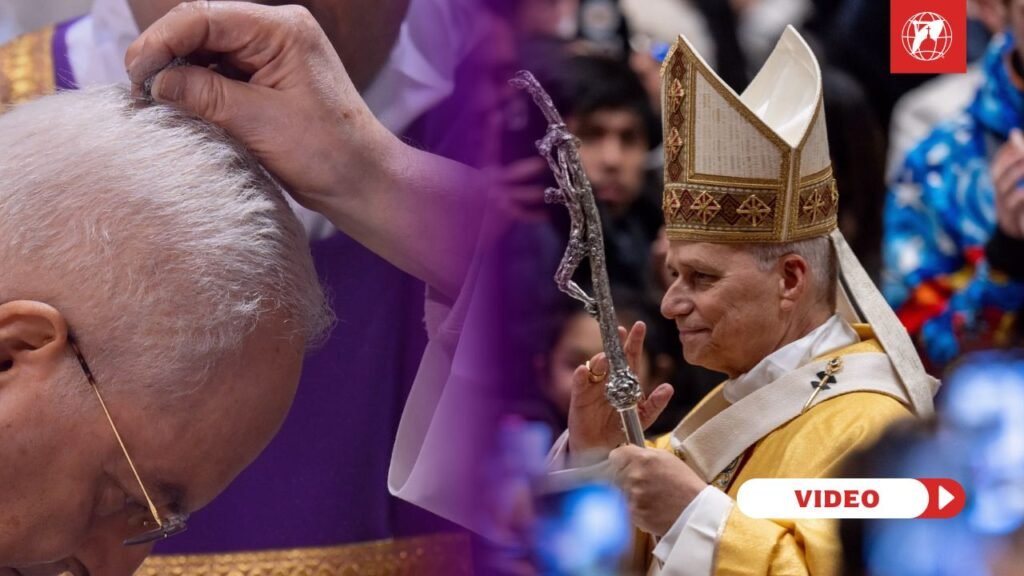
He also sees the day as a clear image of the unity Pope Leo has emphasized since the beginning of his pontificate. “The Holy Father has made unity a centerpiece of his pontificate and we see a beautiful sign of that on Ash Wednesday,” he says, pointing to the moment when the Pope imposes ashes on the cardinals.
“The cardinals stand in for the whole Church,” Fr. Briscoe explains. “They’re the pope’s key collaborators, and they’re a sign of all of us joining and following the Pope’s lead.”
Adapted by Jacob Stein. Produced by Alexey Gotovskiy; Camera by Sergio Natoli; Video edited by Alessio Di Cintio.