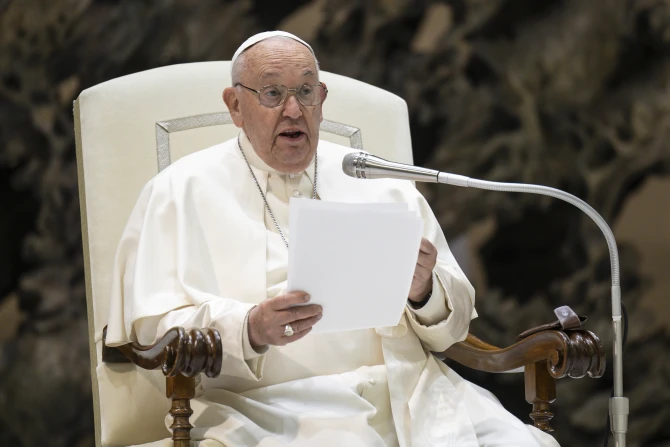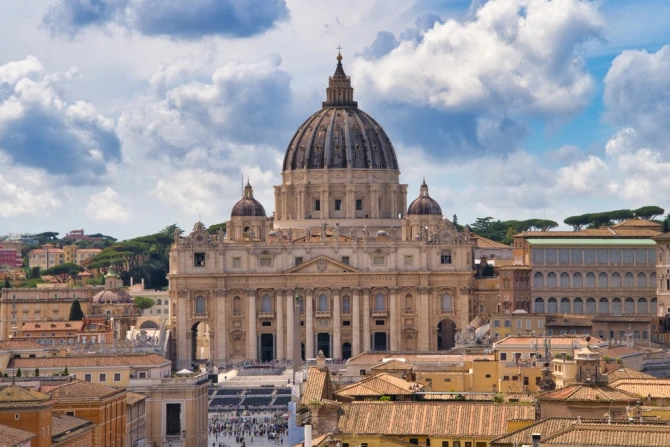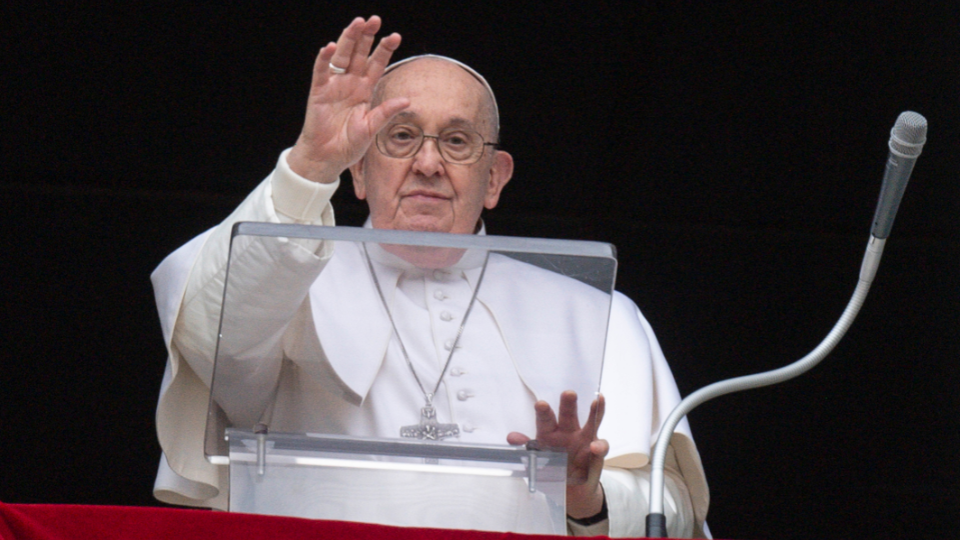
Pope Francis said Sunday that governments and civil society have a fundamental duty to help ensure that women are able to accept the gift of life.
“Institutions, social and political, have the fundamental duty to protect and promote the dignity of every human being, offering women, the bearers of life, the necessary conditions to be able to accept the gift of life and ensure a dignified existence for their children,” Pope Francis said on March 10.
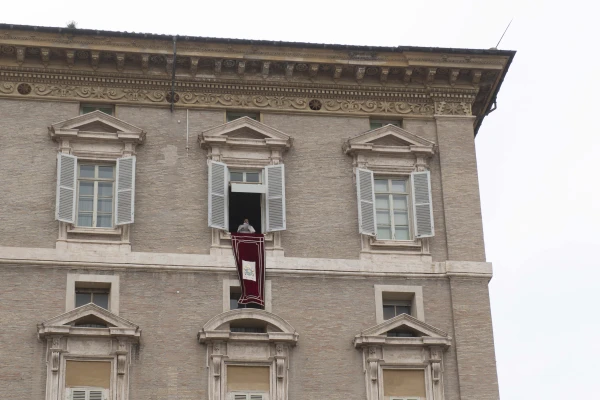
Speaking from the window of the Vatican’s Apostolic Palace, the pope said at the end of his Angelus address that he wanted to express his closeness to all women after International Women’s Day, especially those whose dignity is not respected.
“There is still a lot of work that each of us must do in order for there to be concrete recognition of the equal dignity of women,” Francis added.
The pope’s comments came one week after France enshrined a right to abortion in its constitution. Pope Francis did not mention abortion by name in his remarks but underlined the fundamental duty to protect the dignity of every human being and to offer women the necessary conditions to be able to accept the gift of life.
In his reflection on Sunday’s Gospel, Pope Francis highlighted how Jesus knows all of our innermost secret thoughts, but does not condemn us.
Pope Francis pointed out that Christ in the Gospels often reveals the true intentions of the people he meets, even “unmasking their false attitudes.”
“There are no secrets before Him: He reads them in the heart,” he said, reflecting on Jesus’ encounter with the pharisee Nicodemus in the Gospel of John.
Yet the Lord does not use this incredible power to expose the people he encounters to “merciless judgments,” he added.
“If the Lord were to use His knowledge of our weaknesses to condemn us, no one could be saved.”
“Indeed, He does not need them to point the finger at us, but to embrace our life, to free us from sins and to save us,” Francis said.
“The Lord’s gaze upon us is not a blinding beacon that dazzles us and puts us in difficulty, but rather the gentle glimmer of a friendly lamp, that helps us to see the good in ourselves and to be aware of the evil, so that we may be converted and healed with the support of His grace.”
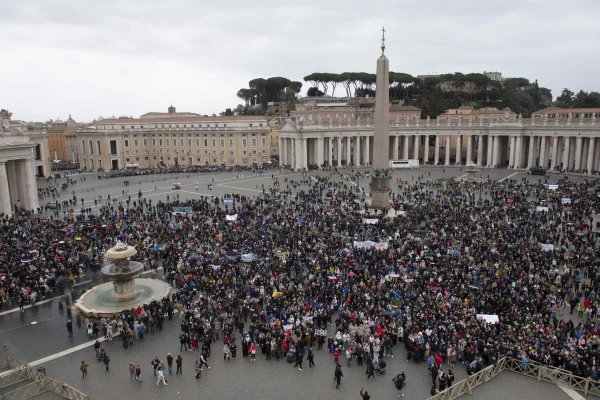
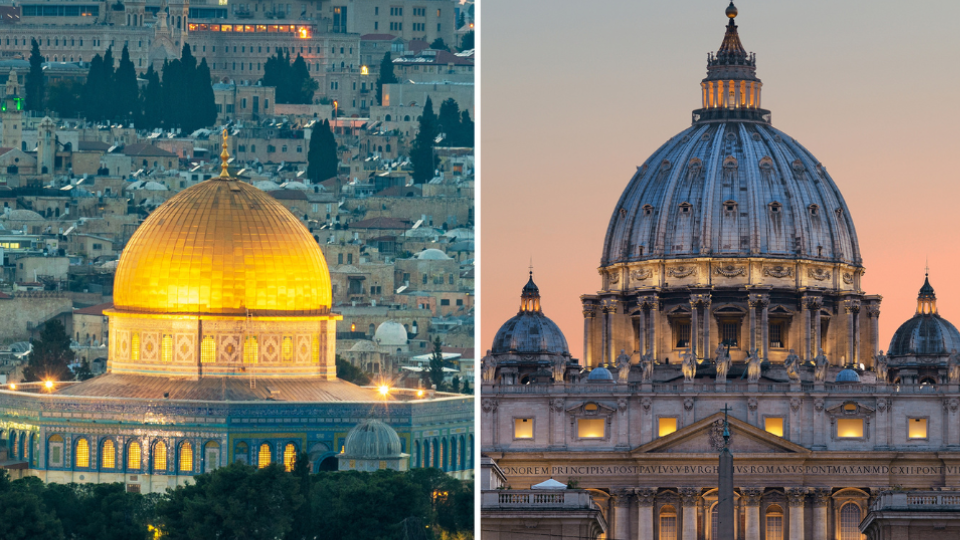
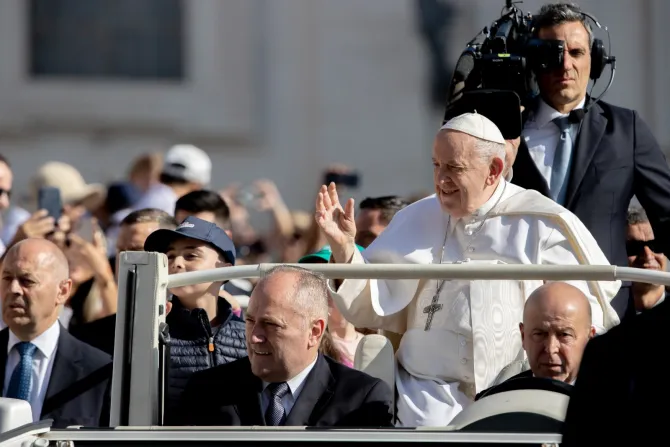
After praying the noonday Angelus prayer in Latin with the crowd gathered below in St. Peter’s Square, the pope expressed his closeness to Muslims around the world who will begin Ramadan, a month of fasting, on the evening of March 10.
Pope Francis also asked people to pray for peace in Ukraine, the Holy Land, the Democratic Republic of Congo, and Haiti.
“I follow with concern and sorrow the grave crisis affecting Haiti and the violent incidents that have occurred in recent days,” the pope said.
“I am close to the Church and to the dear Haitian people, who have been tried by much suffering for years. I invite you to pray, through the intercession of Our Lady of Perpetual Help, that all kinds of violence cease and that all offer their contribution to growing peace and reconciliation in the country, with the renewed support of the international community.”
This article was originally published on Catholic News Agency.