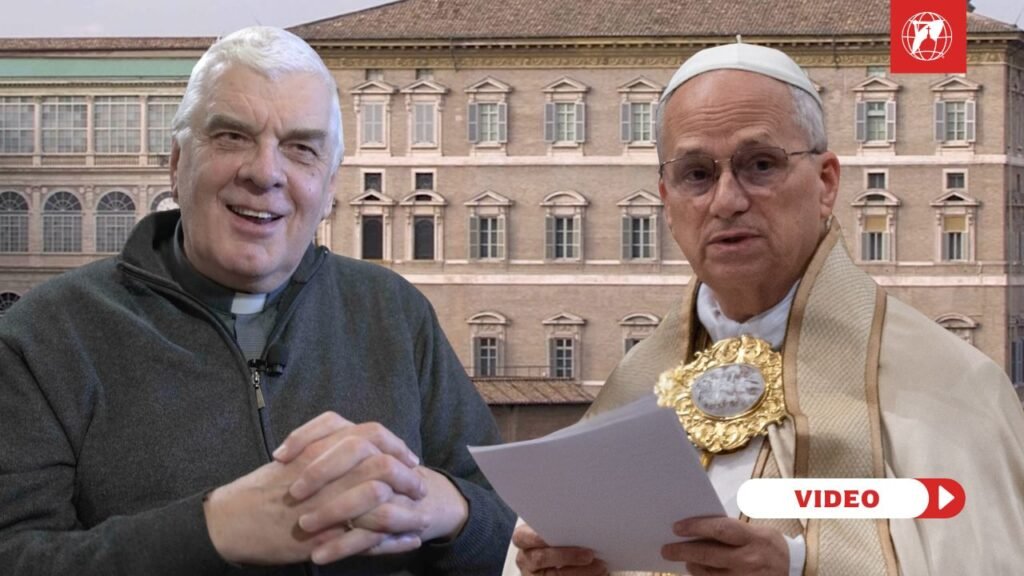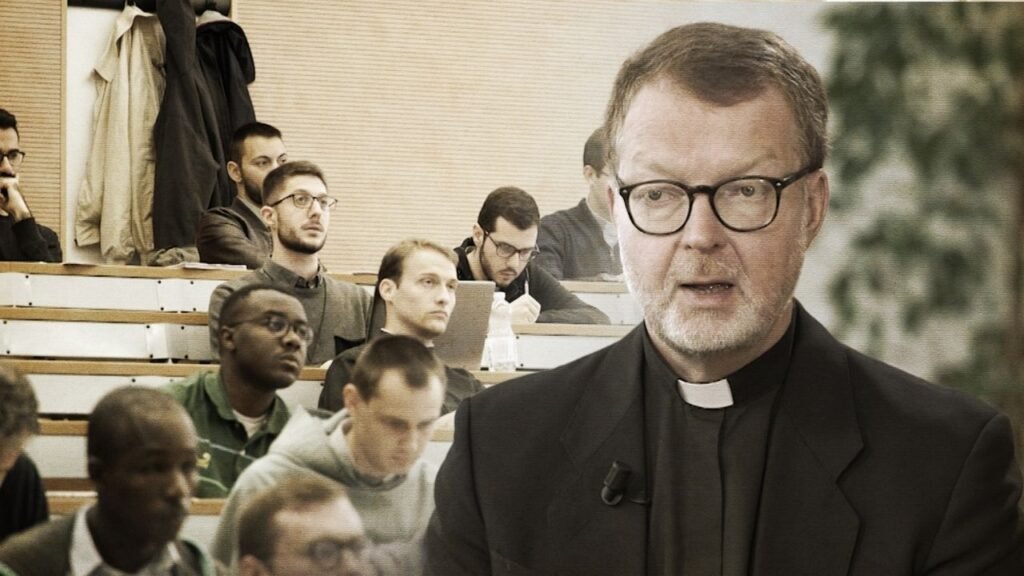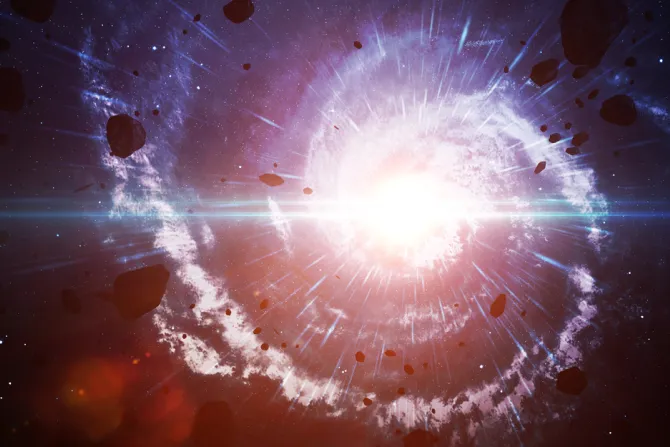
Two priests and cosmologists from the Vatican Observatory have made further progress in developing a new mathematical method to understand the Big Bang theory, which describes the first moments of the universe.
In a 2022 article published in the prestigious journal Physical Review D, Fathers Gabriele Gionti, SJ, and Matteo Galaverni introduced the new and promising mathematical tool. They have recently published a new article in the European Physical Journal C, a publication that presents novel research results in theoretical physics and experimental physics.
“It really is fascinating to try to understand the physical laws in the early moments of the universe. The search for new physical laws and the effort to fully understand them is a process that fills our minds and hearts with great joy,” the priests said in a Vatican Observatory publication released March 14.
The observatory’s statement points out that Albert Einstein’s theory of general relativity, which postulates that gravity is the curvature of space-time rather than a force as proposed by Isaac Newton’s theory of gravity, remains the best physical theory “for understanding the large-scale structure of the universe today.” However, there are still unresolved questions about the laws of physics during the first moments of the universe and about how gravity works on extremely small scales, which can be studied using quantum mechanics.
Currently, there are alternative or modified theories of gravity that suggest that gravity might behave differently than general relativity predicts, even with respect to the large-scale structure of the universe.
In their new article, “On the canonical equivalence between the Jordan and Einstein frames,” Gionti and Galaverni demonstrate how they can “map” the solution to a physical problem from an alternative theory of gravity to general relativity through a mathematical trick. This trick consists of analyzing the problem through two different mathematical frames, known as the “Jordan” and “Einstein” frames, which are different approaches to describing the geometry of space-time in general relativity, each with its own advantages and specific applications.
For Gionti and Galaverni, this work is “a way to contribute, together with the entire scientific community, to answering some fundamental questions: “Who are we? Where do we come from? What is our origin?”
“Furthermore, for a person of faith, it is a wonderful possibility to interpret one’s research as a discovery of new traces or signs of God’s beauty and elegance in the creation of the universe, despite our extremely limited knowledge!” the priest-scientists concluded.