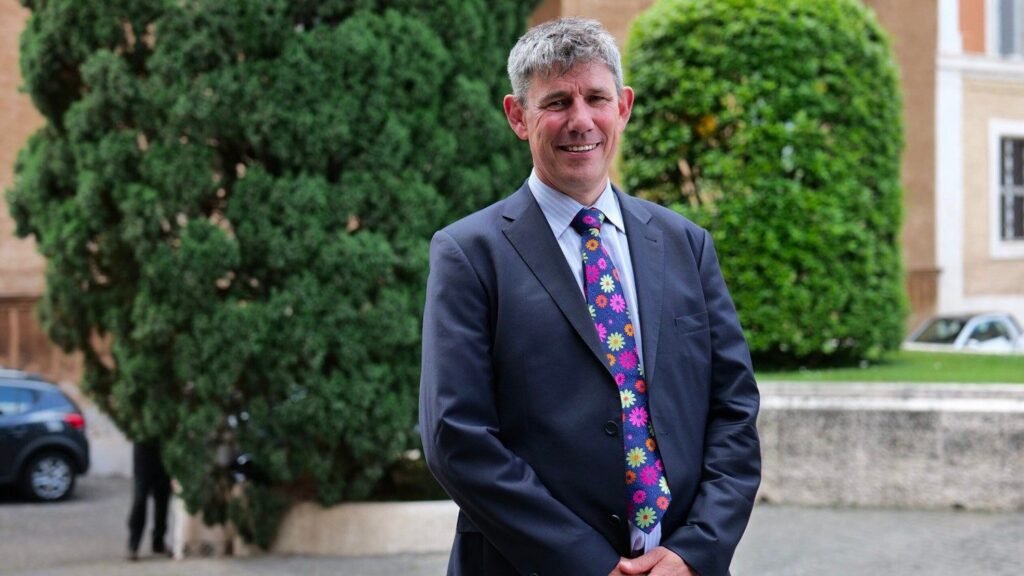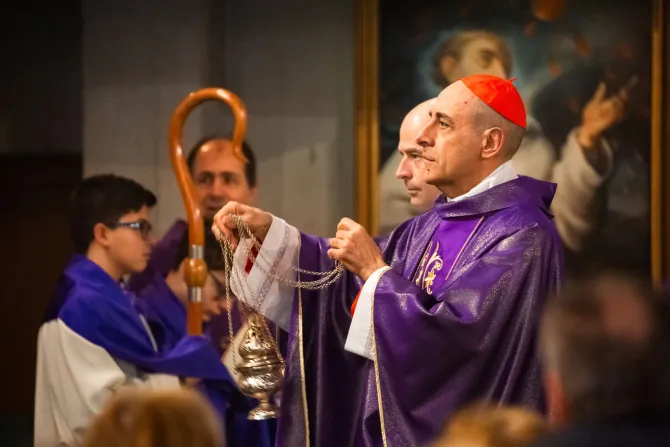
The prefect of the Dicastery for the Doctrine of the Faith (DDF), Cardinal Víctor Manuel Fernández, said in a recent interview that Pope Francis previously knew of his Spanish-language book “Mystical Passion: Spirituality and Sensuality.”
The book was originally published in Mexico in 1998, when Fernández was 36. He had been a priest for 12 years and already held a doctorate in theology. The book has been out of circulation, but the Argentine blog Caminante Wanderer revealed its existence in a Jan. 8 post, and it was later reported by various media outlets.
In an interview last week with the EFE news agency, the Argentine cardinal responded to criticism he received after the latest revelations about the book: “I foresaw it, and I knew that in the midst of controversial issues they could use old things like this book.”
“I had told the pope, when he proposed this position [DDF chief] to me for the second time, that this could happen, but he was already clear about it and also knew about this book,” the cardinal revealed.
“It so happens that on one occasion many years ago they had already accused me about that book and I was not sanctioned in Rome for it. They have already exhaustively investigated me,” he added.
As is also the case with the Spanish-language book “Heal Me with Your Mouth: The Art of Kissing,” published by Fernández in 1995, “Mystical Passion” does not appear on the list of his published works that was released by the Vatican Press Office on July 1, 2023, when his appointment as the new prefect of the DDF was made official.
What is ‘Mystical Passion’ about?
In the interview, the DDF prefect noted that the “book grabs attention because it comes from research on male and female orgasm that I had done with a group of married couples.”
“But two people greater and wiser than me did something similar: St. John Paul II and the holy abbess and doctor of the Church Hildegard of Bingen. I quote verbatim part of the conclusions of St. Hildegard’s research because it’s important to read it directly: ‘When the sexual impulse makes itself felt in a man, something begins to turn inside him like a windmill … But in a woman, pleasure is like the sun, which gently, lightly, and continuously bathes the earth with its heat,” Fernández continued.
The cardinal also noted that “this saint was more thorough and concrete than me. Except that the research we did with these couples was to discover if these differences had any influence on the way they related to God. Why this saint did it I don’t know.”
“The Mystical Passion: Spirituality and Sensuality” consists of nine chapters: “The Fire of Divine Love,” “A Well of Sublime Passion,” “A Crazy Love Story,” “Mystical Passion,” “Until the End,” “My Beautiful One Come,” “Male and Female Orgasm,” “The Path to Orgasm,” and “God in the Couple’s Orgasm.”
The last three chapters of the book are possibly the ones with the most controversial content.
In a Jan. 8 statement to Infovaticana, Fernández distanced himself from the text and called it “a book from his youth that he certainly would not write now.”
Was Fiducia Supplicans necessary? Fernández responds
When asked if “it was necessary” to publish the Fiducia Supplicans declaration, which allows priests to give a blessing to same-sex couples and those in an irregular situation, Fernández told EFE that “many people and institutions have been sending questions about this topic for some time.”
In addition, he pointed out that in his “conversations with the pope one thing became clear to me, that he wanted to reject blessings to irregular couples with rites or liturgical forms, but at the same time he wanted to avoid that this involve beginning to set many conditions to give a simple blessing on the go, on the street, on a pilgrimage, because he holds in his heart the value of pastoral care for the people, which welcomes everyone.”
“For many priests in Argentina, Brazil, and other countries it’s very common to give these simple blessings without requiring anything, and to give them even to criminals. Therefore, if two people ask for it, it doesn’t involve demanding moral or canonical perfection to give it,” he stressed.
“Deep down, Francis’ interest was in safeguarding the freedom and spontaneity of this other type of blessing that is the only priestly gesture we have to give to everyone,” he stated.
When asked if Fiducia Supplicans creates division in the Church, the DDF prefect responded: “In any case, that division already existed and is only becoming transparent.”
The cardinal also said that he has spoken with Pope Francis about the criticisms and reactions in opposition to the declaration and said that the Holy Father considers them as “purifications from God to allow us to fulfill better and with more humility the task that the Lord entrusts to us.”
Responding to the question if there are any other issues he would like to clarify because they create confusion, Fernández replied: “I must say that I don’t think I’ll be in the news in the future because we don’t have any topics planned in the dicastery that could be very controversial, like the last ones.”
Fernández added: “We are preparing a very important document on human dignity that not only includes social issues but also strong criticism on moral issues such as sex changes, surrogacy, gender ideology, etc. In that sense, the people who are most concerned will be able to take it easy.”
This story was first published by ACI Prensa, CNA’s Spanish-language news partner. It has been translated and adapted by CNA. It was later published on EWTNVatican.com