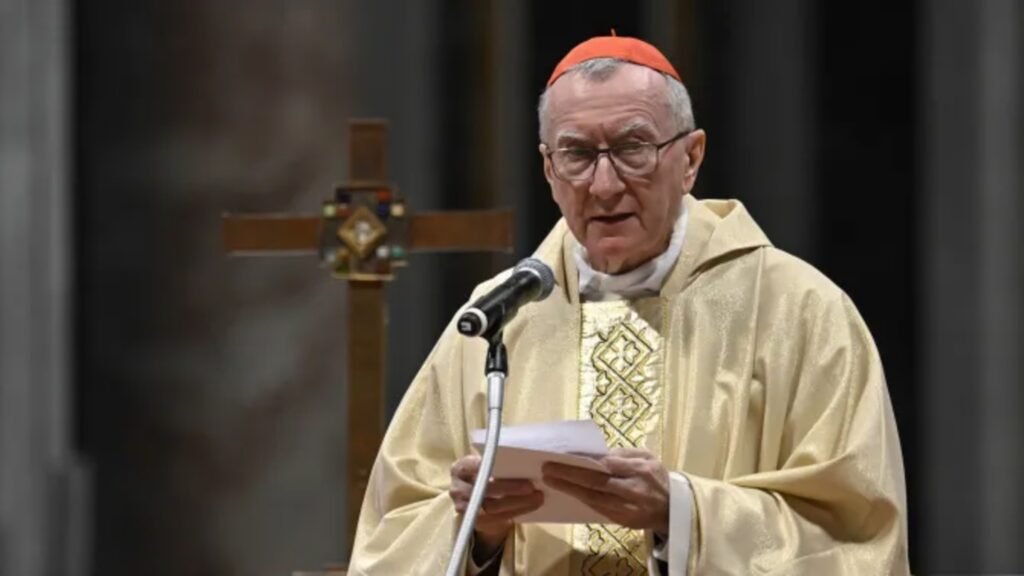
Cardinal Matteo Zuppi, President of the Italian Episcopal Conference, has announced that the country’s bishops have welcomed the Fiducia supplicans declaration, “a document situated on the horizon of mercy.”
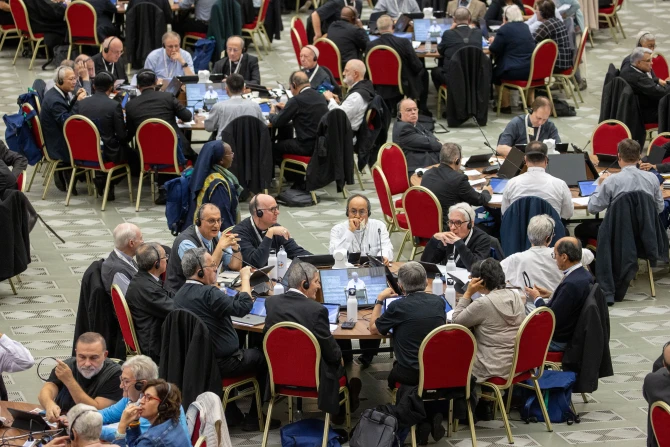
The Italian cardinal, to whom the Holy Father has conferred the mission of interceding on behalf of the Holy See to achieve peace in Ukraine, has made these statements in an extensive and resounding address to the Permanent Episcopal Council of the Italian Episcopal Conference, which is meeting this week in Rome.
Zuppi specified that the document of the Dicastery of Faith “is situated within the horizon of mercy, of the loving gaze of the Church towards all children of God, without departing from the teachings of the Magisterium.”
In this regard, he stressed that in the text written by Cardinal Víctor Fernández and signed by the Holy Father, “the meaning of the sacrament of marriage is not questioned.”
Furthermore, the Archbishop of Bologna also recalled that “God wants everyone to be saved” and that it is “the task of the Church to be interested in each and every one of us.”
For this reason, he urged not to forget “that all the baptized enjoy the full dignity of children of God and, as such, are our brothers and sisters.”
Next, the cardinal invited the Italian bishops not to allow themselves to be “intimidated by merely sociological readings of the Church” or by a culture “for which faith declines.”
“It is the arrogance of pessimism, which presents itself as realism. Pessimism becomes a kind of security and motivates laziness and habit,” he warned.
At the same time, he urged them to avoid being intimidated “by readings of the Church that interpret our action as political.”
He reiterated that, despite being open to dialogue, “we will not let others tell us what the content of our charitable action or of our mission, which is never partisan, because the uniqueness of the Church is Christ and the defense of the person, of life, from beginning to end is.”
“Certain interpretations want to divide bishops and Christians, while on the other hand, I feel the communion between bishops and the people is alive, and this is worth more than the likes on social networks,” he stated.
Likewise, he recalled that “there have been difficult years for the Churches in Italy,” especially after the Second Vatican Council, “when the community seemed to disintegrate in opposition between groups, bishops, and protests, the Church confidently practiced an inclusive communion in listening to one another.”
Along these lines, he lamented that “we are in an era in which the past and tradition are erased as if what preceded us were wrong or irrelevant; on the other hand, history, of which we are heirs, comforts us.”
According to Cardinal Zuppi, “crises present a weakened Church,” but he assured that one should not be afraid “of fragility and littleness.”
He also reiterated that “despite pessimistic or political readings about the Church,” we realize “the strength of charity,” both Christians and priests.
Adapted by Jacob Stein