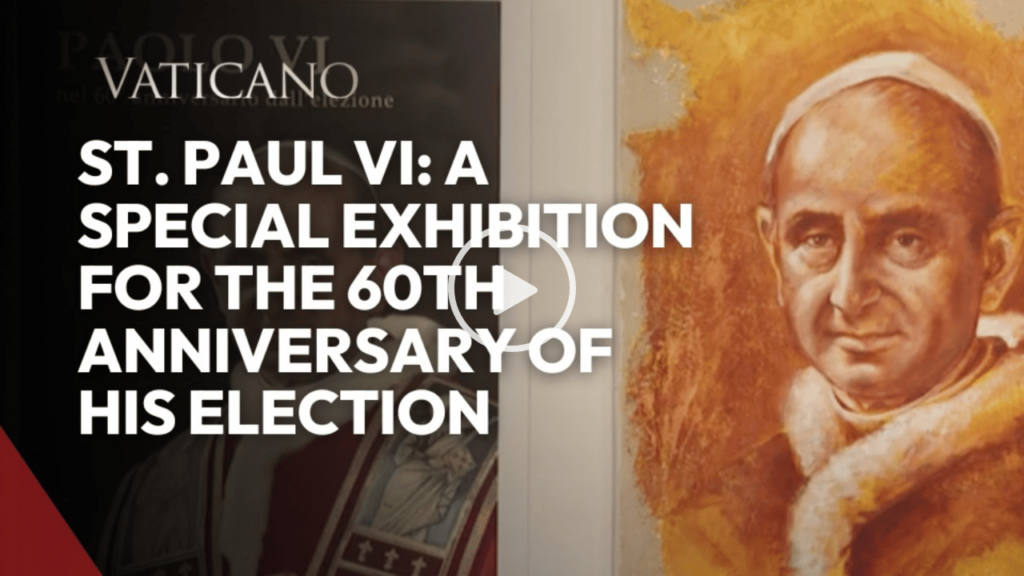
On June 21st, 1963, the white smoke from the Sistine Chapel announced the election of the Petrine successor to Pope St. John XXIII. Cardinal Giovanni Battista Montini became Pope, taking the name Paul VI.
On the occasion of the 60th anniversary of his election, an exhibition of the personal belongings of Saint Paul VI was set up in the Poli Art Gallery, steps away from Vatican City.
EWTN Vatican spoke with the director and curator of the exhibition, Ivan Marsura. As founder of the Museum of the Popes, Marsura is also a great enthusiast of the lives of the Popes. He helped EWTN trace the main stages of Montini’s life, explaining the provenance of the exhibition, “The exhibition was inaugurated by Cardinal Mario Grech right at the beginning of the synod. It was organized to commemorate the 60th anniversary of the election of Paul VI and, above all, to reconstruct his entire life through objects and some handwritten writings.”
The Museum of the Popes is a place dedicated to the preservation and sharing of the history of the Church, offering the faithful the opportunity to approach with devotion and curiosity the personal belongings of the Pontiffs. Marsura brings to life the person of past Popes. “It’s about retrieving all these pieces of every Pope’s life,” he said, “And, of course, making them accessible to visitors. So, I always say it’s a vocation. A vocation to make the history of the Church more known through objects.”
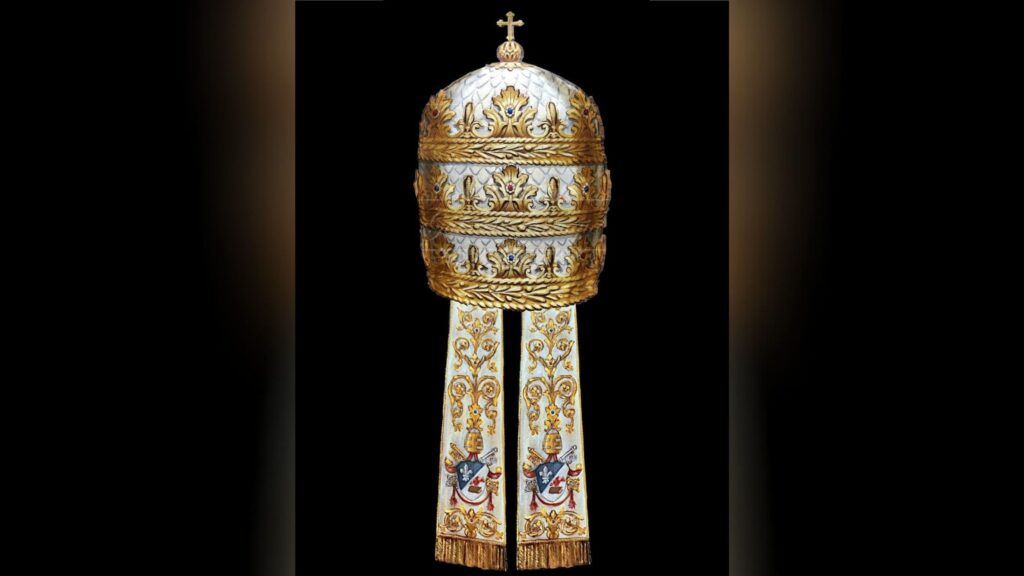
Strolling through the museum’s display cases, the onlooker can revisit some significant milestones in the life of Saint Paul VI, from his childhood to the first days of his priesthood. “Inside the exhibition are some particular pieces, such as the umbrella with which the mother of the future Paul VI accompanied her children to the shrine of Madonna della Stella,” Our Lady of the Star, in English. Even the altar of his first Mass can be found in the exhibit, along with cassocks and chasubles from various moments of his ministry as Archbishop of Milan and as Pope. “From his pontificate, there are specific items like the hammer and trowel used to open the Holy Door” for the Jubilee Year. And, we find “a chalice with which he celebrated the Christmas night of ’72.”
The museum is not just a place of preservation but aspires to become a permanent venue contributing to the common good.
Marsura explained, “We have already organized several exhibitions and themes about the Popes in recent years. We hope that in the near future, this project takes shape, having a permanent location.” Looking forward, the hope is to support charitable works from the revenue of the museum.
This mission reflects the teachings and ideals that the Church has embraced throughout the centuries: sharing the museum’s resources for beneficial purposes, along with the vocation to channel the legacy of the Popes into a tangible message of hope.
(Adapted by Jacob Stein)