When Pope Sixtus IV decided to consecrate the Sistine Chapel, he chose a very special date in the Catholic calendar: he did so on August 15, 1483, dedicating it to the Virgin Mary, within the framework of the first Mass celebrated there.
Located in the Apostolic Palace of the Vatican City, and well-known for being the site of papal conclaves and important ceremonies, it takes its name from Pope Sixtus IV, who ordered its construction between 1473 and 1481.
It is a reconstruction and enlargement of the Capella Magna, a place used by the Pope and his retinue for daily worship, which had serious structural issues.
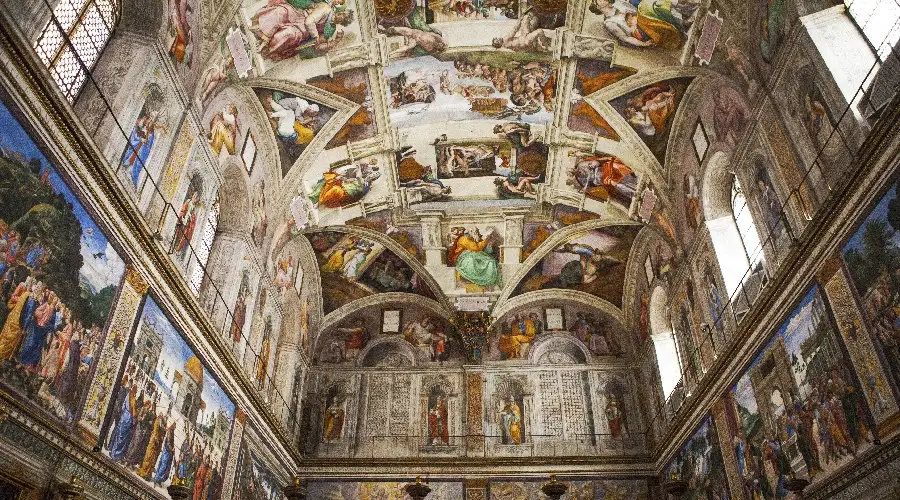
After its construction, the decoration of the Sistine Chapel was entrusted to Renaissance painters Sandro Botticelli, Pietro Perugino, Pinturicchio, Domenico Ghirlandaio, Cosimo Rosselli, and Luca Signorelli.
They created the first frescoes depicting the life of Moses and Christ, as well as portraits of the Popes who had ruled until then.
The paintings were installed in 1482, but it wasn’t until August 15 of the following year that Pope Sixtus IV celebrated the first Mass on the occasion of the Assumption of the Virgin Mary. The next phase of decoration was carried out by Michelangelo between 1508 and 1512, commissioned by Pope Julius II.
Originally, the artist was supposed to paint the twelve Apostles on the ceiling of the Sistine Chapel. However, Michelangelo proposed and executed nine scenes from Genesis, depicting The Creation, God’s Relationship with Humanity, and The Fall of Man.
Between 1536 and 1541, the artist also painted the altar wall with The Last Judgment, which led to the removal of the Nativity scenes and the Finding of Moses, as well as some portraits of Popes. In 1515, Raphael’s intervention came, as he designed ten tapestries representing the lives of Saint Peter and Saint Paul, a project that took 4 years to complete.
Modifications and restorations continued in the Sistine Chapel, transforming it into an invaluable artistic treasure, recognized as a World Heritage Site.