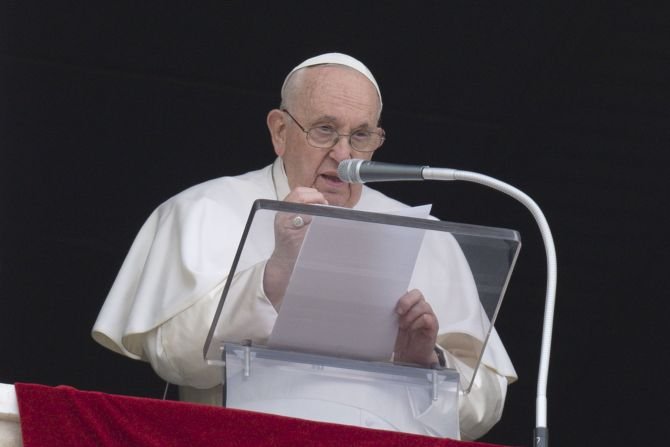
We should treat the physical and social differences of others as a chance to love, not as an inconvenience, Pope Francis said in his Angelus address on Sunday.
The pope’s weekly message focused on the day’s Gospel reading, which recounts Jesus’ miraculous healing of the blind man.
Francis pointed out the reactions of the different characters in the story and invited people to reflect on how they might respond in a similar situation.
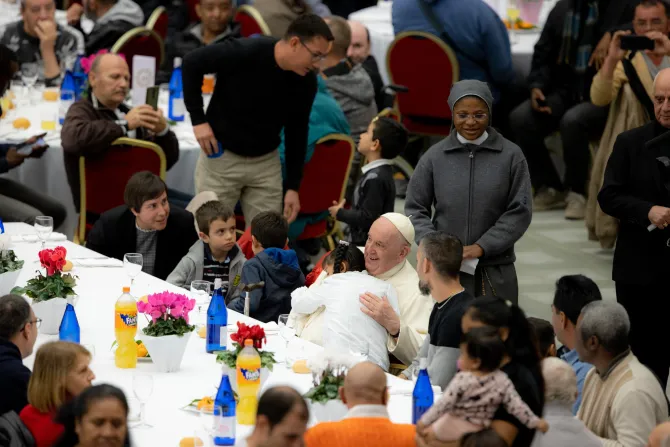
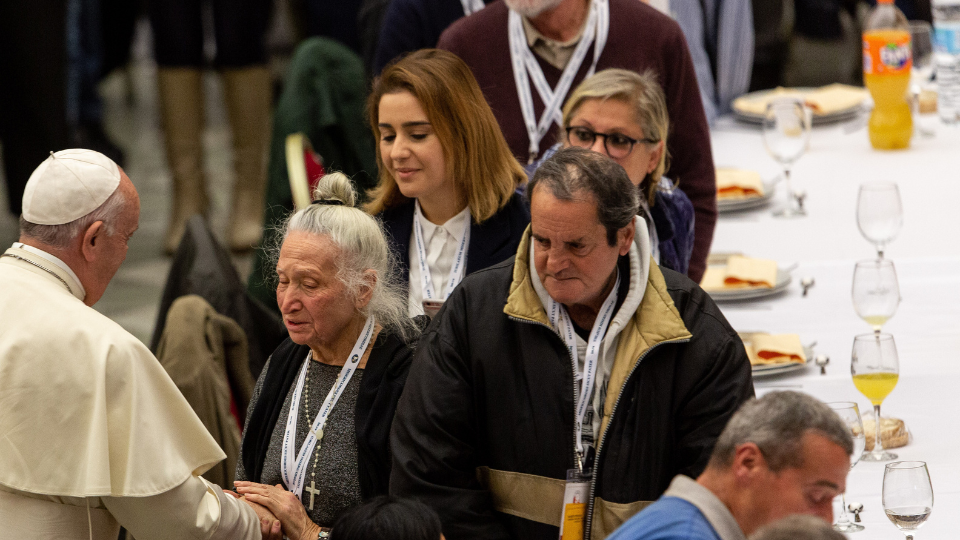
“How do we welcome the difficulties and differences of others? How do we welcome the people who have many limitations in life, either physical like this blind man or social like the beggars we find on the street?” he asked. “And do we welcome these people as inconveniences or as occasions to draw near to them with love?”
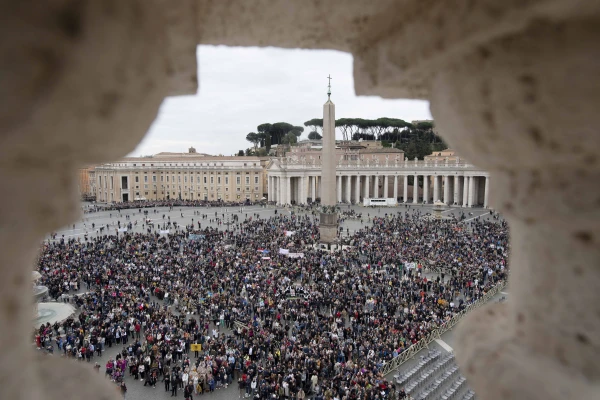
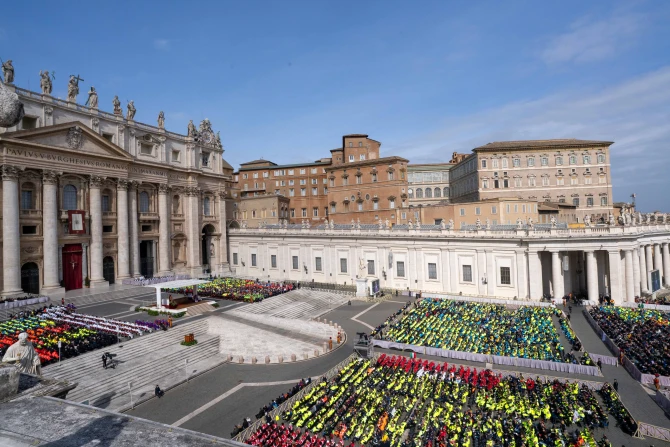
Pope Francis addressed approximately 25,000 people gathered in St. Peter’s Square on March 19. He also led everyone in praying the Angelus, a traditional Marian prayer, in Latin.
He encouraged everyone to read chapter 9 of the Gospel of John.
“Read about this miracle” of the healing of the blind man, he said. “It’s beautiful the way John recounts it.”
“You can read it in two minutes. But it shows how Jesus proceeds and how the human heart proceeds. The good human heart, the lukewarm human heart, the fearful human heart, the courageous human heart,” he continued.
The pope said the Gospel passage shows how each of the different characters react to Jesus’ healing of the man born blind.
Some are skeptics and some find it unacceptable, he said.
“In all these reactions, for various reasons, there emerge hearts closed in front of the sign of Jesus,” he said, “because they seek a culprit, because they do not know how to be surprised, because they do not want to change, because they are blocked by fear.”
This is similar to many situations today, he added. “When faced with something that is really a message of a person’s testimony, a message from Jesus, we fall into this: we look for another explanation, we don’t want to change, we look for a more elegant way out than accepting the truth.”
The blind man, instead, is the only person who accepts Jesus’ gift well, the pope explained. “Happy to see, [he] testifies what happened to him in the simplest way: ‘I was blind, now I see.’”
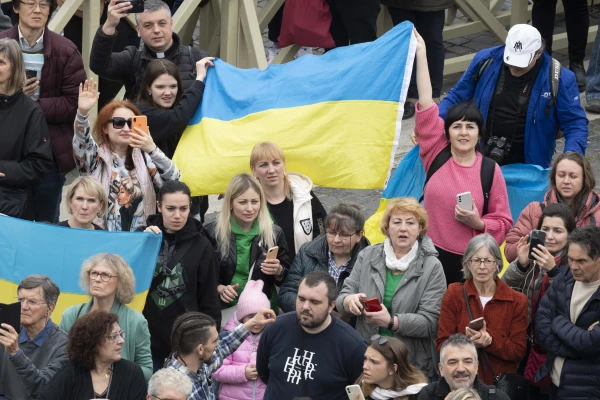
Pope Francis said the Gospel is asking us to imagine ourselves in the same scene, so that we might ask what our own reaction would be.
“What would we have said then? And above all, what would we do today? Like the blind man, do we know how to see the good and to be grateful for the gifts we receive?” he said.
He added: “Do we bear witness to Jesus, or do we spread criticism and suspicion instead? Are we free when faced with prejudices or do we associate ourselves with those who spread negativity and gossip? Are we happy to say that Jesus loves us and saves us, or, like the parents of the man born blind, do we allow ourselves to be caged in by the fear of what others will think?”
Or are we, he continued, “the lukewarm of heart who do not accept reality, and do not have the courage to say: ‘No, this is how it is.’”
After praying the Angelus, Pope Francis expressed his closeness to the people of Ecuador, who were hit by a 6.4-magnitude earthquake on Saturday.
Hundreds of people were hurt and at least 15 people killed in the quake, which mainly affected southern Ecuador and northern Peru, BBC News reported.
“I am close to the Ecuadorian people and I assure of my prayers for the deceased and all those who are suffering,” the pope said.
He also wished a happy Father’s Day to all the fathers.
In countries such as Italy, Portugal, Spain, Bolivia, Honduras, and several others, Father’s Day is celebrated on March 19, the Catholic feast of St. Joseph.
“Today we wish all fathers well. May they find in St. Joseph the model, the support, the comfort to live their fatherhood well,” Pope Francis said, inviting everyone to pray the Our Father for fathers.
In 2023, due to March 19 falling on the Fourth Sunday of Lent, the liturgical feast of St. Joseph is moved to Monday, March 20.