The Vatican is collaborating with tech leaders and companies, governmental institutions, scholars, and nongovernmental organizations to fight “a war on two frontiers” — the sexual abuse and exploitation of children in person and online, including in the sphere of artificial intelligence (AI).
“We are really currently in a war at two frontiers when it comes to protecting children — the old ugly child exploitation, one-on-one, is not overcome — and now we have the new AI, gender-based violence at scale and sophistication. These are two things which are interacting,” Joachim Von Braun, president of the Vatican’s Pontifical Academy of Sciences, said at a March 20 press conference.
“The Church,” Von Braun added, “has a role to play in both of these, and it needs to work on a science base and deeply engage in the regulatory debate, otherwise we cannot win.”

The Pontifical Academy of Sciences is hosting a March 21-22 conference with the safeguarding-centered Institute of Anthropology (IADC) at the Pontifical Gregorian University and the Sweden-based World Childhood Foundation to address risks and opportunities presented by AI for protecting the safety of children and adolescents.
Jesuit Father Hans Zollner, director of the IADC, also emphasized on Thursday the role of the Church to provide education at a national and international level about the importance of “creating a safe space, safe relationships, and safe processes” to safeguard children’s dignity online.
“The mission that Jesus Christ has given us includes the well-being of all people, and especially, if you look into the Gospel, those who have been wounded or are exposed to greater risk of being harmed: children, adolescents, vulnerable populations,” the priest and child sexual abuse expert said.
The Church has a “responsibility to raise our voice to point out where governments and tech companies fail.”
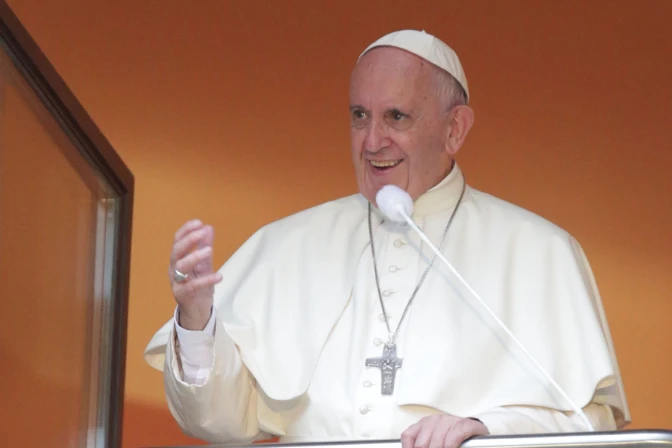
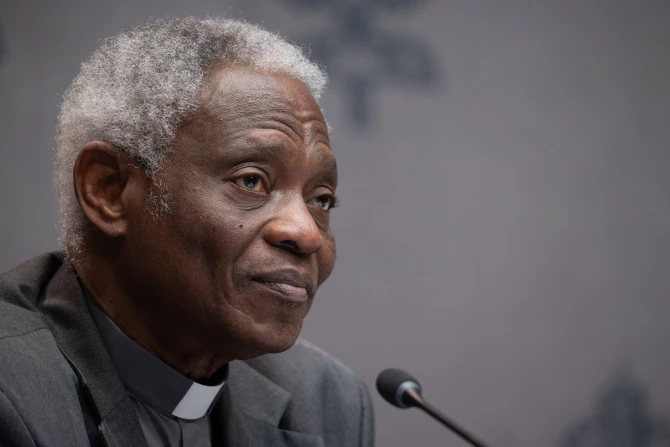
Cardinal Peter Turkson, chancellor of the Pontifical Academy of Sciences, reinforced that “AI is with us” and Catholics cannot miss the chance to be an influential voice for protecting children from the negative effects of this “exciting but fearsome tool,” as Pope Francis described it in his message for peace in 2024.
That is why, the cardinal continued, the Pontifical Academy of Sciences is glad to be partnering with scientists, tech leaders, and child well-being organizations from around the world to solve the issue at the root, through the promotion of ethically compliant AI models and data, rather than going after the systems “like a firehose after they are already created.”
The two-day Vatican conference, titled “Risks and Opportunities of AI for Children: A Common Commitment for Safeguarding Children,” features a number of high-level participants, including Her Majesty Queen Silvia of Sweden, the founder of World Childhood Foundation, and Her Royal Highness Princess Madeleine of Sweden.
Also participating: Michelle DeLaune, president and CEO of the U.S.-based National Center for Missing and Exploited Children; parliamentarian Brando Benifei, rapporteur of the EU AI Act and president of the EU Parliament-U.S. Delegation; Mama Fatima Singhateh, U.N. special rapporteur on the Sale and Sexual Exploitation of Children; parliamentarian Neema Lugangira, chair of the African Parliamentary Network on Internet Governance; and Julia Hiller, office of the Independent Commissioner for Child Sexual Abuse Issues (UBSKM) for the German government.

Similoluwa Okunowo, a Google DeepMind scholar in the AI for Science Program at the African Institute for Mathematical Sciences in Nigeria, will also present as one of four young adults providing a “youth perspective” during the conference.
Zollner said some of the risks of AI for children and adolescents include bullying, sextorsion, and entering relationships with digital partners they do not know.
Mandatory reporting laws in many parts of the world, including in the EU, are inadequate, he noted, and the risks are also exacerbated by a lack of consistency in policy and by tech companies who make enormous amounts of money but do not engage enough in child safety.
“We need to talk about the digital environment that for many of the young people today is perhaps the most important environment in which they communicate and relate,” he said.
Zollner also emphasized the important role families play as the front line for education about artificial intelligence and internet safety. He has noticed that parents are concerned, but there is also a huge “illiteracy” and feeling of overwhelm about the challenges and about how to engage in meaningful conversations with children and adolescents about the issue.
“It’s not about black and white,” he encouraged. “All of us use these instruments more than we are aware of, all of us are dependent on these instruments, how do we educate to a proper and healthy use of them, so that it’s not harming myself or others, but it’s meant to create a space of safe interaction and growth and well-being.”
Families, parishes, dioceses, and Catholic schools “could and should be promoters of an education for a safer way to engage with the social media world and digital world in general,” Zollner added. “We have a huge ethical impact here potentially but unfortunately we have not made much use of that.”
“AI is galloping away,” Von Braun said. He offered a practical suggestion: that each diocese set up an academic group from the community as an AI council to give evidence-based advice to bishops on the risks and influence of artificial intelligence.
At the press conference, Britta Holmberg, deputy secretary general of the World Childhood Foundation, urged the public to not be afraid to confront the issue of AI.
While the quickly-changing world of AI can be scary, everyone has a responsibility, she said, to be open and curious, and to learn more in order to be role models for the world and to spread awareness about AI’s risks.
“If we don’t act, that also has consequences,” she underlined.
This article was originally published on Catholic News Agency.