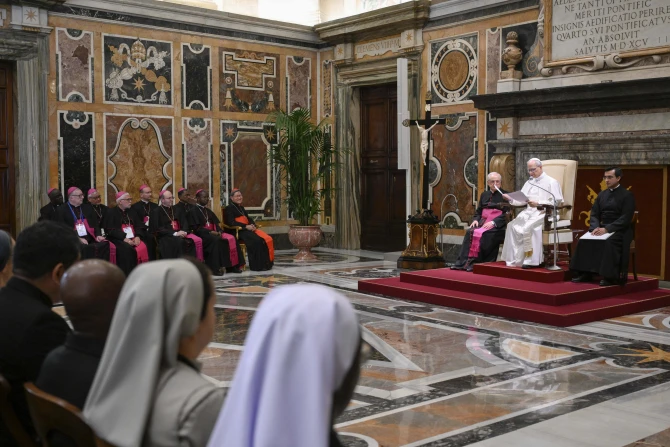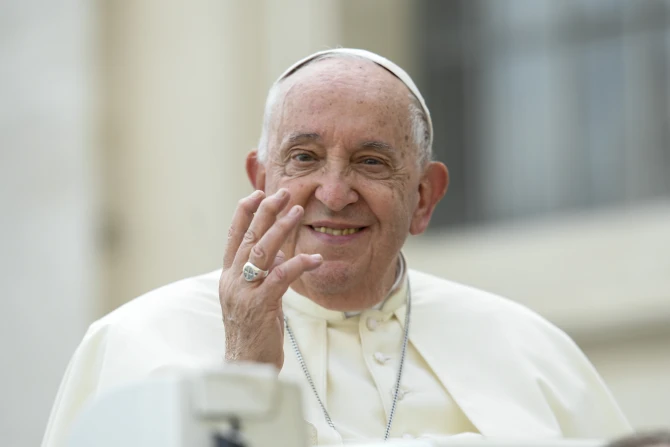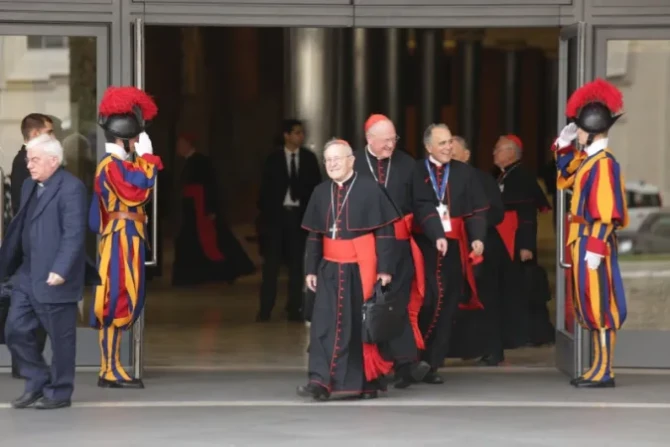
The 21 new cardinals to be created by Pope Francis at the Dec. 7 consistory reflect the pontiff’s vision for a missionary Church that reaches out to the world’s peripheries.
A Diverse Vision for the Church’s Future
Following the 10th consistory of his pontificate, Pope Francis will have effectively cemented the expansive geographical diversity of the College of Cardinals as well as chosen approximately 60% of all its members and almost 80% of the cardinals who will choose his successor in a future conclave.
While the College of Cardinals will still largely be European — with a high proportion who are either representing Italian churches or are of Italian origin — after the Dec. 7 consistory more than 90 countries will be represented in the college responsible for advising the pope in the care of the universal Church.
Expanding Representation in Missionary Regions
The December consistory will also see the College of Cardinals expand to a total of 253 members. Though the vast majority of cardinals are usually secular clergy, this year’s consistory will bring the number of cardinals belonging to religious congregations and institutes to 68.
The continued expansion of the college beyond traditionally Catholic Europe is also evident in the selection of cardinals belonging to missionary congregations in countries where Catholics are a minority.
Both Cardinals-elect Archbishop Tarcisio Isao Kikuchi, SVD, of Tokyo and Archbishop Ladislav Nemet, SVD, of Belgrade-Smederevo, Serbia, belong to the Society of the Divine Word religious congregation and represent the Church in countries where the Catholic population is at 5% and below.
Age and Voting Rights in the College of Cardinals
According to Canon 349 of the Code of Canon Law, cardinals hold the duty to act collegially in choosing a pope’s successor should a conclave be convoked. However, not all cardinals hold the right to cast a vote in a conclave.
More than half of the college after the consistory is set to be “cardinal electors.” These cardinals are below the age of 80 and therefore eligible to vote for a new pope.
Among the 140 cardinals with voting rights, the highest representation by country is Italy with 17 cardinal-electors, followed by the U.S. with 10 cardinal-electors, and then Spain with six cardinal-electors.
The college’s remaining 113 “cardinal non-electors” are 80 years old and older. While they are eligible to participate in the meetings leading up to the start of a conclave, they do not have voting rights and so will not participate in the conclave itself.
Both the eldest and youngest College of Cardinals members will be created at the Dec. 7 consistory.
At 99, Italian Cardinal-elect Angelo Acerbi, the prelate emeritus of the Knights of Malta, will become the oldest member of the college. Having served the Catholic Church as a bishop for 50 years, he also has 40 years of experience working in the Holy See’s diplomatic corps.
Between 1974 and 2001, he served as nuncio to New Zealand, Colombia, Hungary, Moldova, and the Netherlands.
Bishop Mykola Bychok of the Ukrainian Greek Catholic Eparchy of Sts. Peter and Paul in Melbourne, Australia, will become the youngest cardinal at age 44. His elevation as cardinal will bring the total number of cardinals from the vast Oceania region to four.
In an Oct. 6 letter welcoming the new cardinals to the “Roman clergy,” Pope Francis said membership to the College of Cardinals “is an expression of the Church’s unity and of the bond that unites all the Churches with this Church of Rome.”
The consistory for the creation of the new cardinals will take place in the Papal Chapel of St. Peter’s Basilica on Saturday afternoon.
This article was originally published on Catholic News Agency.