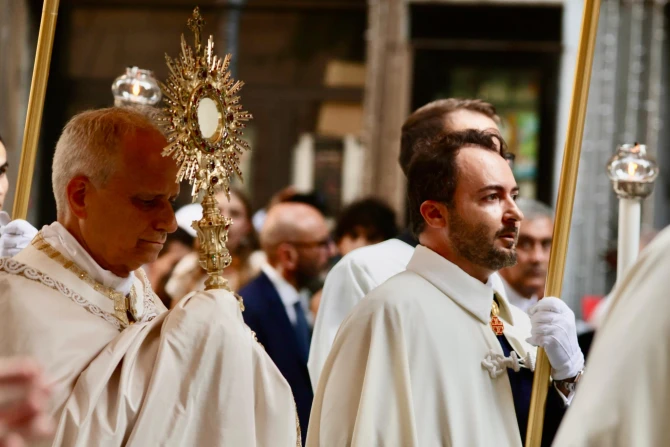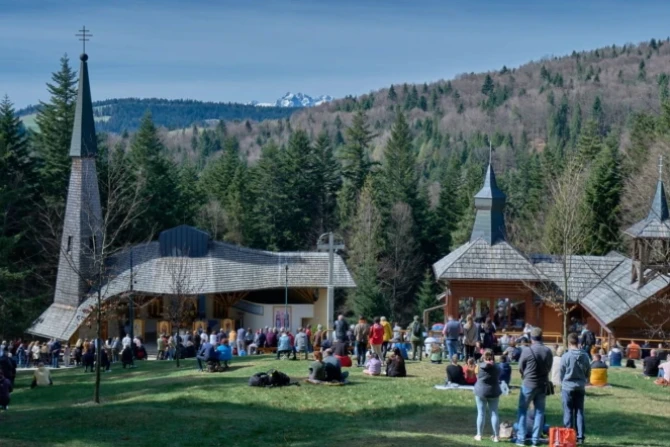
For one day, every year, churches across the world remain open for 24 hours inviting everyone to pray in front of the Blessed Sacrament and encounter Jesus through confession.
This is ’24 Hours for the Lord’—a time when hearts burdened by sin find renewal and the faithful meet Jesus face to face in prayer before the Blessed Sacrament.
But where did it all begin?
It all began in Rome, near St. Peter’s Square, at Centro San Lorenzo, where Daniele Venturi helped spark what would become a global movement.
Daniele Venturi, who sadly passed away just days ago, described that night 12 years ago:
“One of the most significant nights that ignited this Eucharistic spark was during the period between the resignation of Benedict XVI and the beginning of Pope Francis’ pontificate.
“We were right here, inside this very church where we find ourselves today, engaged in intense prayer that lasted several days, 24 hours a day, day and night.”
On March 13, 2013— As the world waited to hear the name of the new Pope, a group of young people continued to pray before the Eucharist—24 hours of adoration, asking God to guide the Church.
Months later, they gathered again—this time to celebrate the birthday of the newly elected Pope Francis. They called it “24 Hours for the Lord.”
And to their amazement—Pope Francis heard about it. The very next day, he sent them a message of thanks. He sent them his greetings, his gratitude, and rosaries.
And then—one year later—he gave them something even greater. In 2014, Pope Francis instituted “24 Hours for the Lord” for the entire Church.
And from that spark—a global movement was born.
But Centro San Lorenzo never stopped. To this day, it remains a place of adoration, prayer, and mission.
Fabiola Inzunza, Head of the Centre, explains:
“Adoration of the Blessed Sacrament is the heart of the centre, because it is there where everything is born.”
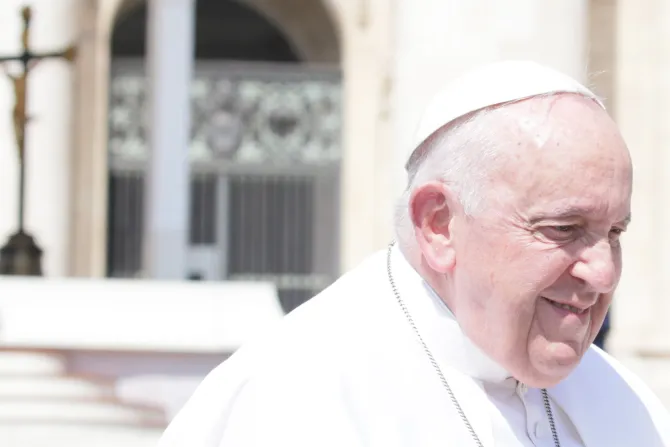
And Pope Francis didn’t just proclaim it. He lived it.
Every year, he attended, prayed, heard confessions, and went to confession himself.
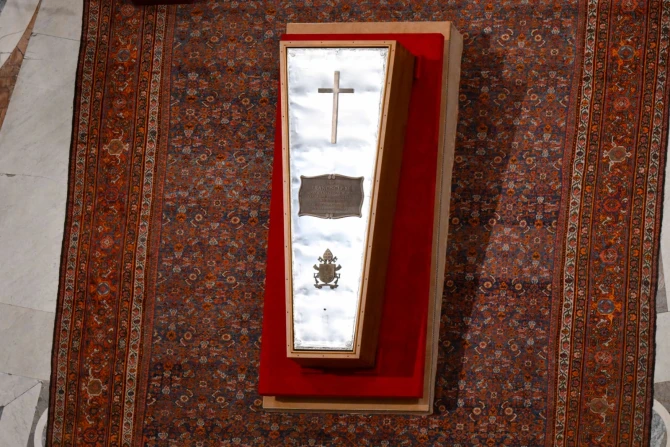
This year, however, something is different. Due to illness, Pope Francis cannot be here. But the mercy of God cannot be stopped.
And Pope Francis’ invitation remains:
“Let us return to the Lord with open hearts, rediscovering the joy of being loved by Him.”
Adapted by Jacob Stein