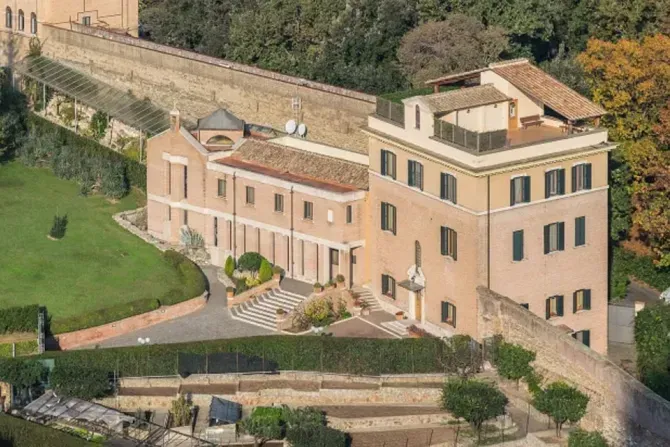
Vatican City has new tenants: seven nuns from Argentina who, at the request of Pope Francis, will live in Mater Ecclesiae (“Mother of the Church”), the monastery where Pope Benedict XVI resided for almost a decade following his resignation from the papacy.
The group consists of six Benedictine nuns and their abbess who were previously living out their religious vocation at St. Scholastica Abbey in the town of Victoria, located in Buenos Aires province in the Diocese of San Isidro, Argentina.
The nuns landed in Rome on the morning of Jan. 3 and were received by Cardinal Fernando Vérguez Alzaga, president of the Governorate of Vatican City State, responsible for everything concerning the monastery.
Before heading to their new home, the Benedictine nuns visited the replica of the Lourdes Grotto in the Vatican Gardens to pray and sing before the image of the Virgin.
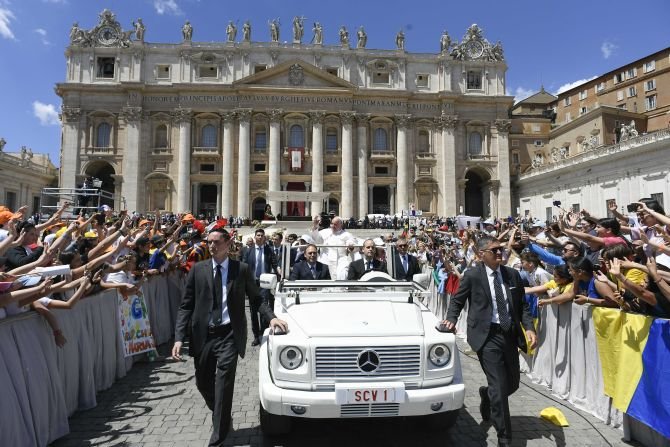
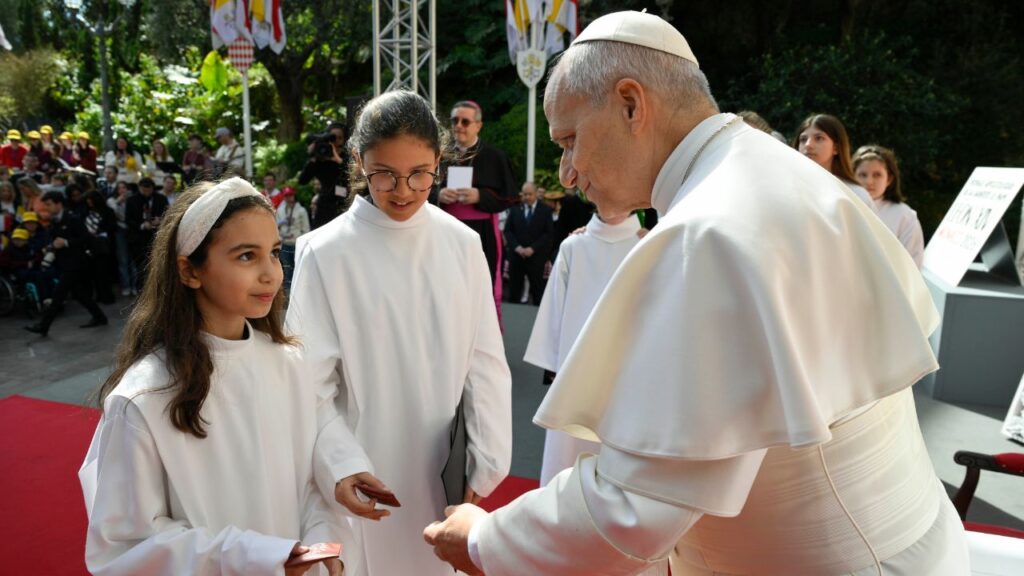
On Jan. 6, the nuns attended the Mass for the Epiphany in St. Peter’s Basilica. At the end of the liturgy, Pope Francis greeted them: “Welcome with all my heart. You are going to bring spirituality, thank you very much,” the Holy Father said to the nuns.
The purpose of Mater Ecclesiae
As reported by the Holy See, Pope Francis in a letter dated Oct. 1, 2023, ordered that the place “return to its original purpose,” which is for “contemplative orders to support the Holy Father in his daily concern for the entire Church, through the ministry of prayer, adoration, praise, and reparation, thus being a prayerful presence in silence and solitude.”
The Argentine Benedictine nuns “generously accepted the invitation.”
The place that was the last residence of Benedict XVI, located among the hills of these gardens, was erected as a women’s monastery of contemplative life with the title of Mater Ecclesiae by St. John Paul II in 1994.
Between 1994 and 2012, four communities — the Poor Clares, the Discalced Carmelites, the Benedictines, and the Visitation nuns — in turn lived there.
In 2013, after Benedict XVI’s historic resignation from the papacy, the monastery became his residence, where he remained until his death on Dec. 31, 2022, in the company of Archbishop Georg Gänswein and four consecrated women.
St. Scholastica Abbey in Victoria
The St. Scholastica Abbey in Victoria was founded in 1941. Almost three years earlier, the construction of their church had begun on the solemnity of the Immaculate Conception, on Dec. 8, 1938, at the urging of the prior of the St. Benedict Abbey in Buenos Aires, Father Andrés Azcárate.
The nuns who were to move to Argentina received their formation at St. Mary’s Abbey in São Paulo, Brazil. In September 1941, “four Brazilians who had taken their solemn vows, six Argentines with temporary vows, and one other sister” left for Argentina, forming the founding community, as detailed on its website.
In 1946, the monastery was raised to the status of an abbey with Mother Plácida de Oliveira being named the first abbess. She died in 1948 and was succeeded by Mother Mectildis Cecilia Santangelo. In 1977, Mother María Leticia Riquelme was appointed abbess, with special permission as she was not yet 35 years old, and she launched three other foundations in Argentina.
This story was first published by ACI Prensa, CNA’s Spanish-language news partner. It has been translated and adapted by CNA. Later on it was published here.