A total of 24 fortunate young people from around the world are participating this year in the Vatican Observatory’s summer camp, an exceptional opportunity to see “that science and faith work together.”
FIND THE POPE’S BIOGRAPHY HERE
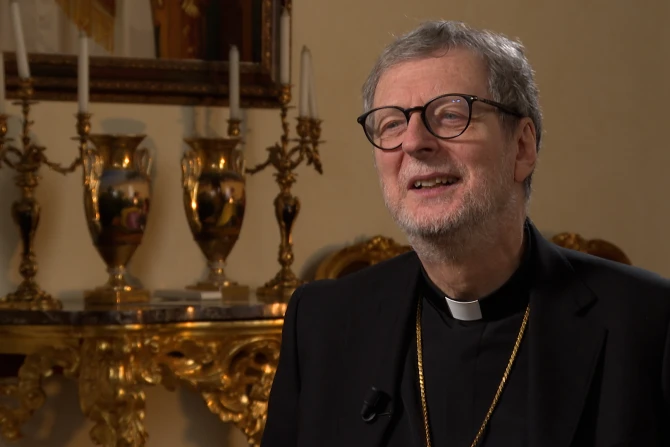
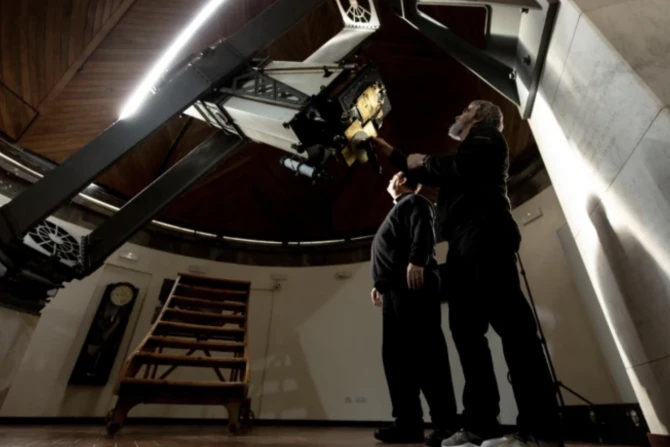
The camp is led by the observatory’s director, Jesuit Brother Guy Consolmagno, who during these summer months is teaching the cohort of future astronomers.
“We hope that simply living and working alongside Jesuit astronomers will be the strongest evidence that science and faith work together, and even more so, that this is a very natural collaboration,” Consolmagno told ACI Prensa, CNA’s Spanish-language news partner.
The veteran Vatican astronomer, born in Detroit, recalled that Pope John Paul II once described faith and reason “as the two wings that lift us toward the truth.”
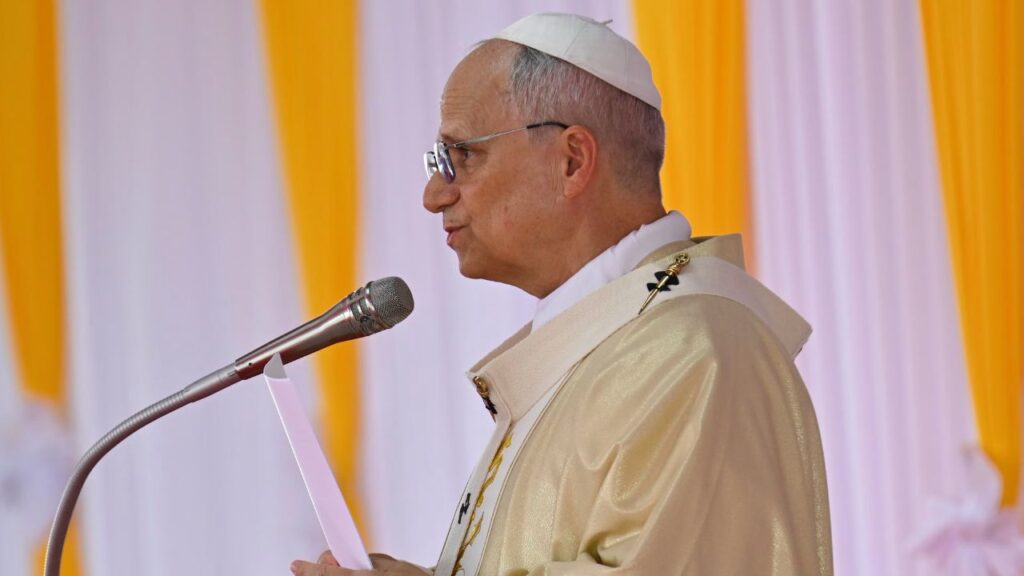
“I hear in Pope Leo’s comments an echo of that same intuition,” the Jesuit affirmed, referring to the pontiff’s words at a recent international bioethics conference in which he called for a science that serves the truth and that is “increasingly humane and respectful of the integrity of the human person.”
According to the director of the observatory, which is located in Castel Gandolfo, Italy, the important thing is to remember “that truth itself is the goal” and that understanding “our faith and our science is never complete, never perfect, but always worth pursuing.”
Spreading the joy of discovery
As Consolmagno sees it, astronomers have a responsibility to pass on their knowledge to the next generation.
In this context, he acknowledged that “young, fresh minds are essential to making new discoveries and creating a deeper understanding of what we discover.”
The Jesuit brother highlighted the “special” nature of the camp, as many of the students “come from the less developed world, which means we can spread the joy of discovery to places that too often don’t have the opportunity to experience it.”
He also noted that the best part of the summer school for the young people “is the opportunity to meet both their peers from around the world and to have access to the experts who teach the classes.”
“Astronomy is a small field, and meeting other astronomers personally and professionally enriches both the students and the work,” he added.
Academic ability and enthusiasm
Consolmagno indicated that this year’s 24 students were chosen from among 175 applicants, so “the decisions were not easy.”
“Our only limit is that there can be no more than two students per nation. Beyond that, we choose the students who showed the greatest promise of being able to benefit from a school like this… both for their academic ability and for their enthusiasm for living in this historic setting,” he indicated.
For many of the students, the connections they make at the Vatican Observatory allow them to enter top-tier doctoral programs around the world “and then bring this high level of scientific excellence back to their home countries.”
“We estimate that more than 80% of students continue on to professional astronomy,” he noted, adding that those who pursue other paths still benefit greatly from the experience.
The revolutionary James Webb telescope
The theme of this year’s summer school — the 19th since its first edition in 1986 — is “Exploring the Universe with the James Webb Space Telescope: The First Three Years.”
The James Webb Space Telescope was launched on Christmas Day 2021. Since it began transmitting data the following July, Consolmagno said, it “has revolutionized our understanding of the cosmos.”
Consolmagno explained that this telescope allows students to see firsthand what science is really saying and not just “the results that have been reported in the press.”
“This allows them to appreciate how important — and difficult — it can be to try to explain to the general public what we have learned,” he emphasized.
For the Vatican astronomer, this is “an ideal time to review what the Webb telescope has discovered so far and to teach what we have learned about how best to take advantage of its capabilities.”
He further pointed out that “the combination of theory and practice” is something the observatory has promoted since these courses began almost four decades ago.
This story was first published by ACI Prensa, CNA’s Spanish-language news partner. It has been translated and adapted by CNA.