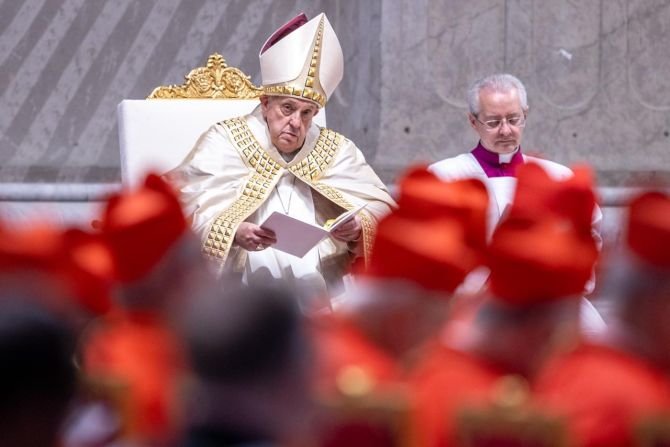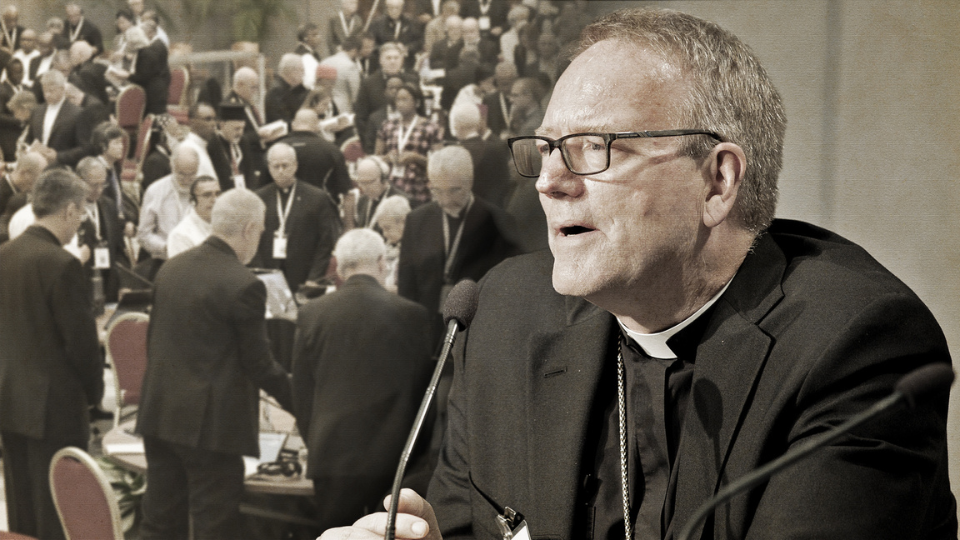
As the Synod on Synodality reaches its final discernment phase, Bishop Robert Barron, from the Diocese of Winona-Rochester, shares his insights on what synodality means for the Church today. In an interview with EWTN’s Colm Flynn, Bishop Barron describes the rigorous schedule and the evolving focus of this year’s synod. He also discusses what he believes to be the core elements of synodality and its impact on the laity and Church leadership.
Colm Flynn:
Bishop Barron, great to see you again, welcome back to Rome.
Bishop Robert Barron:
Yeah, thank you. Always good to be with you Colm.
Colm Flynn:
Now, we spoke last year when you were here for the first session of the Synod. How does it compare? It’s a month long this year, it was a month long last year. What’s the comparison?
Bishop Robert Barron:
Well, it’s similar that way. It’s long and I’ve said it many times, it’s a slog. I mean, they really work us, we get there at 8:45 for prayer and the day ends at 7:30 PM. Now we have a little Roman siesta break in the middle there, you know, for lunch. But they work here. It’s a challenge, you know. A difference I would say last year had more of an Omnium Gatherum quality like people were talking about all kinds of different things and different themes arose. This year is more focused, the Instrumental Laborious really got us back onto synodality. One of the marks of last year was, you know, the Synod on Synodality became the Synod, in a way, on everything, because all kinds of topics came up. This year I think, it’s cleaner, it’s clearer and it’s focused on synodality itself.
As you know, it’s well-known, a lot of the hot button issues that were raised last year have been given to the study groups and so the synod itself, and it’s true, we are two weeks into it now, they have not been the topic of our conversion.
Colm Flynn:
Now I know Bishop that, you know, there are limits around what you can talk about and can’t talk about because they like to just keep it confined to the Synod until it’s finished, but is there anything different coming up or unusual or anything that has surprised you?
Bishop Robert Barron:
No, I’d say this. You know, the famous question: What is Synodality? What do you mean? To me it’s clearer this time around. I would say three basic things: one is the wider consultation with the laity so they can be more involved in the decision-making process of the Church. That’s a basic concern of synodality that we listen more fully, more widely, especially the voices often marginalized. That’s a big part of it. The second thing, I would say, is accountability and transparency on the part of Church leadership, that we have an obligation to let people know how and why we’re making the decisions we make.
So, I think maybe those three things, wider consultation, greater accountability, greater transparency, are the marks of synodality. Now I don’t mean this as a criticism, but to me it’s an inward-looking approach. It’s looking at Church governance. It’s, how is the church managing its interior life? How it’s governing itself. And so those three elements apply there. A drum that I beat last year, and I keep beating this year is, I think that’s true for a small percentage of the laity who will be involved in the governance of the church. The vast majority of the laity are involved in the Christification of the world, to carry the Gospel out into the world and be great Catholic lawyers and teachers and writers and business leaders, et cetera. If they’re asking me — they’re not, but if they were — I would say: that would be a good Synod as a follow up, the role of the laity in the transformation of the world. Synodality, again I don’t mean it critically, is looking more inward at how are we governing ourselves and how are we involving the laity in that governance?
Colm Flynn:
When all is said and done and this month-long Synod has passed, we had the one last year, looking back at it, what would you like to see, to say that was a great success, a worthwhile exercise. What would the results be?
Bishop Robert Barron:
Let me say a couple of things. One would be what we just talked about: if you could say yes, those have all been strengthened all over the Church, or I go back to my diocese and say, you know, we really do, on those three points, greater consultation, greater accountability, greater transparency, that that those have been realized more fully, or if a Bishop, let’s say in another part of the world, says, yeah, I’m going to make these things happen in my diocese, that would be a sign of a success of this in it.
But something a little more intangible. And I think one of the best parts of the Synod is just being with these people from all over the world. There was a lovely moment I must say, the first day we got back together, it was a bit like the first day of school, when you’re starting, you know.
I haven’t seen, for a year, most of them, and it was lovely. It was a sense of the Universal Church and that we’re connecting it across ethnic and ideological divides and all of that. So, I think that’s a great fruit of the synod, no matter what you say about, you know, what we’re talking about, the very fact that we’re together, talking and getting to know each other.
I’ve said it many times and I don’t mean it as a joke: the coffee breaks are my favorite parts of the Synod, and that remains true this year as well. We have a half hour coffee break in the morning and half hour in the afternoon and I just circle the room. I get my coffee or whatever, and I circle the room, and I jump into this conversation and that, and I love that moment. That’s maybe the best part of the Synod.
Colm Flynn:
Bishop Robert Barron, it’s been a pleasure talking to you and thank you so much once again.
Bishop Robert Barron
Always good to be with you, Colm. Thanks.
Adapted by Jacob Stein