Amid significant confusion about the Vatican’s recent guidance on same-sex blessings, the document’s architect has lashed out at those advancing the most liberal interpretation: Catholic leadership in Germany.
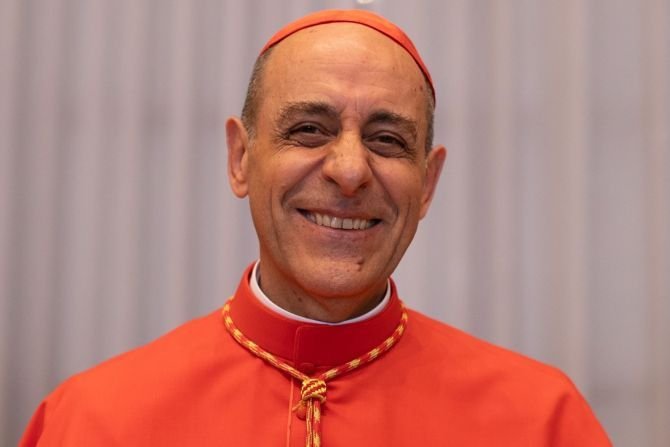
Cardinal Victor Manuel Fernández, prefect of the Vatican’s Dicastery for the Doctrine of the Faith (DDF) and longtime theological adviser to Pope Francis, described Fiducia Supplicans as a “clear answer” to German plans to formalize liturgical blessings for same-sex couples, a move that is explicitly forbidden by the Dec. 18 guidance.
“It is not the answer that people in two or three countries would like to have,” Fernández said of Fiducia Supplicans in a Jan. 3 interview with the German Catholic newspaper Die Tagespost. “Rather, it is a pastoral response that everyone could accept, albeit with difficulty.”
The Vatican’s guidance proposes the possibility of “spontaneous blessings” for same-sex couples and those in “irregular relations” but “without officially validating their status or changing in any way the Church’s perennial teaching on marriage.” To avoid confusion, Fiducia Supplicans prohibits the promotion of formalized blessings and the use of any clothing or symbols that could give the impression of a marital blessing.
Members of the controversial German Synodal Way, a collaboration between the German Bishops’ Conference (DBK) and a powerful lay lobby (ZdK), overwhelmingly approved developing formalized ritual texts for same-sex blessings at a March 2023 assembly in Frankfurt.
Since then, several German bishops have greenlighted public blessings of same-sex couples in their dioceses. And following the publication of Fiducia Supplicans, ZdK vice president Birgit Mock said the Church in Germany would not scrap its plans to develop a formal text of same-sex blessings, despite the guidance’s prohibitions.
Fernández suggested that some German Catholics may fail to appreciate the perspectives of Catholics in other parts of the world on questions related to sexuality.
“Listening to some reflections made in the context of the German Synodal Path, it sometimes seems that a part of the world feels particularly ‘enlightened’ to understand what the other poor wretches are unable to grasp because they are closed or medieval, and then this ‘enlightened’ part naively believes that thanks to it, the whole universal Church is reformed and freed from the old schemes,” Fernández told Die Tagespost.
Similarly, the DDF head suggested that some German Catholic leaders don’t appreciate Pope Francis’ effort to maintain Church unity.
“Some German bishops do not seem to understand that a liberal or enlightened pope could not guarantee this communion among Germans, Africans, Asians, Latin Americans, Russians, and so on,” Fernández said. “A ‘pastoral’ pope, on the other hand, is able to do this,” because he preserves Church teaching while allowing it “to enter into dialogue with the concrete, often so wounded lives of the faithful.”
Fernández also directly challenged the Synodal Way’s basis for trying to radically change Church teaching and practice related to sexuality and governance, namely, the need to address the systemic causes of the sexual abuse crisis.
“To believe that in one part of the world the crisis caused by sexual abuse can be solved by decisions that are contrary to the teaching of the universal Church is, in my opinion, not even reasonably justified,” Fernández said, noting that “some non-Catholic Christian communities” with differing understandings of sexuality and authority are also plagued by problems related to sex abuse.
The publication of Fiducia Supplicans has been marked by widespread confusion and conflicting interpretations, with bishops in countries throughout Africa and Eastern Europe banning the proposed blessings in their jurisdictions, while prelates in countries like Germany have characterized the document as an affirmation of their push for change.
Wednesday’s interview was not the first time Fernández has addressed the impact of Fiducia Supplicans, including its significance for the Catholic Church in Germany.
In a Dec. 23 interview, he told The Pillar that some episcopates’ advancement of ritualized blessings of irregular couples is “inadmissible” and that “they should reformulate their proposal in that regard.”
The Argentinian also said that he is “planning a trip to Germany to have some conversations that I believe are important.”
In the Die Tagespost interview, the cardinal also discussed the Vatican’s ongoing dialogues with DBK representatives. Two have occurred already, with the next set to take place in Rome this month.
Fernández reaffirmed that discussion of changes to Church teaching on sexuality and male-only holy orders will not be on the table in further meetings, something already expressed to the DBK in an October letter from Vatican Secretary of State Cardinal Pietro Parolin. However, the DDF head suggested that “the door remains open” to discuss how reformable aspects of the issues involved “can be deepened” and possibly lead to “a pastoral development” similar to Fiducia Supplicans.
The cardinal also addressed the German Church leadership’s ongoing preparations to establish a governing “synodal council” of bishops and laity — which was forbidden by senior Vatican leadership in a January 2023 letter explicitly approved by Pope Francis.
The synodal committee laying the groundwork for the synodal council held its first meeting Nov. 10–11, though it was boycotted by four German ordinaries, while an additional four were not able to attend, citing scheduling conflicts. The DBK is set to vote on adopting the committee’s statutes at its February plenary session in Augsburg. Fernández emphasized patience in his Die Tagespost interview.
The condition of continuing dialogue between the Vatican and the DBK, he said, is that “we do not continue to make decisions that will only be discussed at further meetings.”
“We must remember that ‘time is worth more than space,’” he said, citing Evangelii Gaudium, Pope Francis’ 2013 apostolic exhortation that Fernández is believed to have ghostwritten. “So let’s stay calm and think about the bigger picture.”
This article was originally published on Catholic News Agency.