COMMENTARY: The Italian cardinal’s Ostpolitik diplomacy is considered a key to the collapse of European communism. It was nothing of the sort.
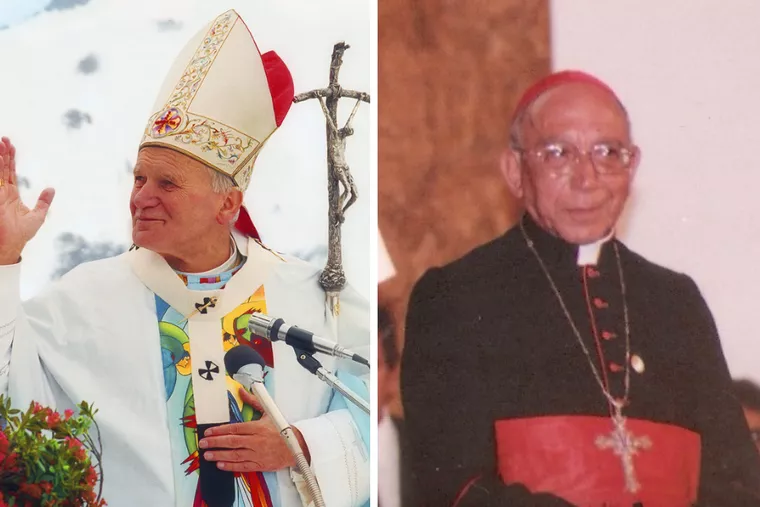
Cardinal Agostino Casaroli, Vatican secretary of state from 1979 to 1990 — and before that, the architect and chief diplomatic agent of the Ostpolitik of Pope Paul VI — initially played hard-to-get when I tried to interview him for the first volume of my John Paul II biography, Witness to Hope.
The cardinal was not a fan of my 1992 book, The Final Revolution: The Resistance Church and the Collapse of Communism, in which I was firmly, but I hope politely, critical of the Ostpolitik’s strategy of accommodation with communist regimes behind the Iron Curtain. The cardinal finally agreed to speak with me, however, and we had a terrific conversation for over an hour and a half. He was full of wit and charm and even had some serious praise for his old Polish sparring partner, Cardinal Stefan Wyszyński. It seemed that Casaroli found me agreeable, for he urged me to return for a second session. Alas, he died before that could happen. May he rest in peace.
Cardinal Casaroli did an able job negotiating the terms of John Paul II’s first papal pilgrimage to Poland in June 1979, getting the communist authorities to agree to a nine-day visit in June rather than the briefer visit the Church had first proposed for May; the communists rejected that May timing because it included the liturgical feast of St. Stanisław, a martyr to state power whose example the authorities found unsettling.
Once the June 1979 visit was underway, however, Cardinal Casaroli tried to assuage communist grievances over the Pope’s famous homily in Warsaw’s Victory Square on June 2 (in which he called on the Holy Spirit to “renew the face of the earth … of this land”) and his address in Gniezno on June 3 (in which he asserted the spiritual unity of the Slavic peoples and indeed of all of Europe, east and west).
Not to worry, Cardinal Casaroli told the agitated officials. The Pope was acting “under emotional impulse,” the Vatican diplomat suggested, being a bit too Polish and not “universal enough.”
John Paul II, aware of this, convened a special meeting of the General Council of the Polish episcopate, a small group of seven men, in Częstochowa on June 5. Neither Cardinal Casaroli nor any other Vatican official accompanying the Pope was present. The meeting was tape-recorded, and in late 2025, I was given a memorandum summarizing the discussion on that occasion; it was written by the conference general secretary, Bishop Bronisław Dąbrowski, and had been kept under lock and key in the archives of the Archdiocese of Warsaw for decades.
What John Paul said on that occasion sheds new light on his keen insight — and on the incomprehension of many in the Vatican, not excluding Agostino Casaroli — when it came to communist regimes. Among the points the Pope made:
+ The Vatican had “no shortage of experts” on Warsaw Pact countries, only a “shortage of people who have experience [of life under communism].”
+ John Paul risked more than the communist authorities did in coming to Poland, because he risked giving those authorities “an alibi” for their regime that they “didn’t deserve” — a “point I keep explaining to Casaroli.”
+ “Ukrainians should feel valued … The [Vatican] has no right to take their historical truth away from them in the name of ecumenism [i.e., with Russian Orthodoxy] … The destruction of the [Ukrainian Greek Catholic Church] … is a crime.”
+ The Polish pilgrimage had “a global significance” geopolitically, and the Polish experience of a faith-based resistance to tyranny had a “necessary” meaning for the entire world Church.
The Polish primate, for his part, demonstrated his own keen insight, indeed foresight, when Cardinal Wyszyński said, in response to the Pope, that the papal pilgrimage was already “a kind of breakthrough. … It is the awakening of Lithuania, Latvia, Estonia, Belarus, Ukraine … a revival of the hope of these people … a kind of spiritual mobilization.” Later in the conversation, John Paul II wholly agreed: “… there is another process [underway] that is not yet visible, namely the process of freeing oneself from political alienation. … So some changes are coming. You can feel it.”
As indeed those changes came, in 1989.
Very little of this is recognized today in certain Vatican and progressive Italian ecclesiastical circles, where Cardinal Casaroli’s Ostpolitik diplomacy is considered a key to the collapse of European communism. It was nothing of the sort. And what John Paul observed to the General Council of the Polish episcopate in June 1979 — that Catholicism has effective weapons against tyranny when it is “strong with its own strength,” its spiritual strength — remains true today, not least with respect to Russia and China.
This article was originally published by NCRegister.